2025 HSA Contribution Limits: Maximize Tax-Free Health Savings

Understanding 2025 HSA contribution limits is crucial for maximizing tax-free healthcare savings, offering a triple tax advantage for eligible individuals and families to cover medical expenses and plan for retirement.
As we approach 2025, understanding the intricacies of your healthcare savings becomes more critical than ever. For many Americans, a Health Savings Account (HSA) represents an invaluable tool for managing medical expenses while enjoying significant tax advantages. Effectively Navigating 2025 Health Savings Account (HSA) Contribution Limits: Maximize Your Tax-Free Benefits can profoundly impact your financial well-being and long-term healthcare planning.
Understanding Health Savings Accounts (HSAs)
Health Savings Accounts (HSAs) are tax-advantaged savings accounts that can be used for qualified medical expenses. They are exclusively available to individuals enrolled in a High-Deductible Health Plan (HDHP), acting as a powerful financial tool for those who meet the eligibility criteria.
The core appeal of an HSA lies in its unique triple tax advantage. Contributions are tax-deductible, the funds grow tax-free, and withdrawals for qualified medical expenses are also tax-free. This combination makes HSAs one of the most beneficial savings vehicles available for healthcare costs.
Eligibility Requirements for HSAs
Before you can even consider contributing to an HSA, you must meet specific eligibility requirements. These are set by the IRS and primarily revolve around your health insurance coverage.
- High-Deductible Health Plan (HDHP) Enrollment: You must be covered by a qualifying HDHP. For 2025, the IRS defines an HDHP as having a minimum deductible and a maximum out-of-pocket limit.
- No Other Health Coverage: Generally, you cannot be covered by any other health plan that is not an HDHP. This includes Medicare, TRICARE, or other health plans that provide benefits before your HDHP deductible is met.
- Not Claimed as a Dependent: You cannot be claimed as a dependent on someone else’s tax return.
- No Medicare Enrollment: Once you enroll in Medicare (even if you’re still working), you are no longer eligible to contribute to an HSA.
Meeting these criteria is the first step toward unlocking the considerable benefits of an HSA. It is crucial to regularly review your eligibility, especially if your health coverage or personal circumstances change, to ensure continued compliance with IRS regulations.
HSAs offer a distinct advantage over other savings accounts due to their flexibility and tax treatment. Unlike Flexible Spending Accounts (FSAs), HSA funds roll over year after year and are portable, meaning they stay with you even if you change employers or health plans. This flexibility, combined with the tax benefits, positions HSAs as a cornerstone of smart financial planning for healthcare.
Decoding the 2025 HSA Contribution Limits
The Internal Revenue Service (IRS) typically adjusts HSA contribution limits annually to account for inflation. These adjustments are critical for individuals and families planning their healthcare savings strategies. For 2025, the projected limits reflect a continued commitment to empowering individuals to save for medical expenses.
While official figures are usually released later in the year, projections based on inflation trends provide a valuable foresight. Staying informed about these limits is not just about compliance; it’s about optimizing your savings potential and maximizing the tax-advantaged growth your HSA can achieve.
Projected Individual and Family Contribution Limits
For 2025, it’s anticipated that the individual contribution limit will see an increase, as will the family contribution limit. These figures represent the maximum amount you can contribute to your HSA during the calendar year.
- Individual Coverage: Expected to rise from the previous year, allowing single filers to set aside more tax-free dollars.
- Family Coverage: Also projected to increase, providing families with a higher ceiling for their combined healthcare savings.
- Catch-Up Contributions: Individuals aged 55 and older are eligible for an additional catch-up contribution, which typically remains steady year-to-year regardless of an HDHP status. This allows older savers to boost their balances significantly as they approach retirement.
These limits apply to all contributions made to your HSA, whether from you, your employer, or a combination of both. It’s essential to track all contributions to avoid exceeding these thresholds, as overcontributing can lead to penalties.
Understanding the projected 2025 HSA limits allows for proactive financial planning. By knowing these figures, you can adjust your payroll deductions or direct contributions to ensure you are fully utilizing this powerful savings vehicle. This foresight helps in maximizing your tax benefits and building a robust fund for future medical needs.
Maximizing Your HSA: Strategic Contributions and Investments
Simply contributing to an HSA is a good start, but truly maximizing its potential involves strategic planning. This means not only contributing the maximum allowable amount each year but also considering how those funds are invested. An HSA is more than just a checking account for medical bills; it’s a long-term investment vehicle.
Many HSA providers offer investment options once your account reaches a certain threshold. These options can range from mutual funds to exchange-traded funds (ETFs), allowing your money to grow over time, much like a 401(k) or IRA. The tax-free growth is a significant advantage, especially over several decades.
Investing Your HSA Funds for Growth
For those who can afford to pay for current medical expenses out-of-pocket, investing HSA funds can be a game-changer. This strategy allows your balance to grow uninterrupted, potentially accumulating a substantial sum for future healthcare costs, including those in retirement.
- Choose a Reputable Provider: Select an HSA administrator that offers a wide range of low-cost investment options and transparent fees.
- Assess Your Risk Tolerance: Just like any investment, determine your comfort level with risk and choose investments that align with your financial goals and time horizon.
- Diversify Your Portfolio: Spread your investments across different asset classes to mitigate risk and enhance potential returns.
- Monitor and Rebalance: Regularly review your investment performance and rebalance your portfolio as needed to stay aligned with your strategy.
The ability to invest HSA funds tax-free is often overlooked but can be incredibly powerful. It transforms the HSA from a mere spending account into a formidable retirement savings vehicle, specifically earmarked for healthcare expenses.
Beyond investing, consider optimizing your contributions. If your employer offers contributions, ensure you’re taking full advantage of them. These are essentially free money that boosts your HSA balance. Additionally, if you have the means, try to front-load your contributions early in the year to allow more time for potential investment growth. Every strategic decision around your HSA can lead to greater long-term financial security.
Tax Advantages and Benefits of HSAs
The financial benefits of an HSA extend far beyond simply saving for medical bills. The triple tax advantage is a cornerstone of its appeal, providing a powerful incentive for eligible individuals to utilize this account. Understanding these tax benefits is key to appreciating the full value of an HSA.
Firstly, contributions to an HSA are tax-deductible. This means that any money you contribute, whether directly or through payroll deductions, reduces your taxable income for the year. This immediate tax savings can be substantial, depending on your tax bracket.
The Triple Tax Advantage Explained
The unique structure of HSAs offers three distinct tax benefits, making them a standout option for healthcare savings.
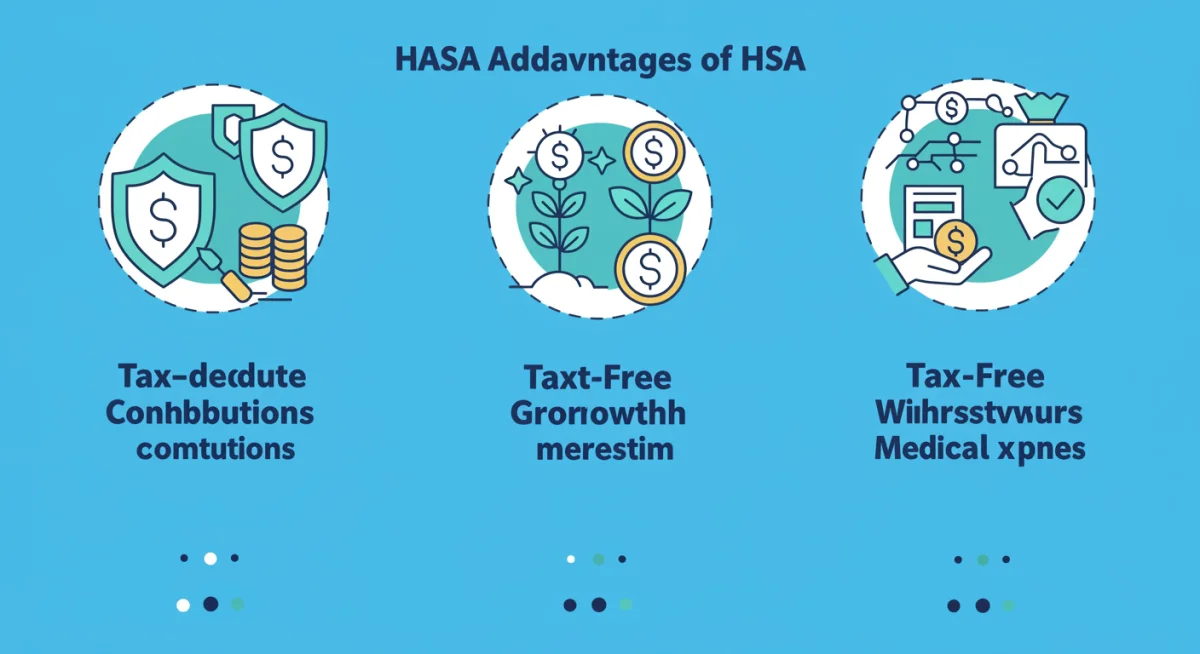
- Tax-Deductible Contributions: Money you put into your HSA reduces your taxable income. This is an above-the-line deduction, meaning you don’t need to itemize to claim it.
- Tax-Free Growth: Any investment earnings or interest accrued within your HSA grow tax-free. You don’t pay taxes on dividends, interest, or capital gains as long as the money remains in the account.
- Tax-Free Withdrawals: When you use HSA funds for qualified medical expenses, the withdrawals are entirely tax-free. This includes deductibles, co-payments, prescriptions, and a wide range of other medical services.
This trifecta of tax benefits makes an HSA an incredibly efficient way to save for healthcare. It’s rare to find an account that offers tax breaks at every stage: contribution, growth, and withdrawal. This makes the 2025 HSA limits even more significant, as they dictate the extent of these valuable tax benefits.
Beyond the immediate tax savings, the long-term growth potential, especially when invested, can create a substantial nest egg for future healthcare needs. This is particularly beneficial in retirement, when healthcare costs often increase and other income sources may be taxed. An HSA can provide a tax-free solution for these expenses, offering peace of mind and financial stability.
Qualified Medical Expenses and Permitted Uses
One of the most important aspects of managing an HSA is understanding what constitutes a qualified medical expense. Using HSA funds for non-qualified expenses can result in taxes and penalties, effectively negating the account’s benefits. The IRS provides clear guidelines on what counts as a qualified expense, covering a broad spectrum of healthcare-related costs.
Generally, a qualified medical expense is any expense incurred primarily for the prevention or alleviation of a physical or mental defect or illness. This includes diagnosis, cure, mitigation, treatment, or prevention of disease, and treatments affecting any structure or function of the body.
Common Qualified Expenses for HSA Use
The range of qualified medical expenses is extensive, covering many common healthcare needs. This flexibility is a key advantage of HSAs, allowing individuals to use their funds for diverse medical services and products.
- Doctor Visits and Hospital Stays: This includes co-pays, deductibles, and co-insurance for physician services, specialist visits, and inpatient hospital care.
- Prescription Medications: Costs for prescribed drugs, including over-the-counter medications that are prescribed by a doctor.
- Dental and Vision Care: Expenses for dental cleanings, fillings, orthodontics, eye exams, eyeglasses, contact lenses, and even laser eye surgery.
- Preventive Care: Vaccinations, screenings, and annual physicals, which are often covered even before meeting your HDHP deductible.
- Over-the-Counter Items: Many non-prescription items like pain relievers, cold medicines, bandages, and feminine hygiene products are now considered qualified medical expenses.
It’s crucial to keep meticulous records of all your medical expenses and HSA withdrawals. In the event of an IRS audit, you’ll need to demonstrate that your withdrawals were for qualified medical expenses. This due diligence ensures you retain the tax-free status of your HSA distributions.
Beyond these common uses, HSAs can also cover certain long-term care insurance premiums, COBRA premiums, and Medicare Part A, B, and D premiums (though not Medigap policies). This broad applicability underscores the versatility of HSAs as a comprehensive financial tool for health. Understanding these permitted uses is vital for effectively managing your HSA and avoiding any potential tax complications associated with non-qualified withdrawals.
Strategic Planning for Retirement with an HSA
While often viewed as a vehicle for current medical expenses, an HSA can also be a powerful component of your retirement planning strategy. Many financial experts refer to it as the ‘super IRA’ due to its unparalleled tax advantages, particularly for healthcare costs in later life. The ability to grow funds tax-free and withdraw them tax-free for medical expenses in retirement makes it exceptionally valuable.
The costs of healthcare in retirement can be substantial and are often underestimated. Medicare premiums, deductibles, co-insurance, and out-of-pocket prescription costs can quickly add up. An HSA provides a dedicated, tax-advantaged fund to cover these inevitable expenses, preserving your other retirement savings for living expenses and leisure.
Leveraging Your HSA for Post-Retirement Health Needs
Thinking of your HSA as a long-term investment rather than just a checking account for medical bills can significantly enhance your retirement security. The longer you let the funds grow, the more substantial your tax-free nest egg will become.
- Pay Out-of-Pocket for Current Expenses: If financially feasible, pay for current medical expenses with after-tax money and let your HSA funds continue to grow untouched.
- Invest for Long-Term Growth: Select investment options within your HSA that align with a long-term growth strategy, taking advantage of the tax-free compounding.
- Save Receipts: Keep detailed records of all qualified medical expenses paid out-of-pocket throughout your working years. You can reimburse yourself tax-free from your HSA in retirement for these past expenses, even years later.
- Medicare Premiums: Once enrolled in Medicare, you can use HSA funds to pay for Medicare Part B and Part D premiums, as well as Medicare Advantage plan premiums (though not Medigap).
The flexibility to use HSA funds for a wide array of retirement healthcare costs, combined with its triple tax advantages, makes it an indispensable tool for financial independence in later life. By strategically managing your HSA, you are not just saving for today’s deductibles; you are building a robust financial defense against future healthcare inflation.
As you near retirement, the catch-up contributions for those aged 55 and older become particularly important. These additional contributions allow you to accelerate your savings, further bolstering your HSA balance just when you need it most. Integrating your HSA into your broader financial plan ensures a more secure and comfortable retirement free from the anxieties of escalating healthcare costs.
Navigating Common HSA Pitfalls and Best Practices
While HSAs offer incredible benefits, misunderstanding their rules can lead to costly mistakes. Being aware of common pitfalls and adhering to best practices ensures you fully capitalize on your HSA’s advantages without running into IRS penalties. Diligence in managing your account is paramount.
One of the most frequent errors is overcontributing. Exceeding the annual contribution limits can result in a 6% excise tax on the excess amount for each year it remains in the account. Another mistake is using HSA funds for non-qualified expenses before age 65, which incurs both income tax and a 20% penalty.
Avoiding Mistakes and Optimizing Your HSA Use
To ensure your HSA remains a powerful financial tool, rather than a source of stress, follow these key best practices.
- Stay Informed on Limits: Always confirm the current year’s and projected 2025 HSA limits to avoid overcontributing. The IRS updates these annually.
- Track Eligibility: Regularly verify that you meet all HSA eligibility requirements, especially if your health coverage or tax filing status changes.
- Maintain Detailed Records: Keep all receipts for qualified medical expenses, even if you pay out-of-pocket. This is crucial for substantiating tax-free withdrawals.
- Understand Qualified Expenses: Familiarize yourself with what the IRS considers a qualified medical expense to avoid using funds for non-permitted items.
- Consider Beneficiaries: Designate a beneficiary for your HSA. If your spouse is the beneficiary, the HSA generally transfers to them tax-free upon your death.
Another important consideration is managing your HSA if you have multiple accounts or switch providers. You can roll over funds from one HSA to another, or even transfer funds directly between accounts, usually once per year without penalty. This allows for consolidation and better management.
By proactively managing your HSA and staying informed about the rules, you can safeguard its tax-advantaged status. Treat your HSA with the same care as your other retirement accounts, and it will serve as a robust financial asset for both your immediate and long-term healthcare needs. Avoiding common missteps is key to truly maximizing its potential.
| Key Point | Brief Description |
|---|---|
| 2025 Contribution Limits | Projected increases for individual and family coverage, plus catch-up contributions for those 55+. |
| Triple Tax Advantage | Contributions are tax-deductible, growth is tax-free, and qualified withdrawals are tax-free. |
| Eligibility & HDHP | Must be covered by a High-Deductible Health Plan (HDHP) and not have other disqualifying health coverage. |
| Retirement Planning | HSAs can serve as a powerful retirement vehicle for tax-free healthcare expenses, especially if invested. |
Frequently Asked Questions About 2025 HSA Limits
While official figures are released later, 2025 HSA contribution limits are anticipated to increase. This means higher ceilings for both individual and family plans, allowing more tax-free savings. Always consult IRS publications for the definitive numbers once they become available to ensure accuracy in your planning.
To be eligible for an HSA in 2025, you must be enrolled in a High-Deductible Health Plan (HDHP), have no other disqualifying health coverage, and not be claimed as a dependent. Enrollment in Medicare also disqualifies you from making new contributions.
Maximize your HSA by contributing the annual maximum, especially if you’re eligible for catch-up contributions. Consider investing your HSA funds for tax-free growth, and whenever possible, pay current medical expenses out-of-pocket to allow your HSA balance to compound over time.
Overcontributing to an HSA can result in a 6% excise tax on the excess amount for each year it remains in the account. It’s crucial to track all contributions from yourself and your employer to avoid exceeding the IRS-mandated limits for 2025.
Absolutely. An HSA is an excellent retirement savings vehicle for healthcare. Funds can be used tax-free for Medicare premiums (Parts B, D, and Advantage), deductibles, and other qualified medical expenses in retirement, preserving other retirement savings.
Conclusion
Navigating 2025 Health Savings Account (HSA) Contribution Limits: Maximize Your Tax-Free Benefits is more than just a financial exercise; it’s a strategic move towards greater financial security and peace of mind regarding your healthcare. By understanding the eligibility requirements, staying informed about the latest contribution limits, and strategically investing your funds, you can unlock the full potential of your HSA. This powerful tool offers unmatched tax advantages that can significantly reduce your healthcare burden both today and in retirement. Proactive planning and diligent management are key to transforming your HSA into one of your most valuable assets.