Capital Gains in 2026: 5 Strategies to Optimize Your Portfolio

Optimizing capital gains in 2026 requires strategic planning, including tax-loss harvesting, long-term holding, and utilizing tax-advantaged accounts to enhance investment portfolio performance and minimize liabilities.
As we approach 2026, investors are increasingly focused on navigating the complexities of the financial landscape. Understanding and effectively managing Capital Gains in 2026: 5 Strategies to Optimize Your Investment Portfolio is crucial for maximizing returns and minimizing tax liabilities. This article will delve into actionable strategies to help you achieve your financial goals.
Understanding Capital Gains and Their Impact
Capital gains refer to the profit you make from selling an asset that has increased in value. This could be anything from stocks and bonds to real estate or even collectibles. While making a profit is always the goal, the tax implications of these gains can significantly impact your net return. Understanding how capital gains are taxed is the first step toward effective optimization.
In the United States, capital gains are typically categorized into two types: short-term and long-term. Short-term capital gains are realized on assets held for one year or less and are taxed at your ordinary income tax rate. Long-term capital gains, on the other hand, are realized on assets held for more than one year and generally benefit from lower tax rates. The distinction between these two types is fundamental to strategic tax planning.
The Difference Between Short-Term and Long-Term Gains
The holding period is the critical determinant. An asset sold after being held for 365 days or less will incur short-term capital gains tax. This is often a higher rate, as it’s tied directly to your individual income tax bracket. Conversely, an asset held for 366 days or more qualifies for long-term capital gains tax, which typically has more favorable rates, often 0%, 15%, or 20% depending on your taxable income.
- Short-Term Gains: Assets held for 1 year or less, taxed at ordinary income rates.
- Long-Term Gains: Assets held for more than 1 year, taxed at preferential rates.
- Tax Brackets: Your overall income influences the exact long-term capital gains rate you pay.
The impact of capital gains extends beyond just the tax bill; it influences your overall investment strategy. Investors often adjust their holding periods to convert short-term gains into long-term gains, thereby reducing their tax burden. This careful consideration of timing can make a substantial difference in the ultimate profitability of an investment.
Navigating these rules requires constant vigilance, especially with potential changes in tax legislation. Staying informed about current tax laws and future proposals is vital for making educated decisions regarding your investment portfolio. The goal is always to maximize your after-tax returns, ensuring that your hard-earned profits remain largely intact.
Strategy 1: Harnessing Tax-Loss Harvesting
Tax-loss harvesting is a sophisticated strategy that involves selling investments at a loss to offset capital gains and, potentially, a limited amount of ordinary income. This approach is particularly effective in volatile markets, allowing investors to turn temporary setbacks into tangible tax benefits. It’s a proactive measure that can significantly reduce your tax liability for the year.
The core principle is simple: if you have realized capital gains from profitable investments, you can sell other investments that have declined in value. The losses realized from these sales can then be used to cancel out your gains. If your capital losses exceed your capital gains, you can deduct up to $3,000 of the remaining loss against your ordinary income, and carry forward any excess loss to future tax years.
Implementing Tax-Loss Harvesting Effectively
Timing is crucial when implementing tax-loss harvesting. It’s often done towards the end of the year, but it can be executed anytime you have realized gains and unrealized losses. However, investors must be mindful of the wash-sale rule. This rule prevents you from claiming a loss on a security if you buy a substantially identical security within 30 days before or after the sale.
- Identify Losses: Review your portfolio for investments trading below your cost basis.
- Offset Gains: Use these losses to cancel out realized capital gains.
- Deduct Ordinary Income: If losses exceed gains, deduct up to $3,000 against ordinary income.
- Wash-Sale Rule: Avoid repurchasing substantially identical securities within 30 days.
This strategy is not about avoiding taxes entirely but rather about deferring or reducing them legally and ethically. By strategically managing your losses, you can improve your overall after-tax investment performance. It requires careful record-keeping and an understanding of your portfolio’s performance throughout the year. Many financial advisors assist clients specifically with this complex but rewarding strategy.
The benefits of tax-loss harvesting extend beyond immediate tax savings. It can also help you rebalance your portfolio, shedding underperforming assets and reallocating funds to more promising opportunities. This dual benefit makes it a powerful tool for optimizing your investment portfolio in 2026 and beyond, ensuring your portfolio remains robust and tax-efficient.
Strategy 2: Maximizing Long-Term Holding Periods
One of the most straightforward yet powerful strategies for optimizing capital gains is simply to hold your investments for the long term. As previously mentioned, assets held for more than one year are subject to lower long-term capital gains tax rates, which can significantly boost your after-tax returns. This strategy aligns perfectly with a buy-and-hold investment philosophy, favoring patience over frequent trading.
The difference in tax rates between short-term and long-term gains can be substantial. For many investors, long-term capital gains rates are 0% or 15%, while short-term gains are taxed at their marginal income tax rate, which can be as high as 37%. This disparity provides a strong incentive to extend your holding period whenever possible, allowing your investments to grow while deferring or reducing your tax obligations.
Benefits of a Long-Term Investment Horizon
Beyond the tax advantages, a long-term holding period often leads to better overall investment performance. It allows your investments to weather market fluctuations, benefiting from compounding returns over time. Short-term market noise can distract from long-term growth trends, and by not reacting to every dip or surge, you avoid transaction costs and potentially emotional, ill-timed decisions.
- Lower Tax Rates: Enjoy preferential tax treatment for gains on assets held over a year.
- Compounding Returns: Allow your investments to grow exponentially over time.
- Reduced Transaction Costs: Fewer trades mean lower brokerage fees and commissions.
- Emotional Discipline: Avoid making impulsive decisions based on short-term market volatility.
This strategy encourages a disciplined approach to investing, focusing on the fundamental value and long-term potential of your assets rather than speculative short-term movements. It’s particularly effective for growth stocks, real estate, and other assets that tend to appreciate significantly over extended periods. By committing to a long-term horizon, you not only reduce your tax burden but also enhance the overall stability and growth potential of your portfolio.
Embracing a long-term perspective requires patience and conviction in your investment choices. It means researching companies thoroughly, understanding their business models, and trusting in their ability to deliver sustained growth. In 2026, with evolving market dynamics, a steadfast long-term approach remains a cornerstone of intelligent investment management, providing both tax efficiency and enhanced returns.
Strategy 3: Utilizing Tax-Advantaged Accounts
Leveraging tax-advantaged accounts is a cornerstone of effective capital gains optimization. These accounts, such as 401(k)s, IRAs, and Health Savings Accounts (HSAs), offer unique tax benefits that can help your investments grow more efficiently, either through tax-deferred growth or tax-free withdrawals. Understanding the nuances of each account type is essential for maximizing their potential.
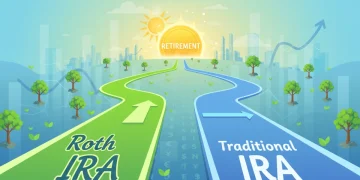
Traditional 401(k)s and IRAs allow your investments to grow tax-deferred, meaning you don’t pay taxes on capital gains or dividends until retirement when you withdraw the funds. This deferral allows your money to compound more rapidly. Roth 401(k)s and Roth IRAs, on the other hand, offer tax-free withdrawals in retirement, provided certain conditions are met, making them incredibly powerful for long-term wealth accumulation.
Exploring Different Tax-Advantaged Options
Each type of tax-advantaged account serves a distinct purpose and comes with its own set of rules and benefits. HSAs, for instance, offer a triple tax advantage: tax-deductible contributions, tax-free growth, and tax-free withdrawals for qualified medical expenses. They are often hailed as one of the most tax-efficient investment vehicles available, especially for those with high-deductible health plans.
- Traditional IRAs/401(k)s: Tax-deferred growth, taxable withdrawals in retirement.
- Roth IRAs/401(k)s: Tax-free growth and withdrawals in retirement (with conditions).
- HSAs: Triple tax advantage for healthcare expenses, investment potential.
- 529 Plans: Tax-advantaged savings for education, often state tax benefits too.
By strategically contributing to and investing within these accounts, you can shield a significant portion of your capital gains from immediate taxation. This allows your investment capital to work harder for you, unburdened by annual tax obligations on dividends and capital gains distributions. For 2026, it’s crucial to review contribution limits and eligibility requirements, as these can change.
The power of tax-advantaged accounts lies in their ability to compound wealth over decades without the drag of annual taxation. For investors looking to optimize their portfolio for capital gains, these accounts are indispensable tools. They offer a structured way to save for retirement, healthcare, or education while simultaneously enhancing your investment returns through favorable tax treatment.
Strategy 4: Diversification and Asset Location
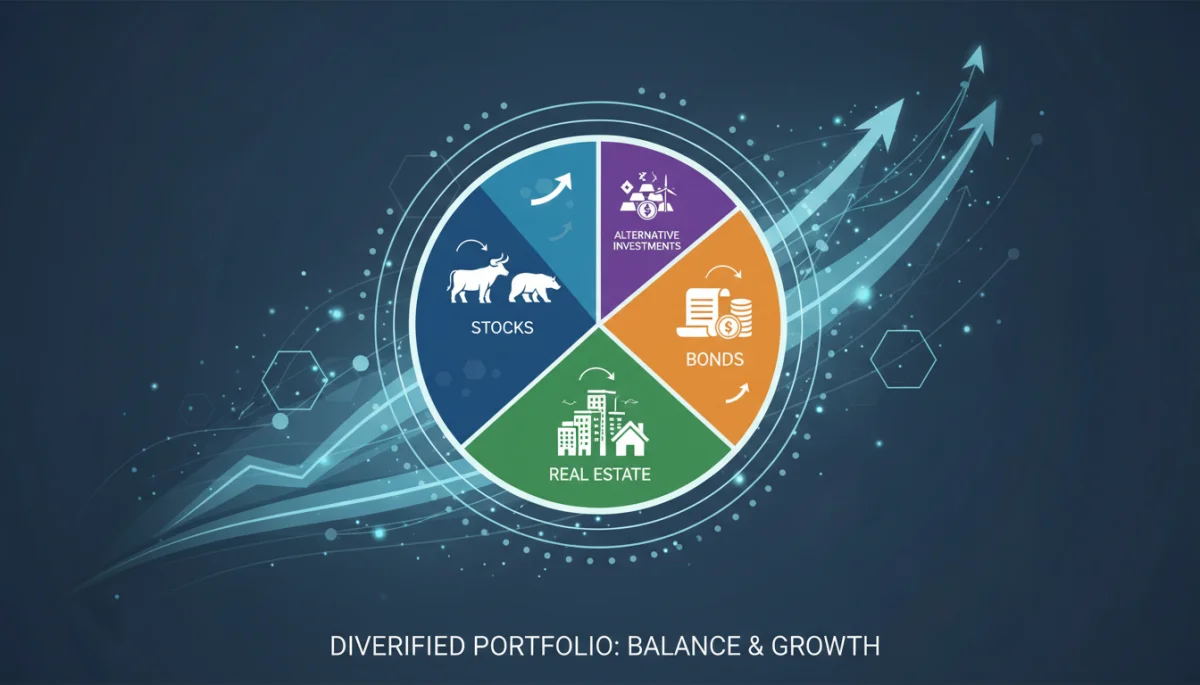
Diversification is a well-known principle in investing, aimed at spreading risk across various asset classes, industries, and geographies. However, when combined with strategic asset location, it becomes a powerful tool for optimizing capital gains. Asset location involves deciding which types of investments to hold in which types of accounts (taxable vs. tax-advantaged) to maximize after-tax returns.
The goal is to place assets that generate high short-term capital gains or ordinary income (like actively managed funds or high-dividend stocks) into tax-advantaged accounts. Conversely, assets that are expected to generate long-term capital gains (like growth stocks or low-turnover index funds) can be held in taxable accounts, where they benefit from lower long-term capital gains rates when eventually sold.
Optimizing Your Portfolio Through Asset Location
Consider placing investments that are frequently traded or generate significant income within your Roth IRA or 401(k) where growth and withdrawals might be tax-free. This shields them from annual income tax and potential short-term capital gains tax. On the other hand, highly appreciated assets that you plan to hold for many years might be better suited for a taxable brokerage account, allowing you to control the timing of long-term capital gains realization.
- High-Income Assets: Place in tax-advantaged accounts (e.g., REITs, high-yield bonds).
- Growth Assets: Consider taxable accounts for long-term appreciation (e.g., growth stocks).
- Tax-Efficient Funds: Use index funds or ETFs in taxable accounts due to lower turnover.
- Rebalancing: Conduct rebalancing within tax-advantaged accounts to avoid taxable events.
Effective diversification and asset location require a holistic view of your entire financial picture, including all your investment accounts. It’s not just about what you own, but where you own it. By strategically allocating your assets, you can minimize the tax drag on your portfolio, allowing more of your investment returns to compound over time.
This strategy demands ongoing review and adjustment, especially as your financial goals and market conditions evolve. In 2026, with potential shifts in tax policy and market performance, a well-thought-out asset location strategy will be crucial for maintaining an optimized and tax-efficient investment portfolio. It’s a key component of sophisticated financial planning.
Strategy 5: Charitable Giving and Qualified Charitable Distributions
For investors with significant appreciated assets and a philanthropic inclination, charitable giving can be a highly effective strategy for optimizing capital gains. By donating appreciated securities directly to a qualified charity, you can often avoid paying capital gains tax on the appreciation and potentially claim a tax deduction for the fair market value of the donation.
This approach is particularly beneficial because it allows you to support causes you care about while simultaneously reducing your tax burden. Instead of selling the appreciated asset, paying capital gains tax, and then donating the remainder, direct donation bypasses the capital gains tax entirely, making your charitable contribution more impactful and tax-efficient.
Advanced Charitable Giving Techniques
Beyond direct donations of appreciated stock, Qualified Charitable Distributions (QCDs) offer another powerful tool for individuals aged 70½ or older who are required to take Required Minimum Distributions (RMDs) from their IRAs. A QCD allows you to directly transfer up to $100,000 annually from your IRA to a qualified charity, and this amount counts towards your RMD without being included in your taxable income.
- Donate Appreciated Stock: Avoid capital gains tax and receive a deduction for fair market value.
- Qualified Charitable Distributions (QCDs): For those 70½+, satisfy RMDs tax-free from IRAs.
- Donor-Advised Funds (DAFs): Contribute appreciated assets, get an immediate tax deduction, and grant funds over time.
- Charitable Remainder Trusts (CRTs): Receive income for a period, then donate the remainder to charity.
These strategies are not only about tax optimization but also about aligning your financial planning with your values. By incorporating charitable giving into your overall investment strategy, you can create a lasting legacy while intelligently managing your capital gains. It’s a win-win scenario that benefits both you and the organizations you support.
As 2026 unfolds, considering these advanced charitable giving techniques can be a crucial part of a comprehensive financial plan, especially for high-net-worth individuals or those with substantial appreciated assets. Consulting with a financial advisor and tax professional is highly recommended to ensure these strategies are implemented correctly and align with your specific financial situation and philanthropic goals.
Future-Proofing Your Portfolio for 2026 and Beyond
As we look towards 2026, the financial landscape is constantly evolving, presenting both opportunities and challenges for investors. Future-proofing your investment portfolio means more than just managing current capital gains; it involves anticipating future changes in tax law, market conditions, and personal financial goals. A proactive and adaptable approach is key to sustained success.
Staying informed about potential legislative changes related to capital gains tax rates, estate taxes, and retirement account rules is paramount. These changes can significantly impact the effectiveness of your current strategies, necessitating adjustments to your portfolio and financial plan. Regular reviews with a qualified financial advisor can help you navigate these complexities and ensure your strategies remain optimized.
Key Considerations for Long-Term Portfolio Resilience
Building a resilient portfolio involves not only tax efficiency but also a robust asset allocation that aligns with your risk tolerance and time horizon. Diversification across different asset classes, geographies, and investment styles can help mitigate risks and capture growth opportunities wherever they arise. Don’t put all your eggs in one basket, and regularly rebalance to maintain your desired asset allocation.
- Stay Informed: Monitor tax law changes and economic forecasts.
- Regular Reviews: Periodically assess your portfolio and financial plan with an advisor.
- Adaptability: Be prepared to adjust strategies in response to market shifts.
- Risk Management: Diversify broadly and rebalance your portfolio consistently.
Technology will also play an increasingly important role in portfolio management. Utilizing advanced analytical tools and robo-advisors can provide insights and efficiencies that were once only available to institutional investors. Embracing these technological advancements can help you make more informed decisions and automate aspects of your portfolio management.
Ultimately, future-proofing your portfolio for 2026 and beyond is about building a durable financial foundation that can withstand various economic cycles and legislative environments. By integrating the five strategies discussed—tax-loss harvesting, long-term holding, tax-advantaged accounts, diversification and asset location, and strategic charitable giving—you can position yourself for optimal capital gains management and long-term financial prosperity.
| Key Strategy | Brief Description |
|---|---|
| Tax-Loss Harvesting | Sell losing investments to offset capital gains and reduce taxable income. |
| Long-Term Holding | Hold assets over a year to qualify for lower long-term capital gains tax rates. |
| Tax-Advantaged Accounts | Utilize 401(k)s, IRAs, and HSAs for tax-deferred or tax-free growth. |
| Charitable Giving | Donate appreciated assets to avoid capital gains tax and receive deductions. |
Frequently Asked Questions About Capital Gains in 2026
The key difference lies in the holding period. Short-term gains are from assets held for one year or less and are taxed at ordinary income rates. Long-term gains are from assets held for over a year and are subject to lower, preferential tax rates, typically 0%, 15%, or 20%.
Tax-loss harvesting allows you to sell investments at a loss to offset realized capital gains. If losses exceed gains, you can deduct up to $3,000 against ordinary income and carry forward any remaining losses to future tax years, effectively reducing your overall tax liability.
While specific changes for 2026 are always subject to legislative processes, investors should stay vigilant. Historically, tax laws can shift based on political and economic priorities. Consulting with a financial advisor or tax professional regularly ensures you remain informed about potential impacts.
A Roth IRA offers tax-free growth and tax-free withdrawals in retirement, provided certain conditions are met. This means that any capital gains realized within the Roth IRA are never taxed, making it an excellent vehicle for maximizing after-tax returns on your investments over the long term.
Donating appreciated securities directly to a qualified charity allows you to avoid paying capital gains tax on the appreciation. Additionally, you may be able to claim a tax deduction for the fair market value of the donation, providing a dual benefit of philanthropy and tax savings.
Conclusion
Optimizing capital gains in 2026 is an essential component of a robust and efficient investment strategy. By thoughtfully implementing strategies such as tax-loss harvesting, prioritizing long-term holding periods, leveraging tax-advantaged accounts, applying strategic diversification and asset location, and considering charitable giving, investors can significantly enhance their after-tax returns. These approaches not only help minimize tax liabilities but also contribute to the overall health and growth of your investment portfolio. Staying informed about evolving tax laws and market conditions, alongside regular consultation with financial professionals, will be key to navigating the financial landscape effectively and achieving your long-term financial aspirations.