K-12 EdTech Trends 2026: 4 Innovations to Watch
The latest K-12 EdTech trends for 2026 are revolutionizing education through personalized learning, advanced AI integration, immersive virtual and augmented realities, and sophisticated data analytics for improved student outcomes.
As we navigate the rapidly evolving landscape of education, staying ahead of the curve is not just an advantage, but a necessity. The year 2026 promises to be a pivotal moment for K-12 learning, with technological advancements reshaping how students learn and teachers teach. This article delves into The Latest Trends in K-12 Educational Technology for 2026: 4 Innovations to Watch, offering insights into the transformative tools and methodologies poised to redefine the educational experience across the United States and beyond.
The Rise of Hyper-Personalized Learning Pathways
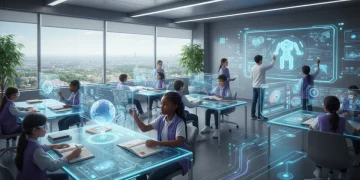
The concept of personalized learning has been a cornerstone of educational reform for years, but in 2026, it transcends traditional boundaries, evolving into hyper-personalized learning pathways. This advanced approach leverages sophisticated algorithms and vast datasets to create educational experiences meticulously tailored to each student’s unique cognitive profile, learning style, pace, and interests.
No longer is personalization a matter of simply adjusting assignments based on performance. Instead, it involves dynamic curriculum adjustments, real-time feedback loops, and content delivery mechanisms that adapt instantaneously to a student’s engagement levels and comprehension. This ensures that every learner receives optimal support and challenge, fostering deeper understanding and intrinsic motivation.
AI-Driven Adaptive Curricula
Artificial Intelligence (AI) is at the heart of hyper-personalized learning, enabling systems to not only identify learning gaps but also to predict future challenges and proactively recommend resources. These AI-driven adaptive curricula continuously evolve, providing a bespoke educational journey for every student.
- Real-time assessment: AI continuously evaluates student performance, identifying areas of strength and weakness without explicit testing.
- Content recommendation: Based on performance and learning style, AI suggests videos, articles, interactive simulations, and practice problems.
- Pacing adjustment: The learning pace is dynamically adjusted, allowing students to accelerate through mastered topics or spend more time on complex concepts.
- Interest-based modules: AI can detect student interests and integrate them into lessons, making learning more engaging and relevant.
Beyond the Classroom: Extending Personalized Support
Hyper-personalized learning extends its reach beyond the confines of the classroom. Students can access tailored resources and support anytime, anywhere, fostering a continuous learning environment. This flexibility is particularly beneficial for diverse student populations, including those with special needs or those in remote areas.
The integration of AI tutors and intelligent learning platforms ensures that personalized guidance is always available. These systems can answer questions, provide hints, and even engage in Socratic dialogues to deepen critical thinking skills. This ubiquitous support system empowers students to take greater ownership of their learning journey.
In essence, hyper-personalized learning pathways in 2026 represent a profound shift from a one-size-fits-all model to an infinitely adaptable educational ecosystem. This innovation promises to unlock the full potential of every K-12 student by providing an educational experience that truly resonates with their individual needs and aspirations.
The Integration of Artificial Intelligence (AI) in Teaching and Learning
Artificial Intelligence is no longer a futuristic concept but a present-day reality rapidly integrating into the K-12 educational landscape. By 2026, AI will be an indispensable tool, transforming both teaching methodologies and student learning experiences. Its applications range from administrative efficiencies to advanced pedagogical support, fundamentally altering the dynamics of the classroom.
The pervasive presence of AI in education aims to augment human capabilities, freeing up teachers from mundane tasks to focus more on individualized student interaction and creative curriculum development. For students, AI offers unprecedented access to personalized learning resources and immediate feedback, fostering a more engaging and effective learning environment.
AI as a Teacher’s Assistant
AI tools are increasingly serving as powerful assistants for educators, streamlining administrative tasks and providing valuable insights into student progress. This allows teachers to dedicate more time to instruction and mentorship.
- Automated grading: AI can efficiently grade objective assignments, providing instant feedback to students and saving teachers countless hours.
- Data analysis: AI platforms analyze student performance data to identify trends, predict at-risk students, and inform instructional strategies.
- Content creation support: AI assists in generating diverse learning materials, from quizzes and worksheets to lesson plans, tailored to specific learning objectives.
- Communication tools: AI-powered tools can draft personalized communications to parents, summarizing student progress and suggesting areas for collaboration.
AI for Enhanced Student Engagement and Support
For students, AI introduces dynamic and interactive learning opportunities that were previously unimaginable. These tools make learning more accessible, engaging, and responsive to individual needs.
Virtual AI tutors, for instance, can provide 24/7 support, offering explanations and practice problems tailored to a student’s specific queries. These tutors can adapt their teaching style, recognizing when a student is struggling and offering alternative approaches or simplified explanations.
Beyond tutoring, AI also powers intelligent game-based learning platforms that adapt difficulty levels in real-time, keeping students challenged and motivated. These games provide a fun and interactive way to master complex subjects, often incorporating elements of competition and collaboration.
The integration of AI into K-12 education by 2026 promises a future where learning is more efficient, equitable, and effective. It empowers both educators and students with tools that enhance pedagogical practices and accelerate academic achievement.
Immersive Learning Experiences: VR and AR in the Classroom
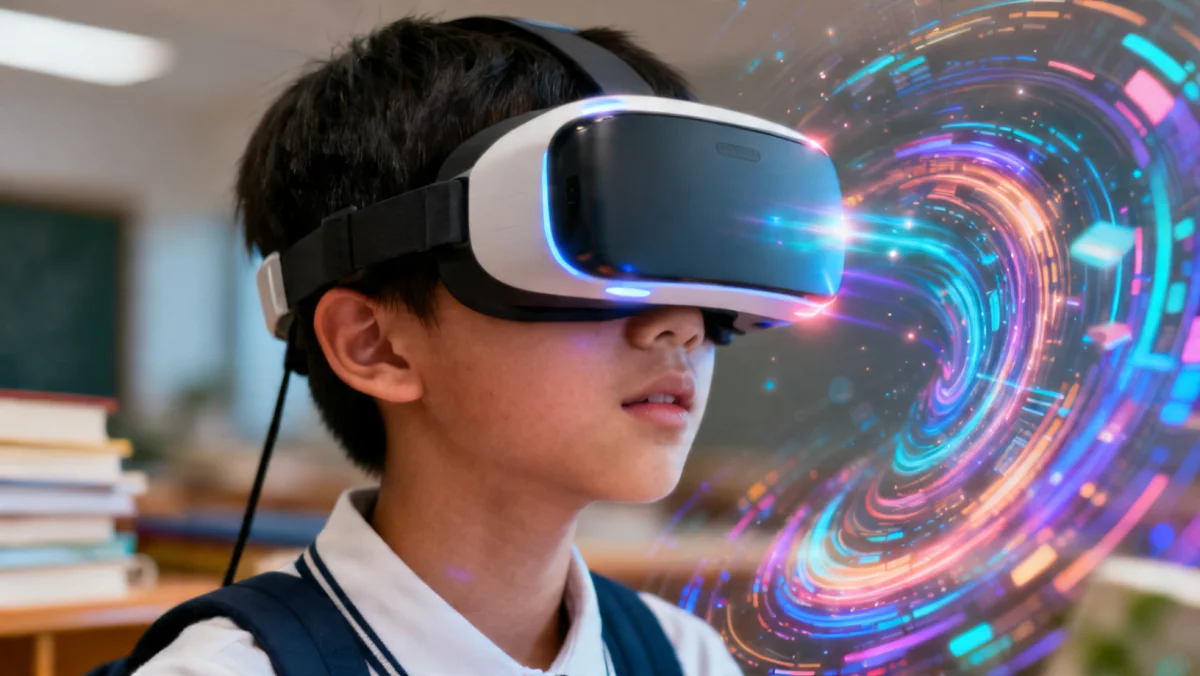
The boundaries of the traditional classroom are dissolving, replaced by expansive, immersive learning environments powered by Virtual Reality (VR) and Augmented Reality (AR). By 2026, these technologies will be integral to K-12 education, offering students unparalleled opportunities to explore, interact, and learn in ways that were once confined to science fiction.
Immersive learning transcends passive information consumption, transforming education into an active, experiential journey. Students can visit ancient civilizations, dissect virtual organs, or explore distant galaxies, all from the safety and convenience of their school desks. This level of engagement significantly boosts comprehension and retention, making abstract concepts tangible and exciting.
Virtual Reality for Experiential Learning
VR transports students into fully simulated environments, enabling them to experience concepts firsthand. This technology is particularly powerful for subjects that benefit from visual and spatial understanding.
- Historical reenactments: Students can ‘walk’ through historical events, experiencing life in different eras and cultures.
- Scientific simulations: Complex scientific phenomena, from molecular interactions to ecological systems, can be explored interactively.
- Field trips without travel: Virtual field trips to inaccessible or distant locations, like the Amazon rainforest or the surface of Mars, become routine.
- Skill development: Safe environments for practicing vocational skills or critical decision-making scenarios.
Augmented Reality for Enhanced Real-World Interaction
AR overlays digital information onto the real world, enriching existing learning materials and environments. This technology blends the physical and digital, creating interactive learning experiences without requiring full immersion.
Imagine students using tablets to scan a textbook page and watch 3D models of chemical structures pop out, or pointing their devices at a plant to see its biological processes animated in real-time. AR apps can transform a classroom into an interactive learning space, allowing digital content to interact with physical objects.
AR also facilitates collaborative learning, as multiple students can share and interact with the same augmented environment simultaneously. This fosters teamwork and problem-solving skills in a dynamic setting. The integration of VR and AR in K-12 classrooms by 2026 promises to make learning more dynamic, memorable, and deeply engaging, preparing students for a world increasingly shaped by digital innovation.
Data-Driven Instruction and Predictive Analytics
The proliferation of educational technology generates an unprecedented volume of data, and by 2026, K-12 institutions will be harnessing this information through data-driven instruction and predictive analytics. This trend moves beyond simple performance tracking, offering deep insights into student learning patterns, instructional effectiveness, and potential academic challenges.
Data-driven instruction empowers educators to make informed decisions, personalizing interventions and optimizing teaching strategies based on tangible evidence rather than intuition. Predictive analytics takes this a step further, identifying students at risk of falling behind before problems escalate, allowing for timely and targeted support.
Actionable Insights for Educators
Advanced analytics platforms aggregate and interpret data from various sources, including assignments, assessments, online interactions, and even emotional engagement indicators. This provides teachers with a holistic view of each student’s progress and needs.
- Identification of learning gaps: Detailed reports highlight specific concepts or skills where students are struggling.
- Effectiveness of teaching methods: Data can show which instructional approaches yield the best results for different groups of students.
- Resource allocation: Schools can optimize the deployment of support staff and learning materials based on identified needs.
- Curriculum refinement: Insights inform adjustments to curriculum design, ensuring alignment with student learning outcomes.
Early Intervention through Predictive Modeling
Predictive analytics uses machine learning algorithms to forecast future academic performance. By analyzing historical data and current engagement metrics, these systems can flag students who are likely to struggle with specific topics or even drop out.
This early warning system is invaluable for implementing proactive interventions, such as one-on-one tutoring, counseling, or adjusted learning plans. The goal is to prevent academic difficulties before they become significant barriers to success. These systems can also identify patterns that indicate a need for adjustments in teaching strategies or curriculum design across an entire cohort.
The embrace of data-driven instruction and predictive analytics in 2026 signifies a commitment to precision education. By leveraging the power of data, K-12 schools can create more responsive, effective, and equitable learning environments, ensuring every student has the opportunity to thrive.
The Evolution of Digital Citizenship and Cybersecurity Education
As technology becomes more deeply embedded in K-12 education, the imperative for robust digital citizenship and cybersecurity education grows exponentially. By 2026, these will not be peripheral topics but core components of the curriculum, equipping students with the knowledge and skills to navigate the digital world safely, ethically, and responsibly.
The digital age presents both immense opportunities and significant risks. Students need to understand not only how to use technology effectively for learning but also how to protect their privacy, identify misinformation, engage respectfully online, and recognize cyber threats. This holistic approach ensures they become informed and resilient digital citizens.
Core Components of Digital Citizenship
Digital citizenship education in 2026 will encompass a broad range of topics, moving beyond basic internet safety to cover complex ethical and societal implications of technology use.
- Online safety and privacy: Understanding data privacy, secure password practices, and recognizing phishing attempts.
- Digital etiquette and communication: Promoting respectful online interactions, understanding consequences of cyberbullying, and responsible social media use.
- Media literacy: Developing critical thinking skills to evaluate online information, identify fake news, and understand digital biases.
- Digital rights and responsibilities: Learning about intellectual property, copyright, and the ethical use of digital content.
Essential Cybersecurity Skills for All Students
Given the increasing prevalence of cyber threats, basic cybersecurity awareness and skills will be considered essential for all K-12 students, not just those pursuing technology careers. This education empowers them to protect themselves and contribute to a safer digital community.
Curricula will include practical modules on identifying malware, understanding secure network practices, and the importance of software updates. Students will also learn about the broader implications of cybersecurity for national security and economic stability, fostering a generation that is vigilant and proactive in protecting digital assets.
Furthermore, schools will implement advanced cybersecurity measures to protect student data and educational systems, providing a secure foundation upon which digital learning can thrive. This dual approach of educating students and securing infrastructure underscores the critical role digital citizenship and cybersecurity education will play in K-12 by 2026.
Flexible Learning Environments and Hybrid Models
The educational landscape has irrevocably shifted towards greater flexibility, and by 2026, flexible learning environments and hybrid models will be standard practice across K-12 education. This evolution is driven by the need for resilience, accessibility, and the recognition that diverse students thrive in varied learning settings.
Hybrid models, which blend in-person and remote instruction, offer the best of both worlds, providing structured classroom interaction alongside the flexibility and personalized pace of online learning. These environments are designed to cater to different learning styles and circumstances, ensuring continuity and engagement regardless of external factors.
Designing Adaptive Learning Spaces
School infrastructure will adapt to support these flexible models, featuring classrooms equipped with advanced technology for seamless integration of remote learners and in-person collaboration.
- Smart classrooms: Equipped with high-definition cameras, microphones, and interactive displays to facilitate hybrid learning.
- Flexible furniture: Modular designs allow for easy reconfiguration of learning spaces to support individual, small group, or whole-class activities.
- Dedicated online learning zones: Spaces within schools designed for focused remote work, with robust internet access and technical support.
- Outdoor learning areas: Utilizing natural environments for instruction, leveraging technology to extend digital resources outdoors.
Leveraging Technology for Seamless Transitions
The success of flexible and hybrid models hinges on robust technological infrastructure and intuitive platforms that support both synchronous and asynchronous learning. Learning Management Systems (LMS) will become even more sophisticated, serving as central hubs for all educational activities.
These platforms will integrate communication tools, digital content libraries, assignment submission portals, and virtual collaboration spaces. Teachers will be proficient in using these tools to deliver engaging lessons, provide timely feedback, and monitor student progress across both physical and virtual settings. The emphasis will be on creating a cohesive learning experience, regardless of where the student is physically located.
The widespread adoption of flexible learning environments and hybrid models by 2026 underscores a commitment to adaptable and inclusive K-12 education. This approach ensures that learning remains accessible, engaging, and effective for all students, preparing them for a future that demands adaptability and technological fluency.
| Key Trend | Brief Description |
|---|---|
| Hyper-Personalized Learning | AI-driven pathways adapting to individual student needs, pace, and interests for optimal engagement. |
| AI Integration | AI assists teachers with administrative tasks and provides students with personalized learning support and feedback. |
| Immersive Learning (VR/AR) | Virtual and Augmented Reality create engaging, experiential learning environments for deeper understanding. |
| Data-Driven Instruction | Utilizing analytics for informed decisions, personalized interventions, and predictive modeling for student success. |
Frequently Asked Questions About K-12 EdTech in 2026
AI will transform teacher roles by automating administrative tasks like grading and data analysis. This shift allows educators to focus more on personalized student interaction, mentorship, and creative curriculum development, enhancing their capacity to address individual student needs and foster deeper learning experiences.
Immersive learning offers unparalleled experiential opportunities, making abstract concepts tangible. Students can explore historical events, conduct virtual science experiments, and take virtual field trips, leading to increased engagement, deeper understanding, and significantly improved knowledge retention compared to traditional methods.
Hyper-personalized learning, powered by advanced AI, dynamically adapts curricula and content in real-time to each student’s unique cognitive profile, learning style, pace, and interests. Unlike traditional personalization, it offers continuous, instantaneous adjustments, ensuring optimal challenge and support for every learner.
Data-driven instruction, especially with predictive analytics, uses algorithms to identify students at risk of falling behind before problems escalate. By analyzing performance and engagement data, schools can implement early, targeted interventions like tutoring or adjusted learning plans, proactively preventing academic difficulties and improving outcomes.
Digital citizenship education is crucial to equip students with skills to navigate the digital world safely and ethically. It covers online safety, privacy, media literacy, digital etiquette, and cybersecurity, preparing them to be responsible and resilient online citizens in an increasingly technology-dependent society, mitigating risks like misinformation and cyber threats.
Conclusion
The landscape of K-12 education in 2026 is being dynamically shaped by technological advancements that promise a more engaging, personalized, and effective learning experience. From hyper-personalized learning pathways and the pervasive integration of AI to immersive VR/AR environments and sophisticated data-driven instruction, these innovations are not merely tools but transformative forces. They are redefining the roles of educators and empowering students to become active participants in their learning journeys, while also emphasizing critical digital citizenship and flexible learning models. By embracing these trends, K-12 institutions are poised to cultivate a generation of learners who are not only academically proficient but also digitally literate, adaptable, and prepared for the complexities of the future.