Medicaid Expansion 2026: Eligibility & Healthcare Access

Medicaid Expansion in 2026 significantly broadens healthcare access for millions in the United States by adjusting eligibility levels, ensuring more low-income individuals and families can receive essential medical services.
As we navigate the complexities of healthcare in the United States, understanding programs designed to support vulnerable populations becomes crucial. This article delves into Medicaid Expansion in 2026, exploring its profound implications for eligibility, healthcare access, and the overall well-being of millions of Americans. What does this mean for you or someone you know?
The Foundations of Medicaid Expansion
Medicaid, a joint federal and state program, provides health coverage to millions of low-income Americans. Its expansion under the Affordable Care Act (ACA) has been a pivotal policy shift, significantly altering the landscape of healthcare access across the nation. In 2026, the ongoing evolution of this expansion continues to shape who qualifies and what services they can receive.
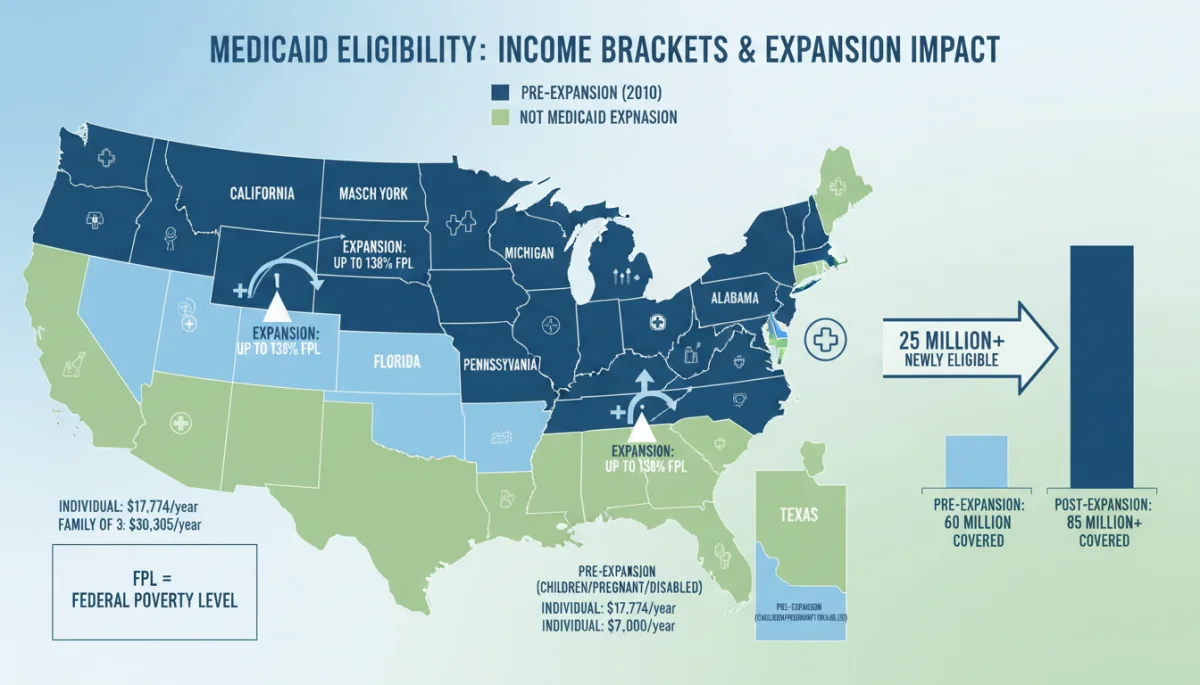
Understanding the origins of Medicaid expansion is key to appreciating its current and future impact. Historically, Medicaid primarily covered specific low-income groups, such as pregnant women, children, and individuals with disabilities. The ACA sought to broaden this scope, allowing states to expand eligibility to nearly all non-elderly adults with incomes up to 138% of the federal poverty level (FPL).
Historical Context and Evolution
The initial implementation of the ACA’s Medicaid expansion faced legal challenges, leading to a Supreme Court decision that made expansion optional for states. This resulted in a patchwork of coverage across the U.S., with some states expanding and others opting out. Over the years, more states have embraced expansion, recognizing its benefits in reducing uninsured rates and improving health outcomes.
- Pre-ACA Medicaid: Limited to specific categories of low-income individuals.
- ACA’s Vision: Universal coverage for non-elderly adults up to 138% FPL.
- State-by-State Adoption: Varied implementation due to Supreme Court ruling.
- Growing Acceptance: Increasing number of states have expanded over time.
The journey of Medicaid expansion has been one of continuous adaptation and reevaluation. Each year brings new insights into its effectiveness and areas for improvement. In 2026, we see a mature program, yet one still subject to legislative and economic forces that can alter its trajectory and impact on healthcare for millions.
The ongoing commitment to expanding Medicaid reflects a broader societal goal: ensuring that essential healthcare services are not a luxury but a fundamental right. This foundational understanding sets the stage for exploring the specific changes and implications coming in 2026.
New Eligibility Levels in 2026
The year 2026 brings refined eligibility criteria for Medicaid Expansion, impacting who qualifies for health coverage. These adjustments are often tied to shifts in the Federal Poverty Level (FPL) and state-level policy decisions, aiming to capture more individuals and families who previously fell into the coverage gap.
For individuals and families, knowing these new thresholds is paramount. The FPL is a set of income cutoffs determined by the federal government, used to define poverty for various programs. Medicaid expansion typically covers adults with incomes up to 138% of the FPL, but states can sometimes implement slight variations or additional criteria.
Understanding the Federal Poverty Level (FPL)
The FPL is annually updated, and these changes directly influence Medicaid eligibility. In 2026, updated FPL figures will mean that individuals and families with slightly higher incomes than in previous years may now qualify for Medicaid. This is a crucial detail for many who were previously just above the threshold.
- Single Individual: Income threshold likely to increase, offering coverage to more single adults.
- Family of Four: Expanded income limits mean more working families can access benefits.
- Special Populations: Some states might introduce or modify eligibility for specific groups, such as those with certain chronic conditions.
These new levels are designed to be more inclusive, addressing the economic realities faced by many low-income households. The goal is to reduce the number of uninsured individuals and ensure that financial hardship does not prevent access to necessary medical care. It’s a continuous effort to align healthcare policy with economic needs.
Staying informed about these specific income limits as they are officially released is vital. Government websites and local Medicaid offices will provide the most accurate and up-to-date information for residents in each state. These new eligibility levels represent a significant step towards broader healthcare access across the nation.
Enhanced Healthcare Access for Millions
The primary objective of Medicaid Expansion is to dramatically improve healthcare access for millions of Americans who would otherwise remain uninsured or underinsured. By broadening eligibility, the program ensures that preventative care, chronic disease management, and emergency services are within reach, leading to healthier communities.
When more people have health insurance, they are more likely to seek medical care proactively, rather than waiting until a condition becomes severe. This shift from reactive to proactive healthcare not only improves individual health outcomes but also reduces the burden on emergency rooms, which often serve as a last resort for the uninsured.
Benefits of Expanded Coverage
The advantages of enhanced healthcare access extend far beyond individual doctor visits. It contributes to a more stable and productive workforce, as healthier individuals are better able to maintain employment and contribute to their communities. It also reduces the financial strain on families, preventing medical debt from spiraling out of control.
- Preventative Care: Increased access to screenings, vaccinations, and wellness visits.
- Chronic Disease Management: Better management of conditions like diabetes, hypertension, and asthma.
- Mental Health Services: Expanded coverage for mental health and substance abuse treatment.
- Reduced Medical Debt: Less financial burden on low-income families due to unforeseen medical expenses.
States that have expanded Medicaid have consistently reported lower rates of uninsured residents and significant improvements in health metrics. This expansion acts as a vital safety net, protecting individuals from the devastating financial and health consequences of being uninsured. It’s a testament to the power of policy in driving public health improvements.
The enhanced access provided by Medicaid Expansion in 2026 reinforces the idea that health is a collective asset. When more people are healthy, society as a whole benefits, creating a stronger, more resilient nation. This broad impact makes the expansion a cornerstone of public health strategy.
Impact on State Budgets and Healthcare Systems
While the benefits of Medicaid Expansion for individuals are clear, its impact on state budgets and the broader healthcare system is a complex and often debated topic. The federal government covers a significant portion of the expansion costs, but states still bear a share, which requires careful financial planning and resource allocation.
The federal matching rate for expansion populations is typically very generous, often starting at 100% and gradually decreasing to 90% over time. This substantial federal contribution is a major incentive for states to expand coverage, as it allows them to draw down federal funds that might otherwise go unused.
Financial Implications for States
Despite federal support, states must still budget for their share of the expansion costs. This can lead to debates about fiscal responsibility and priorities. However, many studies have shown that the economic benefits of expansion, such as increased economic activity and reduced uncompensated care costs, often offset the state’s financial contribution.
- Federal Funding: High federal matching rates significantly reduce state burden.
- Reduced Uncompensated Care: Hospitals experience fewer unpaid bills from uninsured patients.
- Economic Stimulation: Increased healthcare spending can boost local economies.
- Budgetary Pressures: States must still allocate funds for their share, which can be a point of contention.
Beyond direct budgetary impacts, Medicaid expansion also influences the healthcare delivery system. It can lead to increased demand for services, requiring hospitals and clinics to adapt by hiring more staff, expanding facilities, and improving infrastructure. This can be a challenge but also an opportunity for growth and modernization within the healthcare sector.
Ultimately, the impact on state budgets and healthcare systems is a dynamic interplay of costs and benefits. While there are initial investments, the long-term gains in public health, economic stability, and reduced financial strain on healthcare providers often make a compelling case for continued expansion.
Challenges and Ongoing Debates
Despite its widespread benefits, Medicaid Expansion continues to face challenges and fuel ongoing debates in the United States. These discussions often center on funding, program integrity, and the balance between state autonomy and federal mandates. Understanding these complexities is vital for a complete picture of the program in 2026.
One of the persistent challenges is the political divide surrounding Medicaid expansion. While many states have embraced it, others remain resistant, citing concerns about costs, dependency on federal funding, and philosophical objections to government-funded healthcare. This political landscape can create uncertainty and disparities in coverage.
Key Areas of Contention
Beyond politics, practical challenges exist. Ensuring that newly eligible individuals are aware of their options and can successfully enroll in Medicaid requires robust outreach and streamlined application processes. Additionally, managing the increased demand for healthcare services can strain existing infrastructure, particularly in rural areas.
- Political Opposition: Resistance in some states due to ideological or fiscal concerns.
- Enrollment Challenges: Ensuring eligible individuals successfully enroll and retain coverage.
- Provider Capacity: Strain on healthcare providers to meet increased demand, especially in underserved areas.
- Program Integrity: Ongoing efforts to prevent fraud and ensure efficient use of funds.
Debates also frequently arise regarding specific aspects of the program, such as work requirements or other eligibility conditions that some states attempt to implement. These often lead to legal battles and can create additional barriers for those seeking coverage. The goal remains to strike a balance between access and program sustainability.
As we look to 2026, these challenges and debates will undoubtedly continue to shape the future of Medicaid Expansion. Addressing them effectively will require ongoing collaboration between federal and state governments, healthcare providers, and community organizations to ensure the program truly serves its intended purpose.
Navigating Medicaid in 2026: What You Need to Know
For individuals and families, navigating the intricacies of Medicaid in 2026 can seem daunting, but armed with the right information, the process can be straightforward. Understanding how to determine eligibility, apply for benefits, and utilize the coverage effectively is crucial for maximizing its potential.
The first step for anyone considering Medicaid is to check their state’s specific eligibility requirements. While the federal framework provides guidelines, states can have variations in income thresholds and additional criteria. Most states offer online portals where individuals can input their information to get a preliminary assessment of their eligibility.
Application and Enrollment Process
The application process typically involves providing documentation of income, household size, and residency. Many states have simplified this process, allowing for online applications, phone assistance, and in-person help through local agencies or navigators. It’s important to gather all necessary documents beforehand to expedite the application.
- Check State Eligibility: Verify income and household size against state-specific criteria.
- Gather Documents: Prepare proof of income, residency, and identification.
- Apply Online or In-Person: Utilize state health exchange websites or local Medicaid offices.
- Seek Assistance: Navigators and community health workers can provide free application help.
Once enrolled, understanding the scope of covered services is equally important. Medicaid typically covers a comprehensive range of benefits, including doctor visits, hospital stays, prescription drugs, mental health services, and preventative care. Familiarizing yourself with your specific plan and provider network will ensure you receive the care you need.
Staying informed about any changes to your eligibility or benefits is also vital. Regular communication with your state Medicaid office and reviewing annual notices will help you maintain continuous coverage. Medicaid in 2026 is designed to be a supportive system, and proactive engagement can help individuals fully leverage its advantages.
| Key Point | Brief Description |
|---|---|
| New Eligibility Levels | Adjustments to Federal Poverty Level (FPL) thresholds in 2026 will allow more low-income adults and families to qualify for Medicaid. |
| Enhanced Access | Medicaid Expansion significantly boosts access to preventative, chronic, and mental health services for millions previously uninsured. |
| State Impact | Federal funding largely covers expansion costs, reducing uncompensated care and stimulating local economies, despite state budgetary contributions. |
| Navigating Enrollment | Individuals should check state-specific criteria, gather necessary documents, and utilize online or in-person resources for application and enrollment. |
Frequently Asked Questions About Medicaid Expansion 2026
In 2026, Medicaid eligibility levels are primarily influenced by updated Federal Poverty Level (FPL) guidelines. These adjustments mean that individuals and families with slightly higher incomes may now qualify for coverage, expanding the safety net for more low-income Americans.
Medicaid Expansion significantly improves healthcare access by covering preventative care, chronic disease management, and mental health services for millions. This leads to earlier treatment, reduced emergency room reliance, and overall healthier communities by ensuring essential services are affordable.
As of 2026, the majority of U.S. states have expanded Medicaid under the Affordable Care Act. However, a few states have not. It is crucial to check specific state government websites or Medicaid offices for the most current participation status and local eligibility rules.
Typically, you will need to provide proof of income, residency, household size, and identification. This might include pay stubs, tax returns, utility bills, a driver’s license, or a state ID. Specific requirements can vary by state, so always check local guidelines.
Yes, while the federal government covers a substantial portion of the costs (often 90%), states contribute the remainder. However, studies suggest that reduced uncompensated care costs and economic benefits often mitigate the state’s financial outlay, making it a net positive for many.
Conclusion
Medicaid Expansion in 2026 represents a continued commitment to ensuring healthcare access for millions of low-income Americans. With updated eligibility levels and a focus on comprehensive coverage, the program aims to strengthen the health and financial stability of communities across the United States. Navigating these changes requires awareness and proactive engagement, but the benefits of expanded access to essential medical services are undeniable. As the landscape evolves, understanding your options and advocating for inclusive healthcare policies remains paramount for a healthier future.