2026 Real Estate Trends: Federal Policy & Investment Opportunities

The 2026 real estate market will be profoundly influenced by federal housing policy shifts, driving new investment opportunities in affordable housing, sustainable development, and evolving urban and suburban landscapes.
As we approach 2026, the landscape of the American housing market continues its dynamic evolution. Understanding the intricate interplay between economic forces, demographic shifts, and crucial government interventions is paramount for both homeowners and investors. This article delves into the anticipated real estate 2026 trends, offering a comprehensive look at how federal housing policies are poised to reshape investment opportunities across the nation.
The evolving federal housing policy landscape
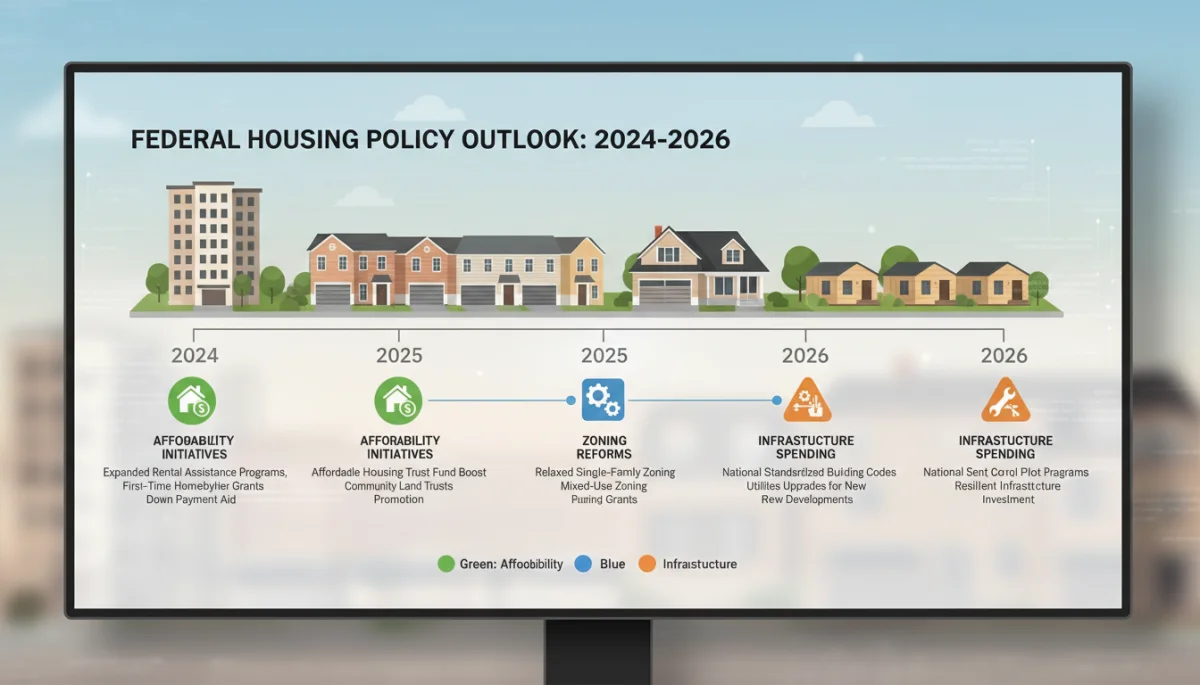
Federal housing policy in 2026 is expected to intensify its focus on affordability and equitable access, responding to persistent supply shortages and rising housing costs. These policy directions will not only influence homeownership rates but also steer capital towards specific types of real estate development and investment.
Policymakers are increasingly recognizing that a stable housing market is foundational to economic growth and social equity. Therefore, legislative efforts are anticipated to address systemic issues rather than merely offering short-term fixes. This proactive stance suggests a more predictable, albeit potentially complex, regulatory environment for real estate stakeholders.
Key policy pillars to watch
Several areas are likely to see significant federal attention, directly impacting market dynamics. These pillars aim to create a more resilient and inclusive housing ecosystem.
- Affordable housing initiatives: Expect expanded tax credits, direct subsidies, and grant programs aimed at increasing the supply of affordable rental and for-sale housing units.
- Zoning and land use reform: Federal incentives may push local governments to relax restrictive zoning laws, encouraging higher-density development and mixed-use projects, especially in urban cores and transit-oriented areas.
- Infrastructure investment: Continued federal funding for infrastructure will unlock new development potential in previously underserved or less accessible regions, fostering growth in secondary and tertiary markets.
These policy shifts are designed to alleviate the housing crisis by tackling both demand-side pressures and supply-side constraints. Investors should closely monitor legislative developments to identify early opportunities arising from these targeted interventions.
In conclusion, the federal government’s approach to housing in 2026 will likely be characterized by a multi-pronged strategy focused on boosting supply, enhancing affordability, and promoting sustainable development. These policy changes will create both challenges and significant new avenues for strategic investment.
Interest rates and mortgage market forecast
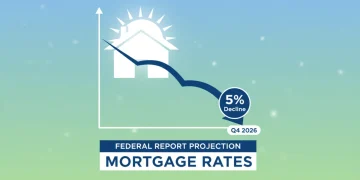
The trajectory of interest rates remains a critical determinant for the real estate market. As we look towards 2026, economic indicators suggest a period of potential stabilization, but with underlying volatility influenced by inflation dynamics and global economic performance. Mortgage rates, directly tied to these broader economic forces, will dictate borrowing costs and, consequently, buyer affordability and investment returns.
Central banks globally are navigating a delicate balance between controlling inflation and supporting economic growth. This balancing act will directly translate into the cost of capital for real estate transactions. Understanding the nuances of these monetary policies is essential for forecasting market behavior.
Projected rate movements and their impact
While precise predictions are challenging, consensus suggests a moderate and potentially more predictable interest rate environment compared to the rapid fluctuations of recent years. However, any unexpected economic shocks could alter this outlook significantly.
- Stabilizing rates: A period of relative stability in interest rates could bring more certainty to the housing market, encouraging both buyers and sellers to re-engage with greater confidence.
- Affordability pressures: Even stable rates, if elevated, will continue to exert pressure on affordability, particularly for first-time homebuyers and in high-cost-of-living areas.
- Refinancing opportunities: Depending on the pace of rate adjustments, there might be windows of opportunity for homeowners to refinance existing mortgages, freeing up capital for other investments or home improvements.
The mortgage market in 2026 will also likely see continued innovation, with new financial products potentially emerging to address specific market needs, such as adjustable-rate mortgages with more consumer protections or shared equity programs. Lenders will adapt to the prevailing rate environment by tailoring their offerings to remain competitive and attractive to diverse borrower profiles.
Ultimately, the interest rate and mortgage market forecast for 2026 points to a landscape where careful financial planning and adaptability will be key. Investors and homebuyers alike will need to remain attuned to economic signals to make informed decisions.
Demographic shifts and housing demand
Demographic trends are powerful, underlying currents that shape long-term housing demand. In 2026, the United States will continue to experience significant shifts in its population composition, influencing everything from the types of homes in demand to the geographic areas experiencing growth or decline. Understanding these movements is crucial for anticipating future market needs.
The interplay of generational preferences, migration patterns, and evolving household structures creates a complex tapestry of demand. These factors dictate where people want to live, what kind of housing they seek, and how much they are willing to pay.
Generational influences on housing
Each major demographic cohort has distinct housing needs and preferences that will play out in the 2026 market.
- Millennials: Many millennials are now in their prime homebuying years, driving demand for starter homes, suburban properties, and increasingly, family-friendly urban environments. Their preference for walkable communities and access to amenities will continue to shape development.
- Generation Z: As Gen Z enters the workforce and housing market, their unique values—such as sustainability, technological integration, and flexibility (e.g., co-living spaces)—will begin to influence rental markets and entry-level home purchases.
- Baby boomers: A significant portion of the boomer generation will be looking to downsize, age in place, or move to active adult communities, creating demand for smaller, accessible homes and specialized senior living facilities.
Beyond generational shifts, internal migration patterns, often driven by remote work flexibility and affordability concerns, will continue to redistribute population across states and regions. Sun Belt states and emerging secondary cities are likely to see sustained growth, while some traditional urban centers might experience shifts in their demographic makeup.
In essence, demographic shifts in 2026 will underscore the need for a diverse housing stock that caters to a wide range of ages, incomes, and lifestyles. Investors who align their strategies with these fundamental population movements will find promising opportunities.
Investment opportunities in residential real estate
The residential real estate sector in 2026 presents a multifaceted landscape for investors, shaped by the aforementioned policy shifts, interest rate environment, and demographic trends. Identifying lucrative opportunities requires a keen understanding of these converging forces and a willingness to adapt investment strategies accordingly.
While traditional single-family homes remain a cornerstone of the market, emerging niches and evolving consumer preferences are creating new avenues for capital deployment. The key is to look beyond the obvious and identify areas of unmet demand or anticipated growth.
High-potential residential segments
Several residential segments are poised for significant investor interest in 2026, offering diverse risk-reward profiles.
- Affordable housing development: Driven by federal incentives and persistent demand, developing or acquiring affordable housing units, particularly multi-family properties, will likely offer stable returns and social impact.
- Build-to-rent communities: As homeownership becomes more challenging for some demographics, build-to-rent single-family and townhome communities cater to those seeking the space and privacy of a house without the upfront costs of ownership.
- Age-restricted communities and senior living: The aging population continues to fuel demand for specialized housing solutions, from active adult communities to assisted living facilities, representing a long-term growth sector.
- Secondary and tertiary markets: Regions experiencing an influx of remote workers and businesses, often characterized by lower costs of living and growing infrastructure, offer attractive yields and appreciation potential compared to overheated primary markets.
Investors should also consider the increasing importance of sustainable and energy-efficient housing. Properties that incorporate green building practices and smart home technology may command higher rents and sale prices, appealing to environmentally conscious tenants and buyers.
In summary, residential real estate investment in 2026 will reward those who focus on segments addressing critical housing needs, adapt to evolving lifestyle preferences, and leverage incentives for sustainable and affordable development.
Commercial real estate outlook and adaptation
Commercial real estate (CRE) is undergoing a profound transformation, with trends accelerated by recent global events. In 2026, the sector will continue to adapt to new work patterns, consumption habits, and technological advancements. Investors in CRE must be agile, discerning, and forward-thinking to capitalize on emerging opportunities and mitigate risks.
The traditional pillars of CRE—office, retail, industrial, and multifamily—are each experiencing unique pressures and opportunities. Understanding these sector-specific dynamics is crucial for strategic investment decisions.
Key commercial real estate sectors
The performance and outlook for different CRE segments diverge significantly, offering varied investment propositions.
- Office: The office sector faces ongoing re-evaluation as hybrid work models become entrenched. Demand will likely shift towards flexible, amenity-rich spaces in prime locations, while older, less adaptable buildings may struggle. Repurposing underutilized office spaces into residential or mixed-use properties presents a significant opportunity.
- Retail: E-commerce continues to reshape retail, but physical retail is not obsolete. Experience-driven retail, local community hubs, and last-mile logistics centers supporting online sales are thriving. Investors should focus on properties that offer convenience, unique experiences, or serve as distribution points.
- Industrial: This sector remains robust, driven by e-commerce fulfillment, supply chain diversification, and the growth of advanced manufacturing. Warehouses, distribution centers, and specialized industrial facilities, especially those near transportation hubs, are expected to see continued strong demand.
- Hospitality: The hospitality sector is recovering, with leisure travel leading the way. Business travel may evolve, but demand for unique boutique hotels, extended-stay properties, and vacation rentals in desirable locations remains strong.
Furthermore, specialized CRE assets like data centers, life science labs, and medical office buildings are experiencing significant growth due to technological advancements and demographic needs. These niche sectors often offer higher yields and greater resilience to economic downturns.
In conclusion, the commercial real estate landscape in 2026 demands a nuanced approach. Successful investors will identify sectors aligning with long-term economic and social trends, embrace adaptive reuse, and prioritize properties that offer flexibility and meet evolving user needs.
Navigating risks and maximizing returns in 2026
While the 2026 real estate market offers numerous opportunities, it is also accompanied by inherent risks that require careful consideration. Economic uncertainties, regulatory changes, and unforeseen global events can all impact investment performance. A strategic approach involves not only identifying potential gains but also proactively managing downside risks to maximize long-term returns.
Successful navigation of the market will depend on thorough due diligence, diversification, and a deep understanding of local market dynamics. Blindly following trends without critical analysis can lead to suboptimal outcomes.
Strategies for risk mitigation and return optimization
Investors can employ several key strategies to enhance their chances of success in the 2026 real estate environment.
- Diversification: Spreading investments across different property types (residential, commercial), geographic locations, and risk profiles can buffer against market downturns in any single segment or region.
- Stay informed on policy: Closely monitor federal, state, and local housing policies, zoning changes, and infrastructure plans. These legislative actions can create or destroy value rapidly.
- Focus on value-add: Seek properties where strategic renovations, improved management, or repurposing can unlock significant additional value, rather than relying solely on market appreciation.
- Embrace technology: Utilize data analytics for market research, property management software for efficiency, and smart home technologies to attract tenants and buyers.
- Long-term perspective: Real estate is often a long-term investment. While short-term fluctuations can occur, a focus on fundamental demand drivers and patient capital deployment typically yields better results.
Additionally, understanding local economic indicators such as job growth, population migration, and income levels is paramount. What works in one market may not apply to another. Engaging with local experts, brokers, and community leaders can provide invaluable insights.
Ultimately, navigating the 2026 real estate market requires a blend of foresight, adaptability, and disciplined execution. By understanding the interplay of federal policies, economic factors, and demographic shifts, investors can position themselves to achieve robust returns while effectively managing the associated risks.
| Key Trend | Brief Description |
|---|---|
| Federal Policy Focus | Increased emphasis on affordability, zoning reform, and infrastructure spending to boost housing supply. |
| Interest Rate Stabilization | Potential for more predictable mortgage rates, influencing buyer affordability and refinancing opportunities. |
| Demographic Demand | Millennials entering prime homebuying years, Gen Z influencing rentals, and Boomers seeking downsizing/senior living. |
| CRE Adaptation | Office sector repurposing, strong industrial demand, and experience-driven retail growth. |
Frequently asked questions about 2026 real estate
Federal housing policies in 2026 are expected to introduce more programs aimed at increasing affordability and supply, potentially making homeownership more accessible for first-time buyers through expanded down payment assistance, tax credits, and incentives for developers to build entry-level homes.
In 2026, the industrial sector (warehouses, logistics) is generally viewed as robust due to e-commerce growth. Life sciences, data centers, and medical office buildings also offer stability. These sectors are less susceptible to economic fluctuations compared to traditional office or retail spaces.
While definitive predictions are difficult, the consensus suggests a period of relative interest rate stabilization through 2026, rather than dramatic rises or falls. Central banks will likely aim for a balance between inflation control and economic growth, leading to more predictable mortgage market conditions.
Sustainability will play an increasingly critical role. Properties with green certifications, energy-efficient features, and smart technologies will likely command higher valuations and attract more tenants and buyers. Federal incentives may also favor sustainable development practices, making them more attractive investment opportunities.
Yes, secondary and even tertiary markets are expected to remain strong investment opportunities in 2026. Driven by remote work flexibility, affordability, and continued population migration from larger cities, these markets often offer higher yields and greater growth potential compared to saturated primary markets.
Conclusion
The real estate market in 2026 is poised to be a complex yet rewarding landscape for those prepared to navigate its intricacies. Federal housing policies aimed at boosting affordability and supply will be a major driving force, creating new avenues for investment in residential and specialized commercial sectors. Understanding the interplay of interest rates, demographic shifts, and technological advancements will be crucial for identifying optimal opportunities and mitigating risks. By staying informed, diversifying portfolios, and adopting a long-term strategic perspective, investors can successfully capitalize on the evolving dynamics of the 2026 real estate market.