US Manufacturing Resurgence: Q1 2026 Output Soars 6%
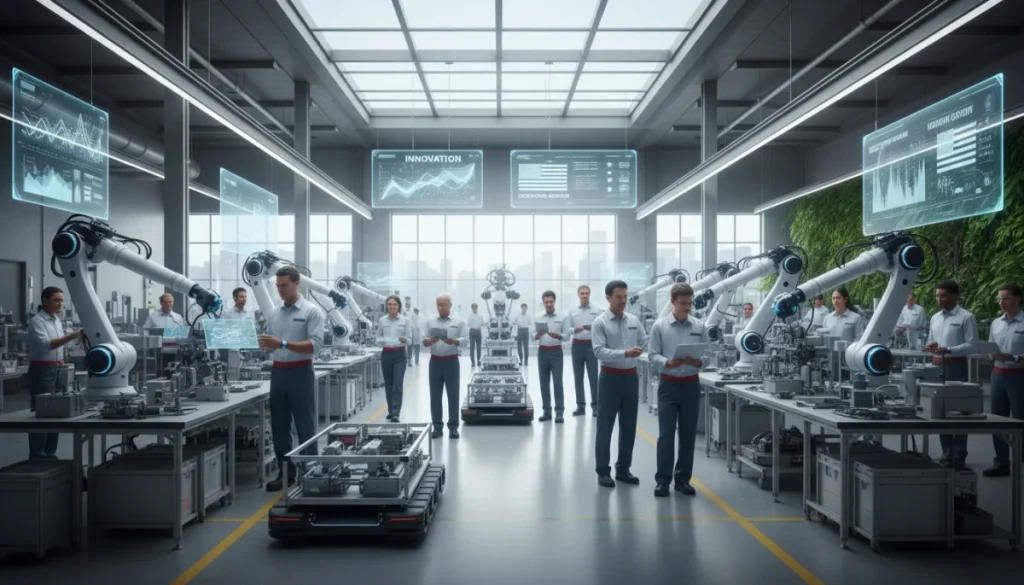
The US manufacturing resurgence saw a notable 6% increase in factory output during Q1 2026, underscoring significant economic strength and industrial vitality.
The latest economic data reveals a compelling narrative for American industry: US manufacturing resurgence with factory output growing by an impressive 6% in Q1 2026. This significant expansion signals robust economic strength and offers a promising outlook for the nation’s industrial future. What factors are driving this remarkable recovery, and what does it mean for the broader economy?
Understanding the Q1 2026 Manufacturing Surge
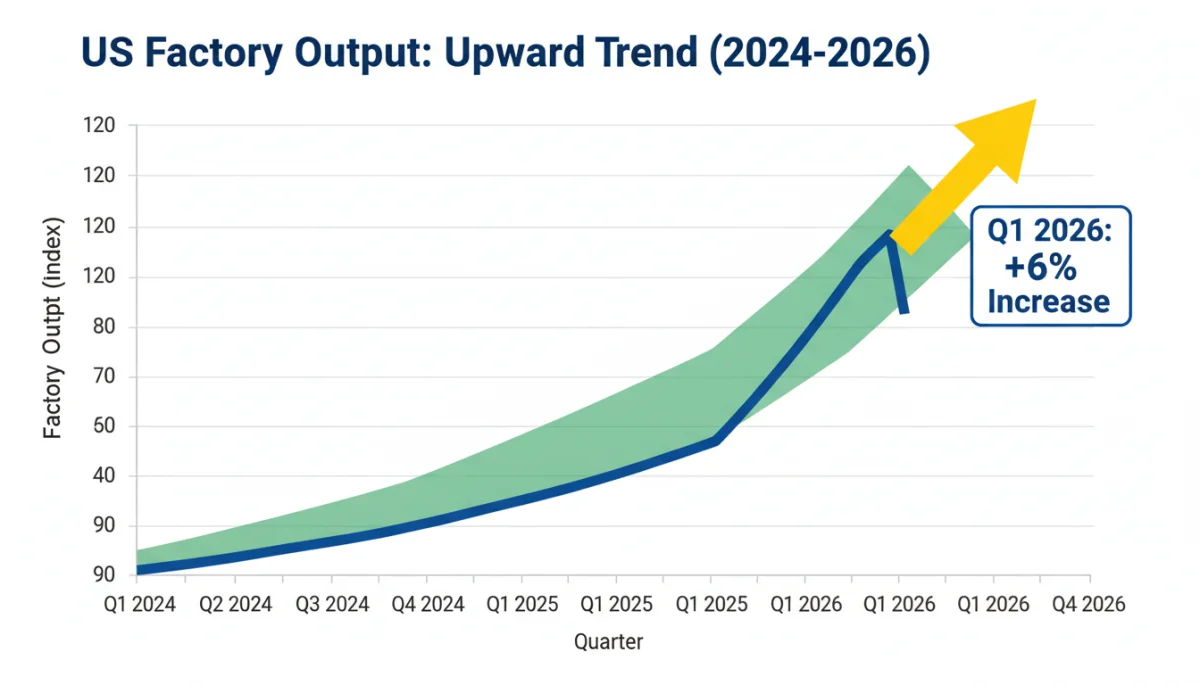
The first quarter of 2026 has delivered compelling evidence of a revitalized American industrial landscape. This 6% growth in factory output isn’t merely a statistic; it represents a tangible expansion in production capacity, a boost in employment, and a renewed confidence in domestic manufacturing capabilities. This surge is particularly noteworthy given the global economic complexities and supply chain challenges that have characterized recent years.
Key Drivers of Growth
Several critical factors have converged to fuel this impressive growth. Strategic investments in automation and advanced technologies have significantly enhanced efficiency, allowing factories to produce more with greater precision. Furthermore, a renewed focus on reshoring and nearshoring initiatives has brought production closer to home, mitigating risks associated with distant supply chains.
- Technological Adoption: Widespread integration of AI, IoT, and robotics in production lines.
- Supply Chain Resilience: Efforts to localize and diversify supply chains reduce vulnerabilities.
- Government Incentives: Policies and tax breaks encouraging domestic production and innovation.
- Skilled Workforce Development: Investment in training programs to equip workers with modern manufacturing skills.
The collective impact of these drivers has created a fertile ground for manufacturing expansion, demonstrating a proactive approach by businesses and policymakers alike to strengthen the industrial base. This foundational work laid the groundwork for the robust performance seen in Q1 2026.
Technological Innovation and Automation
At the heart of the current US manufacturing resurgence is an unwavering commitment to technological innovation and automation. Factories across the nation are no longer relying solely on traditional methods but are embracing the digital revolution to optimize every aspect of their operations. This shift is not just about replacing human labor but about augmenting it, enabling greater precision, speed, and customization.
The adoption of advanced robotics, artificial intelligence, and the Internet of Things (IoT) has transformed production lines. Smart sensors monitor equipment performance in real-time, predicting maintenance needs before failures occur. AI-driven systems analyze vast amounts of data to optimize processes, reduce waste, and improve product quality. This level of integration was unimaginable just a decade ago and is now a standard practice in leading American factories.
Impact of Industry 4.0
The principles of Industry 4.0 are fully at play, creating interconnected and intelligent manufacturing ecosystems. This includes additive manufacturing (3D printing) for rapid prototyping and specialized production, as well as virtual reality (VR) and augmented reality (AR) for training and remote assistance. These technologies empower workers, making their roles more analytical and less repetitive, contributing to a more engaged and skilled workforce.
- Predictive Maintenance: AI and IoT sensors reduce downtime and extend equipment life.
- Enhanced Quality Control: Automated inspection systems detect defects with unparalleled accuracy.
- Customization at Scale: Flexible production lines cater to individualized customer demands efficiently.
- Data-Driven Decision Making: Real-time analytics inform strategic operational and business choices.
The continuous integration of these cutting-edge technologies is not only driving efficiency but also positioning US manufacturing at the forefront of global innovation. This technological edge is a critical component of the sustained growth observed.
Reshoring and Supply Chain Resilience
The lessons learned from recent global disruptions have profoundly reshaped manufacturing strategies, placing a premium on reshoring and building resilient supply chains. This shift is a crucial element in the ongoing US manufacturing resurgence, ensuring that production is less vulnerable to international geopolitical events, natural disasters, or unexpected logistical bottlenecks.
Companies are actively re-evaluating their global footprint, choosing to bring production back to American soil or to friendly neighboring countries. This strategic pivot reduces transit times, lowers shipping costs, and provides greater oversight over quality and ethical labor practices. The move is not simply a reactive measure but a proactive investment in long-term stability and operational security.
Benefits of Domestic Production
Beyond immediate cost and logistical advantages, domestic production fosters a stronger national economy. It creates jobs, stimulates local economies, and encourages innovation within the country. Furthermore, it strengthens national security by ensuring critical goods, from medical supplies to defense components, are produced reliably within the United States.
- Reduced Lead Times: Quicker delivery of goods to market due to shorter distances.
- Greater Control: Enhanced oversight of production processes, quality, and labor standards.
- Economic Stimulus: Creation of domestic jobs and investment in local communities.
- Risk Mitigation: Less exposure to international trade disputes and supply chain disruptions.
The commitment to reshoring is a long-term strategy that not only underpins the current growth but also fortifies the US manufacturing sector against future uncertainties, making it a more robust and dependable engine of economic activity.
Government Policies and Economic Support
The sustained US manufacturing resurgence in Q1 2026 is not solely an industry-driven phenomenon; it is significantly bolstered by supportive government policies and strategic economic initiatives. Recognizing the critical role of manufacturing in national prosperity and security, policymakers have implemented measures designed to incentivize domestic production, foster innovation, and develop a skilled workforce.
These policies range from targeted tax credits for companies investing in US-based manufacturing facilities and R&D, to grants for workforce development programs that train individuals in advanced manufacturing techniques. Infrastructure investments, particularly in transportation and digital connectivity, also play a vital role in creating an environment where factories can operate efficiently and compete globally.
Strategic Initiatives
Key legislative actions and federal programs have been instrumental. For instance, initiatives aimed at boosting semiconductor production or clean energy manufacturing have provided significant capital and regulatory support. Such targeted interventions help de-risk private investment and accelerate the adoption of new technologies and production capabilities within the country.
- Tax Incentives: Credits for R&D, capital expenditures, and job creation in manufacturing.
- Infrastructure Spending: Investments in transportation networks and energy grids supporting industrial operations.
- Workforce Development Programs: Funding for vocational training and STEM education relevant to modern industry.
- Regulatory Streamlining: Efforts to simplify processes for establishing and expanding manufacturing facilities.
The synergy between government support and industry ambition creates a powerful feedback loop, where policy encourages growth, and growth, in turn, validates and informs future policy. This collaborative approach is essential for maintaining momentum in the manufacturing sector.
Workforce Development and Skill Enhancement
A crucial, often understated, aspect of the US manufacturing resurgence is the ongoing transformation of its workforce. As factories become more automated and technologically advanced, the demand for traditional manual labor shifts towards roles requiring specialized skills in robotics, data analytics, and advanced machinery operation. This evolution necessitates a robust commitment to workforce development and continuous skill enhancement.
Educational institutions, industry associations, and government agencies are collaborating to create curricula and training programs that meet the demands of modern manufacturing. Apprenticeships are gaining renewed prominence, offering hands-on experience combined with theoretical knowledge. These programs ensure a steady pipeline of skilled workers capable of operating and maintaining the sophisticated equipment that drives today’s factories.
Adapting to New Demands
The focus is not just on new entrants to the workforce but also on upskilling and reskilling existing employees. Companies are investing in internal training initiatives to ensure their current staff can adapt to new technologies and processes. This continuous learning environment fosters a culture of innovation and resilience, making the workforce a key competitive advantage for US manufacturing.
- STEM Education: Emphasis on science, technology, engineering, and mathematics from an early age.
- Vocational Training: Partnerships between schools and industry to provide practical skills.
- Apprenticeship Programs: Structured on-the-job training combined with classroom instruction.
- Lifelong Learning Initiatives: Companies offering continuous professional development for employees.
By investing in its human capital, the US manufacturing sector is not only securing its present but also building a strong foundation for future growth and adaptability in an ever-evolving global economy.
Global Competitiveness and Future Outlook
The remarkable 6% growth in Q1 2026 positions the US manufacturing resurgence as a significant force in the global economy. This performance indicates that American factories are not only recovering but are also enhancing their competitiveness on the international stage. Factors such as technological superiority, robust supply chains, and a skilled workforce contribute to a compelling value proposition for US-made goods.
Looking ahead, the outlook for US manufacturing appears increasingly positive. Continued investment in R&D, sustainable practices, and strategic international partnerships will further solidify this position. The ability to innovate rapidly and adapt to changing market demands will be crucial in maintaining this upward trajectory.
Challenges and Opportunities
While the momentum is strong, challenges remain, including geopolitical uncertainties and the ongoing need to attract and retain talent. However, these challenges also present opportunities for further innovation and strategic differentiation. The focus on high-value manufacturing, such as advanced materials and specialized components, allows the US to compete effectively even in a globalized market.
- Innovation Leadership: Pioneering new products and production methods.
- Sustainability Practices: Adopting eco-friendly processes and materials for global appeal.
- Strategic Alliances: Collaborating with international partners for market access and shared expertise.
- Talent Attraction: Developing attractive career paths to draw the next generation into manufacturing.
The sustained growth and strategic direction suggest that US manufacturing is not just experiencing a temporary upswing but is rather embarking on a long-term path of strength and innovation, contributing significantly to the nation’s economic vitality.
| Key Aspect | Brief Description |
|---|---|
| Q1 2026 Growth | US factory output increased by 6%, indicating robust economic health. |
| Technological Adoption | Integration of AI, robotics, and IoT drives efficiency and innovation. |
| Supply Chain Resilience | Reshoring efforts strengthen domestic production and reduce global dependencies. |
| Workforce Development | Investment in training programs adapts labor to modern manufacturing needs. |
Frequently asked questions about US manufacturing growth
The 6% growth indicates a strong economic rebound and revitalization of the US manufacturing sector. It suggests increased production capacity, higher demand for goods, and a positive trajectory for industrial employment and investment across the nation.
Key drivers include significant investments in advanced technologies like AI and robotics, strategic reshoring initiatives to enhance supply chain resilience, supportive government policies and incentives, and robust workforce development programs focused on new industrial skills.
Technology, particularly Industry 4.0 principles, is enhancing efficiency, precision, and customization. It allows for predictive maintenance, improved quality control, and data-driven decision-making, positioning US manufacturing at the forefront of global innovation and competitiveness.
Government policies provide crucial support through tax incentives for domestic investment, infrastructure spending, and funding for workforce training programs. These measures de-risk private capital and accelerate the adoption of new manufacturing capabilities, fostering a favorable business environment.
The long-term outlook is positive, with continued growth expected due to ongoing innovation, enhanced global competitiveness, and a focus on high-value production. Strategic investments in R&D and sustainable practices will further solidify the sector’s strength and resilience.
Conclusion
The 6% growth in US factory output during Q1 2026 is more than just an encouraging statistic; it represents a profound revitalization of American industry. Driven by technological innovation, strategic reshoring, supportive government policies, and a skilled workforce, the US manufacturing resurgence is a clear indicator of robust economic strength. This momentum not only promises sustained growth but also reinforces the nation’s position as a global leader in industrial production and innovation, setting a confident tone for the economic landscape of 2026 and beyond.