Investing in US Treasury Bonds 2026: Yields & Risks

Investing in US Treasury Bonds for 2026 requires a thorough understanding of yield expectations and a meticulous assessment of associated risks, considering the dynamic economic environment.
As we navigate the complexities of the global financial landscape, the prospect of investing in US Treasury Bonds for 2026 presents a compelling, yet nuanced, opportunity for investors seeking stability and potential returns. This guide will delve into the critical factors influencing bond yields, assess the inherent risks, and provide a framework for making informed investment decisions in the coming years.
Understanding US Treasury Bonds and Their Role
US Treasury Bonds are debt instruments issued by the United States Department of the Treasury to finance government spending. They are considered among the safest investments globally due to the full faith and credit of the US government backing them. These bonds play a pivotal role in diversified investment portfolios, often serving as a safe haven during periods of market volatility.
Their importance extends beyond individual portfolios; Treasury bonds are fundamental to the global financial system. Central banks worldwide hold them as reserves, and their yields serve as benchmarks for various other interest rates, influencing everything from mortgage rates to corporate borrowing costs.
Types of Treasury Securities
Understanding the different types of Treasury securities is crucial for investors. Each type caters to different investment horizons and risk tolerances, offering varying liquidity and yield characteristics.
- Treasury Bills (T-Bills): Short-term securities maturing in a few days to 52 weeks. They are sold at a discount and pay face value at maturity.
- Treasury Notes (T-Notes): Intermediate-term securities with maturities ranging from 2 to 10 years. They pay interest every six months.
- Treasury Bonds (T-Bonds): Long-term securities with maturities of 20 or 30 years, also paying interest semi-annually.
- Treasury Inflation-Protected Securities (TIPS): Notes or bonds where the principal value is adjusted for inflation, protecting investors’ purchasing power.
For investors eyeing 2026, T-Notes with maturities around that timeframe, or T-Bonds that extend beyond, will be of particular interest. Each type carries distinct implications for yield expectations and risk assessment, making a tailored approach essential for optimal portfolio construction.
Forecasting Yield Expectations for 2026
Predicting bond yields for 2026 requires a careful analysis of economic indicators, central bank policies, and global financial trends. Several key factors will likely shape the yield curve over the next few years, influencing the attractiveness of US Treasury bonds.
The Federal Reserve’s monetary policy stance, particularly regarding interest rate adjustments, remains a primary driver. Any signals about future rate hikes or cuts will directly impact bond prices and yields. Economic growth, inflation expectations, and unemployment rates also play significant roles, as robust growth and higher inflation typically lead to higher bond yields.
Key Economic Indicators to Watch
Investors should closely monitor a range of economic data points to anticipate yield movements. These indicators provide valuable insights into the health of the economy and potential policy responses from the Federal Reserve.
- Inflation Data: Consumer Price Index (CPI) and Producer Price Index (PPI) figures are critical for gauging inflationary pressures, which directly influence bond yields.
- Employment Reports: Non-farm payrolls, unemployment rates, and wage growth provide insights into economic strength and potential Fed actions.
- GDP Growth: Gross Domestic Product figures indicate the overall health and expansion of the economy, impacting investor sentiment and bond demand.
Geopolitical events and global economic conditions also cannot be overlooked. International trade relations, major political shifts, and global supply chain disruptions can all have ripple effects on US Treasury yields. A comprehensive view of both domestic and international factors is necessary for accurate yield forecasting.
Impact of Interest Rates on Treasury Bonds
The relationship between interest rates and bond prices is inverse: when interest rates rise, bond prices fall, and vice versa. This fundamental principle is crucial for understanding the potential returns and risks associated with investing in US Treasury Bonds for 2026.
If the Federal Reserve continues to tighten monetary policy in response to persistent inflation or strong economic growth, new Treasury bonds will be issued with higher coupon rates, making existing lower-yielding bonds less attractive and causing their market value to decline. Conversely, if the Fed signals a loosening of policy, perhaps due to an economic slowdown, bond prices would likely rise.
The Role of the Federal Reserve
The Federal Reserve’s dual mandate of maximizing employment and maintaining price stability heavily influences its interest rate decisions. Its actions directly affect short-term rates, which in turn impact longer-term Treasury yields. Forward guidance from the Fed, including projections for the federal funds rate, provides valuable clues for bond investors.
Market expectations of future Fed moves are often priced into bond yields even before official announcements. This means investors must not only react to current policy but also anticipate how the Fed might respond to evolving economic conditions. Understanding the Fed’s communication and its historical responses to economic data is paramount for navigating the bond market effectively.
Assessing Risk in US Treasury Bond Investments
While US Treasury bonds are considered low-risk, they are not entirely risk-free. Investors must assess various risk factors that can impact their investment value and overall returns. These risks, though different from equity market volatility, still require careful consideration.
The primary risk associated with Treasury bonds is interest rate risk. If rates rise after you’ve purchased a bond, the market value of your bond will decrease if you need to sell it before maturity. Another significant risk is inflation risk, where unexpected increases in inflation can erode the purchasing power of your bond’s fixed interest payments. While TIPS mitigate this, traditional Treasuries are vulnerable.
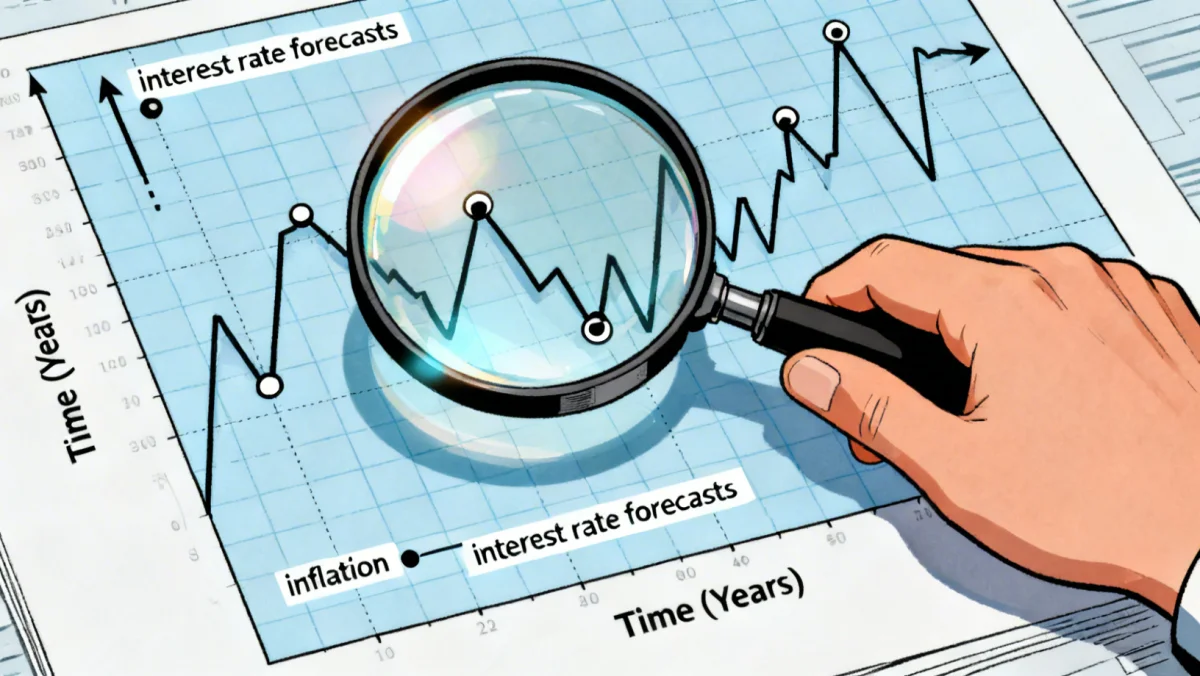
Credit risk, or the risk of default, is essentially non-existent with US Treasury bonds due to the backing of the US government. However, liquidity risk can be a factor for certain less frequently traded maturities, though generally, the Treasury market is highly liquid.
Mitigating Bond Investment Risks
Investors can employ several strategies to manage the risks associated with Treasury bond investments. Diversification across different maturities and types of bonds is a common approach to reduce overall portfolio risk.
- Laddering Strategy: Involves staggering bond maturities over time, ensuring a portion of your portfolio matures regularly, allowing reinvestment at prevailing rates.
- Duration Management: Choosing bonds with shorter durations can reduce interest rate sensitivity, as shorter-term bonds are less affected by rate changes.
- Inflation Protection: Incorporating Treasury Inflation-Protected Securities (TIPS) into a portfolio can safeguard against unexpected inflation, preserving real returns.
Understanding these risks and implementing appropriate mitigation strategies is crucial for maintaining portfolio stability and achieving desired investment outcomes when investing in US Treasury Bonds for 2026 and beyond.
Strategic Considerations for 2026 Investors
For investors looking at 2026, strategic planning is essential to optimize returns and manage risks effectively. The economic outlook for the mid-2020s suggests a period of continued evolution, demanding adaptability in investment approaches.
Consider the potential for economic cycles. If the economy experiences a slowdown, Treasury bonds might offer a flight to safety, potentially increasing their value. Conversely, a robust economic expansion could lead to higher interest rates, impacting existing bond holdings. Therefore, a forward-looking perspective, anticipating these cycles, is vital.
Portfolio Diversification and Allocation
Treasury bonds often serve as a ballast within a broader investment portfolio. Their low correlation with other asset classes, such as equities, can help reduce overall portfolio volatility. Determining the appropriate allocation to Treasury bonds depends on an individual’s risk tolerance, investment horizon, and financial goals.
For conservative investors, a higher allocation to bonds might be suitable, while more aggressive investors might use them to balance higher-risk equity holdings. Regularly reviewing and rebalancing your portfolio ensures that your bond allocation remains consistent with your objectives.
Furthermore, consider the tax implications of bond investments. Interest earned on US Treasury bonds is exempt from state and local income taxes, though it is subject to federal income tax. This tax advantage can be a significant benefit, especially for investors in high-tax states.
Alternative Fixed Income Options and Comparison
While US Treasury bonds offer undeniable safety, investors should also consider alternative fixed-income options to diversify their portfolios and potentially enhance returns. Comparing these alternatives against Treasuries helps in making informed decisions.
Corporate bonds, for instance, typically offer higher yields than Treasuries to compensate for their increased credit risk. The creditworthiness of the issuing corporation plays a significant role in their yield. Municipal bonds, issued by state and local governments, often provide tax-exempt income, which can be particularly attractive to high-income earners.
Exploring Other Fixed Income Instruments
Beyond traditional bonds, other fixed-income instruments can complement a portfolio focused on US Treasuries. Each comes with its own risk-reward profile.
- Certificates of Deposit (CDs): Bank-issued products offering fixed interest rates for a set period. They are FDIC-insured, providing a high degree of safety.
- Money Market Accounts: Highly liquid, low-risk accounts that typically offer slightly higher interest rates than savings accounts.
- International Bonds: Bonds issued by foreign governments or corporations. These introduce currency risk and geopolitical risk but can offer diversification and potentially higher yields.
Comparing these options requires a thorough understanding of their risk characteristics, liquidity, and tax implications. For instance, while corporate bonds might offer higher nominal yields, they come with default risk that Treasuries do not. Municipal bonds’ tax advantages can make their after-tax yield superior to taxable Treasuries for certain investors.
Ultimately, the choice to include or prioritize US Treasury bonds over other fixed-income options will depend on an investor’s specific financial situation, risk appetite, and investment goals for the 2026 horizon and beyond. A balanced approach often involves a mix of these instruments to achieve optimal diversification and risk-adjusted returns.
| Key Aspect | Brief Description |
|---|---|
| Yield Expectations | Influenced by Fed policy, inflation, and economic growth; requires forward-looking analysis. |
| Interest Rate Impact | Inverse relationship with bond prices; rising rates decrease bond values. |
| Primary Risks | Interest rate risk and inflation risk are key concerns, credit risk is minimal. |
| Strategic Approach | Diversification, laddering, and duration management are crucial for risk mitigation. |
Frequently Asked Questions About Treasury Bonds in 2026
The primary risks include interest rate risk, where rising rates can decrease bond values, and inflation risk, which erodes purchasing power. While credit risk is negligible, these factors necessitate careful consideration for investors targeting 2026.
Interest rates and bond yields have an inverse relationship. When interest rates rise, newly issued bonds offer higher yields, making existing bonds with lower yields less attractive, thus decreasing their market price. Conversely, falling rates increase existing bond values.
Yes, US Treasury Bonds are widely considered among the safest investments globally due to the full faith and credit backing of the US government. However, investors still face interest rate and inflation risks, which can impact real returns.
The Federal Reserve’s monetary policy decisions, particularly on the federal funds rate, directly influence short-term interest rates and, by extension, longer-term Treasury yields. Their forward guidance and economic outlook significantly shape market expectations for bond performance.
Yes, Treasury Inflation-Protected Securities (TIPS) can be a valuable consideration. Their principal value adjusts with inflation, offering protection against unexpected price increases. This can be particularly beneficial if inflation concerns persist towards 2026.
Conclusion
Investing in US Treasury Bonds for 2026 requires a balanced perspective, acknowledging their inherent safety while diligently assessing the dynamic interplay of economic forces. Yield expectations will continue to be shaped by Federal Reserve policy, inflation trends, and overall economic growth. Investors must remain vigilant, adapting their strategies to mitigate interest rate and inflation risks through diversification, laddering, and careful duration management. While Treasuries provide a cornerstone of stability, exploring complementary fixed-income alternatives can further enhance portfolio resilience and optimize returns in an ever-evolving financial landscape.