AI’s Impact on K-12 Curriculum by 2026: 3 Major Shifts
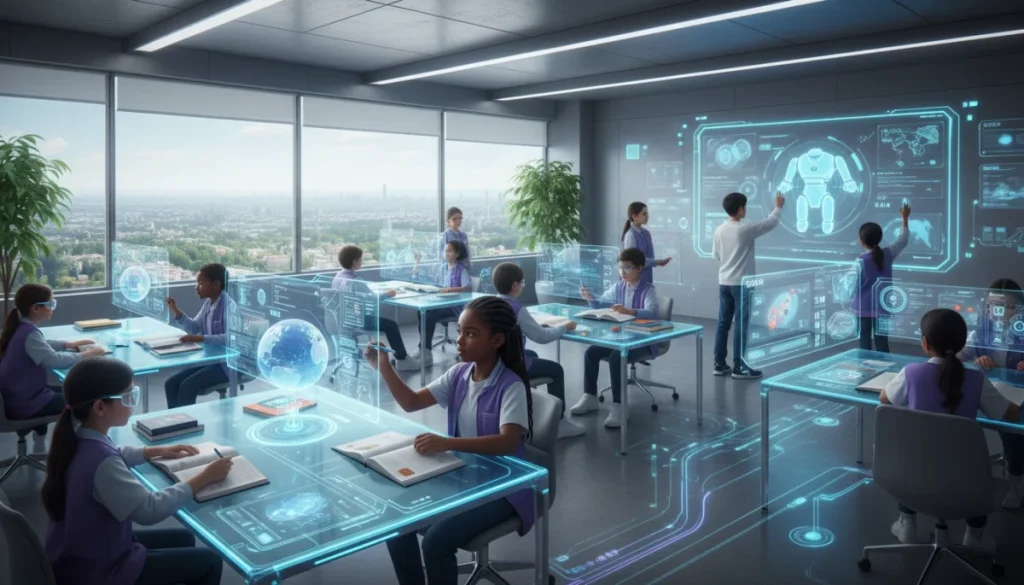
By 2026, artificial intelligence will fundamentally reshape K-12 curriculum development through personalized learning pathways, the integration of AI literacy and ethical considerations, and dynamic, adaptive assessment methodologies, preparing students for an AI-driven future.
The educational landscape is on the cusp of a profound transformation, with artificial intelligence emerging as a primary catalyst. By 2026, the impact of AI on K-12 curriculum development will be undeniable, ushering in three major shifts that promise to redefine how students learn, what they learn, and how their progress is measured. This evolution is not merely about integrating new tools; it’s about fundamentally rethinking pedagogical approaches to better prepare the next generation for a world increasingly shaped by AI.
The rise of personalized learning pathways
One of the most significant shifts driven by AI in K-12 curriculum development is the widespread adoption of personalized learning pathways. Historically, education has largely followed a one-size-fits-all model, often failing to address the diverse needs and learning styles of individual students. AI is poised to change this paradigm by offering highly customized educational experiences.
AI-powered platforms can analyze a student’s performance, strengths, weaknesses, and preferred learning modalities in real-time. This data then informs the delivery of content, suggesting resources, exercises, and pacing that are uniquely tailored to each learner. Imagine a system that recognizes when a student is struggling with a particular concept and immediately provides alternative explanations, supplementary materials, or even connects them with a virtual tutor.
Tailoring content and pace
AI’s ability to adapt content means that students are no longer constrained by a rigid curriculum. Instead, the curriculum becomes a dynamic entity, responsive to their individual growth. This can manifest in various ways, from adjusting the difficulty of math problems to recommending specific reading materials based on a student’s comprehension level and interests.
- Adaptive learning platforms: These systems continuously assess student understanding and adjust the learning path accordingly.
- Intelligent tutoring systems: AI tutors can provide immediate feedback and personalized guidance, simulating one-on-one instruction.
- Differentiated instruction at scale: Educators can manage diverse classrooms more effectively, as AI assists in providing individualized support.
Empowering student agency
Personalized learning also fosters greater student agency. When students have a degree of control over their learning journey, they become more engaged and motivated. AI tools can present students with choices, allowing them to explore topics of interest in greater depth or to revisit areas where they feel less confident. This approach moves beyond rote memorization, encouraging critical thinking and self-directed learning, essential skills for the future.
The shift towards personalized learning pathways fundamentally alters the role of the educator from solely a knowledge dispenser to a facilitator and guide. Teachers will leverage AI insights to better understand their students’ needs, allowing them to focus on higher-order thinking skills, collaborative projects, and socio-emotional development. This collaborative model between AI and human educators promises a richer, more effective learning environment for every child.
Integrating AI literacy and ethical considerations
The second major shift involves the integration of AI literacy and ethical considerations directly into the K-12 curriculum. As AI becomes ubiquitous, understanding its principles, capabilities, and societal implications is no longer an optional skill but a fundamental requirement for informed citizenship. By 2026, curricula will reflect this necessity, moving beyond basic digital literacy to encompass a deeper understanding of AI.
This integration will manifest in various subjects, not just computer science classes. For instance, social studies might explore the ethical dimensions of AI, its impact on employment, privacy, and bias. Language arts could analyze AI-generated texts, prompting discussions on authorship and critical evaluation. Math and science classes will delve into the algorithms and data that power AI, fostering an understanding of its underlying mechanisms.
Developing critical AI understanding
Students will need to learn how AI works, not necessarily to become AI developers, but to be intelligent users and citizens. This includes understanding concepts like machine learning, data privacy, and algorithmic bias. The goal is to demystify AI, making it accessible and understandable, thereby reducing fear and fostering responsible engagement.
- Understanding AI fundamentals: Basic concepts of how AI learns and makes decisions.
- Data literacy: Recognizing the importance of data, how it’s collected, and its implications for AI systems.
- Algorithmic bias awareness: Identifying and critically analyzing potential biases in AI outputs.
Fostering ethical AI citizenship
Beyond technical understanding, ethical considerations will form a cornerstone of AI education. Students will engage in discussions and projects that explore the societal impact of AI, encouraging them to think critically about its responsible development and deployment. This includes understanding the implications of automation, the importance of human oversight, and the potential for AI to exacerbate or alleviate social inequalities.

Curriculum developers will need to create age-appropriate materials that introduce these complex topics in an engaging and accessible manner. This might involve simulations, case studies, and project-based learning that allow students to grapple with real-world ethical dilemmas posed by AI. By embedding AI literacy and ethics into the core curriculum, K-12 education will equip students not just with technical skills, but with the critical judgment needed to navigate an AI-powered future responsibly.
Adaptive assessment and continuous feedback
The third significant shift in K-12 curriculum development by 2026, propelled by AI, is the transformation of assessment practices. Traditional, high-stakes testing often provides a snapshot of a student’s knowledge at a single point in time, offering limited insights into their learning process or areas needing improvement. AI-powered adaptive assessment promises a more dynamic, continuous, and effective approach to evaluating student progress.
Adaptive assessment systems use AI to tailor questions and tasks based on a student’s responses, providing a more precise measure of their understanding. If a student answers a question correctly, the system might present a more challenging one; if they struggle, it can offer simpler questions or provide immediate instructional support. This not only makes assessments more efficient but also less stressful for students, as they are constantly working within their zone of proximal development.
Real-time insights for educators
Beyond individual student benefits, adaptive assessments provide invaluable real-time data to educators. AI analytics can identify common misconceptions across a class, pinpoint specific areas where students are excelling or struggling, and even predict future performance. This allows teachers to intervene promptly, adjust their teaching strategies, and personalize instruction more effectively, moving away from reactive teaching to proactive educational support.
- Diagnostic assessment: AI can quickly identify learning gaps and areas requiring attention.
- Formative assessment: Continuous feedback loops help students understand their progress and areas for improvement.
- Predictive analytics: AI can forecast student success and identify those at risk of falling behind.
Shifting the focus from grading to learning
The continuous feedback loop facilitated by AI-driven assessment shifts the focus from simply assigning a grade to fostering genuine learning and mastery. Students receive immediate, actionable feedback that helps them understand *why* an answer is incorrect and *how* to improve. This iterative process promotes a growth mindset, encouraging students to view mistakes as opportunities for learning rather than failures.
Moreover, AI can help reduce the burden of grading for teachers, freeing up valuable time that can be redirected towards more impactful instructional activities, such as one-on-one coaching or developing richer learning experiences. By revolutionizing how we assess and provide feedback, AI will ensure that K-12 curricula are not just about delivering content, but about cultivating deep understanding and continuous improvement in every student.
Rethinking curriculum design for an AI-centric world
The profound influence of AI on K-12 curriculum development extends beyond personalized learning and assessment to fundamentally reshape how curricula are designed and implemented. By 2026, the focus will shift from content memorization to developing skills that complement AI capabilities, fostering creativity, critical thinking, and complex problem-solving. This means a move towards interdisciplinary approaches and project-based learning.
Curriculum designers will increasingly integrate real-world problems that require students to collaborate, innovate, and apply knowledge across various subjects. AI tools can assist in creating these dynamic learning scenarios, providing simulations, data sets, and analytical support. The emphasis will be on teaching students how to ask the right questions, interpret AI outputs, and use AI as a powerful tool for discovery and creation.
Emphasizing human-centric skills
As AI automates routine tasks, the demand for uniquely human skills will grow. Empathy, ethical reasoning, collaboration, communication, and emotional intelligence will become paramount. K-12 curricula will be designed to cultivate these attributes, preparing students for roles where human interaction and nuanced decision-making are critical.
- Collaborative projects: Designing tasks that require teamwork and diverse perspectives.
- Creative problem-solving: Encouraging students to think outside the box and innovate with AI tools.
- Ethical deliberation: Integrating scenarios that challenge students to make morally sound decisions.
Dynamic and evolving content
Traditional curricula are often static, updated infrequently. In an AI-driven world, knowledge evolves rapidly. AI can help curriculum developers keep content current by identifying emerging trends, new research, and relevant real-world examples. This ensures that students are always learning the most up-to-date and pertinent information, making education more relevant and engaging.
The re-imagination of curriculum design through an AI lens will create a learning environment that is not only academically rigorous but also deeply connected to the demands of the future workforce and society. It will prepare students not just for jobs that exist today, but for those that are yet to be imagined, fostering adaptability and a lifelong love for learning.
Challenges and opportunities in AI adoption
While the benefits of AI in K-12 curriculum development are vast, the path to widespread adoption by 2026 is not without its challenges. Equitable access to technology, teacher training, and data privacy concerns are significant hurdles that must be addressed. However, these challenges also present unique opportunities for innovation and systemic improvement within the education sector.
Ensuring that all students, regardless of socioeconomic background, have access to AI-powered learning tools is crucial. This requires investment in infrastructure, devices, and digital literacy programs. Governments and educational institutions will need to collaborate to bridge the digital divide, ensuring that AI enhances, rather than exacerbates, existing inequalities. This is a critical ethical consideration that must be at the forefront of policy decisions.
Teacher professional development
The successful integration of AI into the curriculum heavily depends on equipping educators with the necessary skills and confidence. Teachers will need professional development opportunities that go beyond basic software training, focusing on how to effectively leverage AI to personalize instruction, interpret data analytics, and foster AI literacy in their students. This represents a significant investment but is essential for realizing AI’s full potential.
- AI pedagogical training: Learning how to integrate AI tools into daily teaching practices.
- Data interpretation skills: Understanding and utilizing AI-generated student data for informed decisions.
- Ethical AI discussions: Facilitating conversations about AI’s impact and responsible use.
Data privacy and security
The use of AI in education involves collecting and analyzing vast amounts of student data. Protecting this sensitive information is paramount. Robust data privacy policies, secure platforms, and transparent communication with parents and students will be essential to build trust and ensure compliance with regulations. This challenge offers an opportunity to establish new standards for data governance in education, setting a precedent for responsible technology use.
Overcoming these challenges will unlock unprecedented opportunities to create a more effective, equitable, and engaging K-12 education system. By proactively addressing these issues, educational stakeholders can ensure that AI serves as a powerful force for good, transforming curricula to meet the needs of every learner in the 21st century.
Preparing for the future: policy and infrastructure
The successful implementation of AI’s major shifts in K-12 curriculum development by 2026 will necessitate robust policy frameworks and significant infrastructure investment. Without clear guidelines and adequate resources, the potential of AI in education may remain largely untapped. Policymakers, educators, and technology developers must collaborate to create an environment conducive to innovation and equitable access.
Policy development will need to address areas such as curriculum standards, teacher certification for AI-integrated pedagogy, and guidelines for ethical AI use in classrooms. These policies should be flexible enough to accommodate rapid technological advancements while ensuring consistency and quality across diverse educational settings. The aim is to create a supportive regulatory landscape that encourages responsible AI adoption.
Investing in digital infrastructure
Fundamental to AI integration is a resilient and accessible digital infrastructure. This includes high-speed internet connectivity in all schools and homes, adequate computing devices for students and teachers, and robust cloud-based platforms to host AI applications. Many schools, particularly in underserved areas, currently lack these basic necessities. Targeted funding and strategic partnerships will be crucial to bridge this gap.
- Universal broadband access: Ensuring reliable internet for all students and schools.
- Device equity: Providing personal learning devices to every student.
- Secure cloud platforms: Establishing reliable and safe environments for AI educational tools.
Fostering research and development
Continuous research and development in educational AI will also be vital. This involves funding pilot programs, evaluating the effectiveness of AI tools in different learning contexts, and fostering collaboration between AI researchers and educational practitioners. By embracing an evidence-based approach, schools can make informed decisions about which AI technologies best serve their curriculum goals and student needs.
Ultimately, preparing for the future means creating a coherent strategy that encompasses policy, infrastructure, and ongoing innovation. This holistic approach will ensure that the transformative power of AI is harnessed effectively to reshape K-12 curricula, empowering students and educators alike for the challenges and opportunities of an increasingly AI-driven world.
| Key Shift | Brief Description |
|---|---|
| Personalized Learning | AI tailors educational content, pace, and resources to individual student needs and learning styles. |
| AI Literacy & Ethics | Curricula integrate understanding of AI principles, capabilities, and societal/ethical implications. |
| Adaptive Assessment | AI-powered evaluations provide real-time, customized feedback and insights into student progress. |
| Curriculum Redesign | Shift to human-centric skills, interdisciplinary approaches, and dynamic content relevant to an AI world. |
Frequently asked questions about AI in K-12 education
By 2026, AI will personalize K-12 learning by analyzing individual student data to tailor content, pace, and teaching methods. This includes adaptive platforms that adjust difficulty, intelligent tutoring systems offering real-time feedback, and customized resource recommendations, ensuring a unique learning journey for every student.
AI literacy for K-12 students means understanding how AI works, its capabilities, and its societal impact. It includes concepts like data privacy, algorithmic bias, and ethical considerations. Students will learn to critically evaluate AI-generated content and responsibly interact with AI technologies in various aspects of their lives and future careers.
AI will revolutionize K-12 assessments by introducing adaptive testing that adjusts questions based on student performance, offering continuous, real-time feedback. This moves away from traditional high-stakes exams towards diagnostic and formative assessments that provide deeper insights for educators and foster a growth mindset in students, focusing on mastery.
An AI-integrated K-12 curriculum will prioritize uniquely human skills like critical thinking, creativity, complex problem-solving, ethical reasoning, and collaboration. As AI handles routine tasks, the curriculum will emphasize attributes that complement AI, preparing students for roles requiring human interaction, empathy, and nuanced decision-making in a rapidly evolving world.
Key challenges include ensuring equitable access to AI tools and digital infrastructure for all students, providing adequate professional development for teachers to effectively integrate AI, and establishing robust data privacy and security measures. Addressing these requires significant investment, policy development, and collaborative efforts from all educational stakeholders.
Conclusion
By 2026, the K-12 educational landscape will be profoundly reshaped by the transformative power of artificial intelligence. The three major shifts—personalized learning pathways, the integration of AI literacy and ethical considerations, and adaptive assessment with continuous feedback—represent a paradigm shift from traditional models. These advancements promise to create more engaging, effective, and equitable learning experiences, preparing students with the essential skills and critical understanding needed to thrive in an AI-driven society. While challenges related to equity, teacher training, and data privacy remain, proactive policy development and strategic investment can ensure that AI serves as a powerful catalyst for a brighter educational future.