Child Tax Credit 2026: Impact on Family Finances

The Child Tax Credit in 2026 is poised for significant updates, potentially reshaping financial benefits for American families, influencing budgeting and long-term economic stability.
As we look ahead, the Child Tax Credit in 2026 stands as a critical component of financial planning for millions of American families. Understanding the updated regulations and their potential impact is essential for optimizing your household’s economic well-being.
Understanding the Child Tax Credit Evolution
The Child Tax Credit (CTC) has undergone several transformations since its inception, reflecting evolving economic landscapes and policy priorities. These changes often aim to provide financial relief to families, stimulate economic growth, or address specific societal challenges. Each iteration brings new rules, eligibility criteria, and benefit amounts that directly affect how much support families receive.
For 2026, experts anticipate further adjustments, building on past reforms. These potential changes are not merely administrative; they can significantly alter the financial safety net for households with children, influencing everything from daily expenses to long-term savings and investments. Being informed about these shifts is the first step toward effective financial navigation.
Historical Context of CTC Adjustments
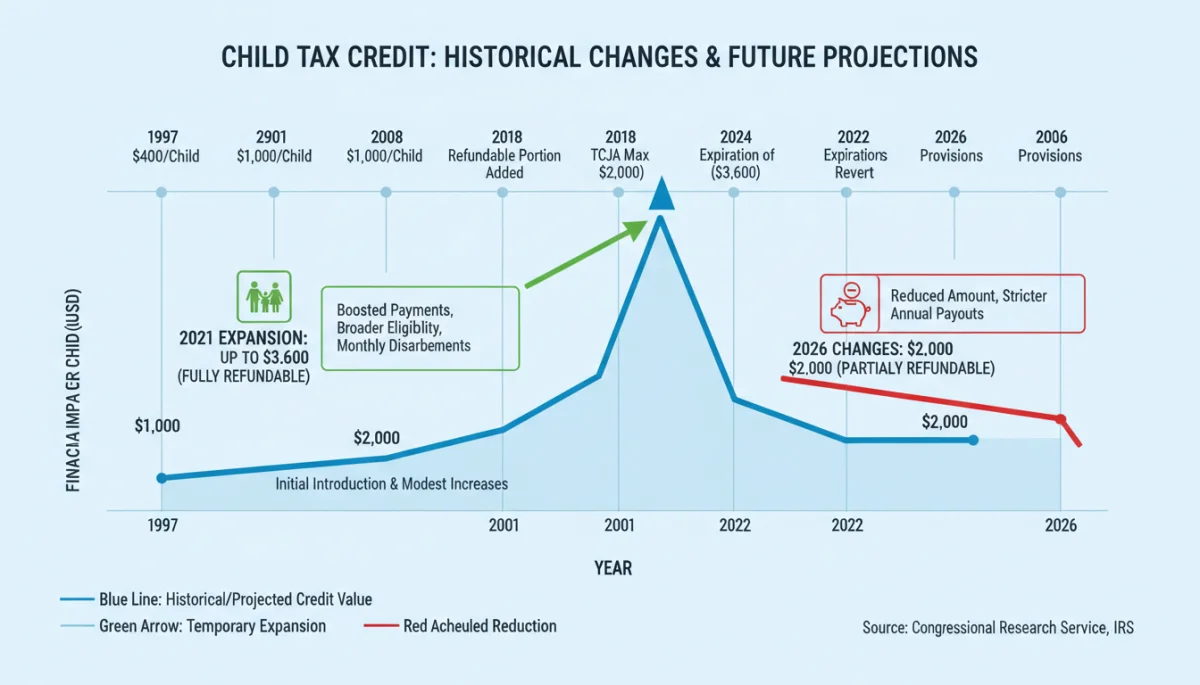
The CTC was first introduced in 1997, offering a modest credit per child. Over the years, it has been expanded and modified through various legislative acts. Notable changes include:
- 2001 Tax Relief Act: Increased the credit amount and made it partially refundable for some families.
- 2009 American Recovery and Reinvestment Act: Expanded refundability, making it accessible to more low-income families.
- 2017 Tax Cuts and Jobs Act (TCJA): Doubled the credit to $2,000 per child and increased the refundable portion to $1,400, while also raising income thresholds.
- 2021 American Rescue Plan Act (ARPA): Temporarily expanded the credit significantly, making it fully refundable, increasing the maximum amount to $3,600 for children under six and $3,000 for older children, and allowing for advance monthly payments.
These historical precedents demonstrate a pattern of legislative responses to economic conditions and social needs. The temporary expansion in 2021, for instance, provided unprecedented relief during the pandemic, highlighting the credit’s potential as an economic stabilizer. Understanding this history helps contextualize the discussions around the 2026 regulations.
The continuous evolution of the Child Tax Credit underscores its importance as a policy tool. Each legislative decision reflects a balance between fiscal responsibility and social welfare, directly impacting millions of families. As we approach 2026, stakeholders are closely watching for signals on whether the credit will revert to pre-ARPA levels, maintain some of the expanded benefits, or introduce entirely new parameters. This ongoing dialogue shapes the financial future for many.
Key Proposed Changes for the Child Tax Credit in 2026
As 2026 approaches, several legislative proposals are circulating that could redefine the Child Tax Credit. These proposals often emerge from a mix of political objectives, economic analyses, and social advocacy. Understanding the core tenets of these potential changes is crucial for families and financial planners alike.
One of the most significant debates revolves around the refundability and the maximum credit amount. The temporary expansion in 2021 made the credit fully refundable, meaning even families with little to no tax liability could receive the full benefit. There is strong advocacy for making this full refundability permanent, ensuring that the lowest-income families continue to receive substantial support. Conversely, some proposals suggest scaling back refundability to pre-2021 levels, arguing for fiscal conservatism.

Income Thresholds and Phase-Out Rules
Another critical area of discussion involves income thresholds and phase-out rules. The 2017 TCJA significantly increased these thresholds, allowing higher-income families to qualify for the credit. Future changes could adjust these, either lowering them to target benefits more specifically to middle and lower-income families or raising them further to broaden eligibility. Phase-out rates also dictate how quickly the credit diminishes as income rises, directly affecting how much a family ultimately receives.
- Potential Lowering of Thresholds: Could mean fewer higher-income families qualify for the full credit.
- Potential Raising of Thresholds: Could extend benefits to a broader range of middle-income households.
- Adjustments to Phase-Out Rates: Might create a smoother or steeper reduction in benefits as income increases.
The structure of these thresholds and phase-out rules is designed to balance the goal of providing support where it’s most needed with the overall cost of the program. Any modification here will have a direct and measurable impact on the number of eligible families and the average credit amount received. Families should monitor these discussions closely, as they could necessitate adjustments to their financial planning strategies.
In conclusion, the proposed changes for the Child Tax Credit in 2026 are multifaceted, touching upon refundability, credit amounts, and eligibility criteria. These discussions are ongoing and reflect a broader debate about the role of government in supporting families. Staying informed about these potential legislative shifts is vital for families to anticipate and adapt to the evolving landscape of financial benefits.
Eligibility Requirements: Who Qualifies in 2026?
Understanding the eligibility requirements for the Child Tax Credit in 2026 will be paramount for families seeking to claim this benefit. While specific rules are subject to legislative updates, the core criteria typically revolve around the child’s age, relationship to the taxpayer, residency, and the taxpayer’s income. Any adjustments to these factors can significantly alter who qualifies and for how much.
Historically, a child must meet several tests to be considered a qualifying child for the CTC. These generally include being under a certain age (often 17), being a son, daughter, stepchild, foster child, brother, sister, half-brother, half-sister, stepbrother, stepsister, or a descendant of any of them. The child must also live with the taxpayer for more than half the year and not provide more than half of their own support. These foundational criteria are likely to remain, but nuances regarding age limits or residency requirements could shift.
Income and Residency Tests
Income remains a primary determinant of eligibility. The credit typically begins to phase out at certain income levels, which have varied considerably in past legislation. For 2026, policymakers might adjust these levels to target specific income brackets, either expanding or contracting the pool of eligible families. Residency requirements, particularly for children living with multiple caregivers or across state lines, may also see clarifications or alterations.
- Adjusted Gross Income (AGI) Limits: Expect potential changes to the AGI thresholds at which the credit begins to phase out.
- Residency Period: Clarifications on what constitutes living with the taxpayer for ‘more than half the year,’ especially for shared custody situations.
- Dependency Status: Reinforcement of rules regarding who can claim the child as a dependent for tax purposes.
The child’s Social Security number (SSN) is also a consistent requirement for claiming the credit, a measure used to prevent fraud and ensure accurate distribution of benefits. Any changes to this requirement are less likely but not entirely out of the question in comprehensive tax reform discussions. Furthermore, taxpayers themselves must meet certain residency or filing status requirements, such as being U.S. citizens or resident aliens and filing a joint return if married.
In essence, eligibility for the Child Tax Credit in 2026 will hinge on a combination of factors related to the child and the taxpayer. Families should proactively review their financial situations against any new guidelines published by the IRS. Understanding these specifics early can prevent surprises and ensure they claim all eligible benefits, maximizing their financial support from the credit.
Anticipated Financial Impact on American Families
The adjustments to the Child Tax Credit in 2026 are expected to have a profound and varied financial impact on American families. The nature of this impact will largely depend on the specific changes enacted, particularly concerning the credit amount, refundability, and income thresholds. For some families, the credit could provide a much-needed boost, while for others, a reduction in benefits might necessitate budget re-evaluation.
If the expanded, fully refundable version of the credit, similar to the 2021 structure, were to be reinstated or made permanent, lower-income families would experience the most significant positive impact. The full refundability ensures that even those with little to no tax liability can receive the maximum benefit, effectively lifting many children out of poverty and providing substantial financial relief for essential needs like food, housing, and healthcare. This scenario would lead to increased household disposable income, potentially boosting local economies.
Varying Effects Across Income Brackets
Middle-income families, who typically qualify for a partial or full credit under most iterations, would also see significant benefits. An increased credit amount could free up funds for savings, education expenses, or debt reduction. However, if the credit reverts to pre-2021 levels and refundability is limited, these families might see a smaller benefit, which could strain budgets that have come to rely on the higher credit amounts.
- Low-Income Families: Could see substantial financial relief if full refundability is maintained, helping to cover basic needs.
- Middle-Income Families: Benefits could range from significant support for savings and education to more modest assistance, depending on credit amount and phase-out rules.
- Higher-Income Families: May experience minimal or no change, as they often face phase-outs even with expanded credits.
The overall economic effect of the changes will also ripple through consumer spending and investment patterns, potentially influencing national economic growth and stability. Families must assess their individual circumstances against the finalized regulations to accurately forecast their specific financial outcomes.
Ultimately, the financial impact of the Child Tax Credit in 2026 will be a direct reflection of legislative choices. Families are encouraged to stay informed and consult with financial advisors to understand how these changes will specifically affect their household budgets and long-term financial strategies, ensuring they are prepared for any shifts in benefit levels.
Strategies for Maximizing Your Child Tax Credit
Navigating tax regulations can be complex, but proactive strategies can help families maximize their Child Tax Credit benefits in 2026. Understanding the rules and planning accordingly are crucial steps to ensure you receive the full amount you’re entitled to. These strategies often involve meticulous record-keeping, careful income management, and staying updated on legislative changes.
One fundamental strategy is to ensure all eligible children are properly accounted for on your tax return. This means verifying that each child meets the age, relationship, residency, and dependency tests. Maintaining accurate records of your child’s SSN and residency for the tax year is essential. Any errors or omissions in this area could delay your refund or result in a reduced credit.
Key Steps for Optimal Claiming
Income management also plays a significant role, especially with phase-out rules. If your income is close to a phase-out threshold, strategic financial planning, such as contributing to tax-deferred retirement accounts, could potentially lower your Adjusted Gross Income (AGI) and help you qualify for a larger credit. This requires careful consideration and professional advice, but it can be a powerful tool.
- Accurate Documentation: Keep precise records of children’s SSNs, birth certificates, and residency proofs.
- Income Planning: Explore options to manage AGI, such as maximizing pre-tax contributions to retirement accounts.
- Filing Status Review: Choose the most advantageous filing status (e.g., Married Filing Jointly vs. Head of Household) for CTC purposes.
Staying informed about the final regulations for 2026 is perhaps the most critical strategy. Tax laws are dynamic, and official announcements from the IRS or Treasury Department should be closely monitored. Subscribing to tax news updates or consulting with a qualified tax professional will provide timely information on any new forms, calculations, or eligibility criteria. Early awareness allows for timely adjustments to your financial planning.
Furthermore, if advance payments of the Child Tax Credit are re-introduced, understanding how to opt in or out, and how they affect your final tax liability, will be vital. These payments can provide immediate financial relief but require careful reconciliation at tax time. By employing these strategies, families can confidently approach the 2026 tax season, ensuring they receive the maximum possible Child Tax Credit.
Potential Economic and Social Ramifications
The adjustments to the Child Tax Credit in 2026 extend beyond individual family finances, carrying significant potential economic and social ramifications for the United States. These effects can ripple through various sectors, influencing poverty rates, consumer spending, labor force participation, and even long-term educational outcomes. The choices made in policy will have broad societal implications.
From an economic standpoint, an expanded and fully refundable CTC could inject substantial capital into local economies. Families, particularly those with lower incomes, are likely to spend increased benefits on essential goods and services, stimulating demand and supporting businesses. This can lead to job creation and broader economic growth. Conversely, a reduction in the credit could dampen consumer spending, potentially slowing economic activity and increasing financial strain on vulnerable households.
Impact on Poverty and Well-being
Socially, the CTC has been shown to be a powerful tool in combating child poverty. The 2021 expansion, for example, was credited with significantly reducing child poverty rates. If similar provisions are enacted in 2026, it could lead to a sustained reduction in poverty, improving children’s health, nutrition, and educational opportunities. This long-term investment in children’s well-being can have lasting positive effects on society.
- Poverty Reduction: An expanded CTC could significantly decrease child poverty rates, improving overall family stability.
- Consumer Spending: Increased benefits typically lead to higher consumer spending, boosting local economies.
- Labor Force Participation: Debates exist on whether a more generous CTC encourages or discourages work, depending on its design.
There are also debates regarding the impact on labor force participation. Some argue that a more generous credit might reduce the incentive for some parents to work, while others contend it enables parents to afford childcare, thus facilitating their entry or re-entry into the workforce. The specific design of the credit, particularly how it interacts with earned income, will determine this outcome. Furthermore, the administrative burden on both taxpayers and the IRS is another consideration, with calls for simplification and improved outreach.
In summary, the Child Tax Credit in 2026 is more than just a tax benefit; it’s a policy lever with the capacity to shape the nation’s economic health and social fabric. Policymakers must carefully weigh these potential ramifications when finalizing the regulations, aiming for a balance that supports families while fostering broader societal benefits.
Comparing 2026 CTC with Previous Iterations
To fully grasp the significance of the Child Tax Credit in 2026, it’s beneficial to compare its anticipated structure with previous iterations, particularly the pre-2021 framework and the temporary 2021 expansion. This comparison highlights the key areas of change and continuity, offering insight into the policy direction and its potential impact on families.
The pre-2021 CTC offered a maximum credit of $2,000 per child, with up to $1,400 being refundable for eligible families. This structure provided substantial relief but excluded the lowest-income families from receiving the full benefit due to its partial refundability. Income thresholds were also set, phasing out the credit for higher earners. This version was a significant improvement over earlier forms but still left a segment of the population underserved.
Key Differences and Similarities
The 2021 American Rescue Plan Act dramatically expanded the CTC, increasing the maximum credit to $3,600 for children under six and $3,000 for those aged six to seventeen. Crucially, it made the credit fully refundable, ensuring that even families with no tax liability could receive the full amount. This expansion also introduced advance monthly payments, providing families with regular financial support throughout the year rather than a lump sum at tax time.
- Credit Amount: 2021 expansion offered significantly higher amounts ($3,000/$3,600) compared to pre-2021 ($2,000).
- Refundability: 2021 was fully refundable; pre-2021 was partially refundable ($1,400 limit).
- Advance Payments: Introduced in 2021, a new feature not present in earlier versions.
- Income Thresholds: While similar, 2021 had unique phase-out rules for the expanded portion.
For 2026, the discussion often centers on whether to revert to the pre-2021 structure, make the 2021 expansion permanent, or find a middle ground. A return to the pre-2021 rules would mean lower credit amounts and limited refundability, potentially increasing child poverty and reducing financial support for many families. Making the 2021 expansion permanent would continue the significant financial boost for low and middle-income families, with substantial anti-poverty effects.
Any compromise position might involve a credit amount higher than pre-2021 but lower than 2021, with varying degrees of refundability. The presence or absence of advance payments will also be a critical distinguishing factor. Families must understand these historical differences to appreciate the potential impact of the 2026 regulations on their financial outlook, allowing them to prepare for various scenarios.
| Key Aspect | Brief Description of 2026 Impact |
|---|---|
| Credit Amount | Could revert to $2,000 or remain higher, significantly affecting total benefit. |
| Refundability | Full or partial refundability will determine access for low-income families. |
| Eligibility Thresholds | Income limits and phase-out rates may change, altering who qualifies. |
| Advance Payments | Uncertainty whether monthly payments will be reinstated for 2026. |
Frequently Asked Questions About the 2026 Child Tax Credit
The most significant potential changes involve the maximum credit amount, whether the credit will be fully refundable for low-income families, and adjustments to the income thresholds that determine eligibility. These factors will largely dictate the financial impact on households nationwide.
The full refundability of the Child Tax Credit for 2026 is currently a subject of legislative debate. While the 2021 expansion made it fully refundable, a return to pre-2021 rules would limit refundability. Families should monitor official IRS announcements closely.
To stay updated, regularly check the official IRS website, subscribe to tax news alerts, and consult with a qualified tax professional. Legislative proposals and final rules are typically announced well in advance of the tax filing season.
You should prepare documents such as your child’s Social Security number (SSN), birth certificate, and proof of residency. Ensure your child meets the age, relationship, and dependency tests for the tax year to avoid delays or issues with your claim.
The reintroduction of advance monthly payments for the Child Tax Credit in 2026 is uncertain and depends on new legislation. These payments were a feature of the 2021 expansion but are not guaranteed for future years without further congressional action.
Conclusion
The landscape of the Child Tax Credit in 2026 is poised for significant changes that will undoubtedly shape the financial well-being of countless American families. From the potential adjustments to credit amounts and refundability to shifts in eligibility criteria, these regulations will require careful attention and proactive planning. Staying informed through official channels and understanding the nuances of these updates will be crucial for maximizing benefits and ensuring financial stability. As policymakers continue to deliberate, families are encouraged to prepare for various scenarios, adapting their strategies to align with the finalized tax laws, thereby securing the best possible financial future for their children.