Community Colleges 2026: Pathways to Degrees & Workforce
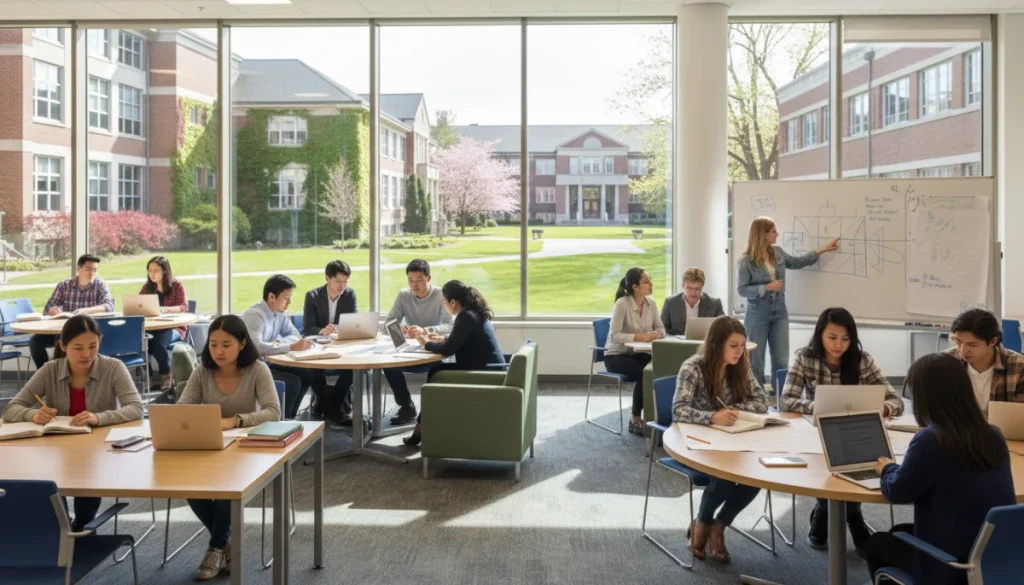
Community colleges in 2026 are crucial for accessible higher education, facilitating seamless transfers to four-year institutions and robust workforce skill development.
In 2026, community college evolution continues to redefine educational accessibility and career readiness in the United States. These institutions are more than just stepping stones; they are dynamic hubs adapting to the changing demands of both academic progression and the modern workforce.
The new landscape of associate degrees
The associate degree, once seen primarily as a terminal credential for entry-level jobs, has significantly evolved. Today, it serves as a versatile foundation, preparing students for immediate employment or seamless transfer to a four-year university. This dual purpose makes community colleges indispensable in the current educational ecosystem.
Expanding transfer pathways
Community colleges are proactively forging stronger partnerships with four-year institutions. These collaborations ensure that credits earned are fully transferable, minimizing academic and financial hurdles for students aiming for bachelor’s degrees.
- Guaranteed Admission Agreements: Many states now have agreements guaranteeing admission to public universities for community college graduates meeting specific criteria.
- Curriculum Alignment: Programs are meticulously aligned with university requirements, ensuring a smooth transition.
- Joint Advising Programs: Students receive guidance from both community college and university advisors from day one.
The emphasis is on creating clear, predictable pathways, allowing students to plan their academic journey with confidence. This proactive approach helps reduce time to degree completion and saves students considerable tuition costs.
Furthermore, the variety of associate degrees has broadened considerably. Beyond traditional arts and sciences, specialized associate of applied science (AAS) degrees are now deeply integrated with industry needs, providing highly relevant skills for emerging sectors. This diversification ensures that community colleges remain responsive to labor market demands while maintaining academic rigor.
The strategic importance of associate degrees cannot be overstated as they provide a flexible and affordable entry point into higher education, catering to a diverse student body, from recent high school graduates to adult learners seeking career changes or skill upgrades. This adaptability is a cornerstone of the evolving community college model.
Workforce development: bridging the skills gap
Community colleges are at the forefront of addressing the nation’s skills gap, offering targeted training programs that respond directly to industry needs. In 2026, this role is more critical than ever, as technological advancements and economic shifts continually reshape the job market.
Industry-aligned training programs
These institutions collaborate closely with local businesses and industries to design curricula that equip students with highly sought-after skills. This direct link ensures that graduates are job-ready upon completion.
- Customized Training: Colleges offer tailored training solutions for companies looking to upskill their existing workforce.
- Apprenticeship Programs: Many programs integrate classroom instruction with on-the-job training, providing practical experience.
- Certification Pathways: Short-term certification programs allow individuals to gain specialized skills quickly and efficiently.
The focus on practical, hands-on learning ensures that students gain competencies immediately applicable in the workplace. This approach is particularly beneficial in high-demand sectors such as healthcare, advanced manufacturing, information technology, and renewable energy.
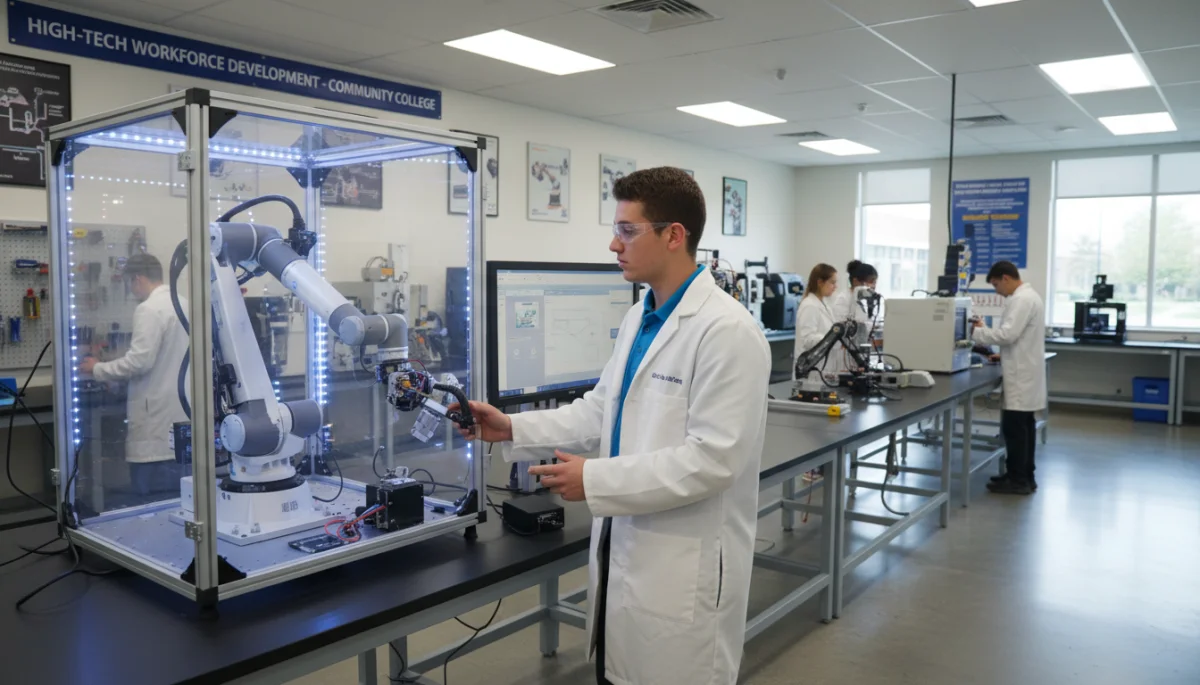
Community colleges are adept at identifying emerging labor market trends and quickly developing programs to meet those needs. This agility is a significant advantage, allowing them to adapt much faster than traditional four-year universities. For example, as the green economy expands, community colleges are rolling out programs in solar panel installation, wind turbine maintenance, and sustainable agriculture.
The impact of these workforce development initiatives extends beyond individual career success; it strengthens regional economies by providing a skilled labor pool that attracts and retains businesses. This symbiotic relationship underscores the vital role community colleges play in economic growth and stability.
The impact of technology on learning delivery
Technology has profoundly transformed how community colleges deliver education, making learning more flexible and accessible. In 2026, digital platforms, virtual reality, and artificial intelligence are not just supplementary tools but integral components of the educational experience.
Online learning options have expanded dramatically, offering students the flexibility to pursue their education while managing work and family responsibilities. Hybrid models, combining online and in-person instruction, are also widely adopted, providing a balanced approach to learning.
Innovative teaching methods
Technological advancements enable new pedagogical approaches that enhance engagement and retention. Virtual labs, for instance, allow students to conduct experiments in a safe, simulated environment, often at a lower cost than traditional physical labs.
- Adaptive Learning Platforms: AI-powered systems personalize learning paths, adjusting content based on individual student progress and needs.
- Virtual Reality (VR) and Augmented Reality (AR): These technologies are used for immersive simulations in fields like healthcare, skilled trades, and emergency services.
- Data Analytics: Colleges use data to identify at-risk students and provide timely interventions, improving success rates.
The integration of technology also extends to administrative functions, streamlining processes such as registration, financial aid, and academic advising. This efficiency allows faculty and staff to focus more on student support and instruction.
However, the rapid adoption of technology also presents challenges, particularly in ensuring equitable access to digital resources and providing adequate training for both students and faculty. Community colleges are actively working to bridge the digital divide, offering loaner devices and robust technical support.
Ultimately, technology empowers community colleges to reach a broader audience, provide a more personalized learning experience, and better prepare students for a technologically driven world. This commitment to innovation ensures that community colleges remain relevant and effective educational providers.
Affordability and accessibility: core community college values
At their heart, community colleges are defined by their commitment to affordability and accessibility. These values are more critical than ever in 2026, as the cost of higher education continues to be a significant barrier for many Americans.
Community colleges offer significantly lower tuition rates compared to four-year universities, making higher education attainable for a wider demographic. This financial advantage is often coupled with a focus on local communities, reducing commuting costs and allowing students to stay close to home.
Financial aid and support services
Beyond lower tuition, community colleges provide extensive financial aid options and support services to ensure student success, regardless of their economic background.
- Grants and Scholarships: Many institutions offer institutional grants and connect students with external scholarship opportunities.
- Payment Plans: Flexible payment options ease the financial burden on students and their families.
- Emergency Aid: Funds are often available for unexpected financial crises, helping students stay enrolled.
Accessibility also means open enrollment policies, welcoming students of all academic backgrounds without requiring standardized test scores for admission. This inclusive approach provides opportunities for individuals who might not otherwise have access to higher education.
Moreover, community colleges often serve as vital community anchors, offering resources beyond academics, such as childcare services, food pantries, and mental health counseling. These holistic support systems address the diverse needs of their student population, many of whom balance multiple responsibilities.
The unwavering dedication to affordability and accessibility ensures that community colleges remain a beacon of opportunity, fostering social mobility and empowering individuals to achieve their educational and career aspirations without accumulating crippling debt.
Partnerships with K-12 and industry: a collaborative ecosystem
The effectiveness of community colleges in 2026 is increasingly rooted in their robust partnerships with K-12 education systems and various industries. These collaborations create a seamless educational and career pipeline, preparing students from an early age for future success.
Dual enrollment programs, where high school students can earn college credit, are expanding rapidly. This not only gives students a head start on their college careers but also exposes them to higher education environments, making the transition smoother.
Strengthening the educational pipeline
These partnerships are designed to build a strong foundation for students, ensuring they are well-prepared for either academic transfer or direct entry into the workforce.
- Early College High Schools: These schools allow students to earn an associate degree concurrently with their high school diploma.
- Career Academies: High school programs focused on specific career pathways, often developed in conjunction with community colleges and local businesses.
- Work-Based Learning: Opportunities for high school students to gain real-world experience through internships and apprenticeships facilitated by college-industry connections.
Collaboration with industry partners ensures that curriculum remains relevant and responsive to current and future job market demands. Industry professionals often serve on advisory boards, providing invaluable input on program development and skill requirements.
These partnerships extend beyond curriculum, encompassing shared resources, joint faculty training, and collaborative research initiatives. This integrated approach benefits all stakeholders: K-12 students gain early exposure and college credit, community colleges strengthen their programs, and industries gain access to a well-prepared talent pool.
The collaborative ecosystem formed by these partnerships is essential for creating a resilient and adaptable workforce, ensuring that education is directly aligned with economic development and societal needs.
Future trends and challenges for community colleges
As community colleges continue to evolve, they face both exciting opportunities and significant challenges. Understanding these trends is crucial for their continued relevance and success in 2026 and beyond.
One major trend is the increasing demand for micro-credentials and stackable certifications. These shorter, more focused programs allow individuals to acquire specific skills quickly, often building towards a larger degree or comprehensive qualification.
Navigating demographic shifts
Community colleges serve a highly diverse student population, and demographic changes will continue to influence their strategies. Adapting to the needs of older learners, military veterans, and first-generation college students is paramount.
- Personalized Support: Developing tailored support services for diverse student groups.
- Flexible Scheduling: Offering evening, weekend, and accelerated programs to accommodate varied lifestyles.
- Culturally Competent Instruction: Ensuring faculty are equipped to teach and support students from all backgrounds.
Funding remains a perennial challenge. While community colleges are more affordable, they often rely heavily on state and local appropriations, which can fluctuate. Advocating for stable and increased funding is essential to maintain quality and expand services.
Another challenge is keeping pace with rapid technological advancements and ensuring that facilities and equipment are up-to-date. This requires continuous investment and strong industry partnerships to provide students with access to the latest tools and technologies.
Despite these challenges, the future of community colleges is bright. Their inherent adaptability, commitment to accessibility, and responsiveness to community and industry needs position them as indispensable institutions in the evolving landscape of American higher education.
| Key Aspect | Brief Description |
|---|---|
| Associate Degrees | Serve as versatile foundations for university transfer or immediate career entry. |
| Workforce Development | Offers targeted training and certifications to meet industry skill gaps. |
| Technology Integration | Enhances learning delivery through online platforms, AI, and VR. |
| Affordability & Access | Maintains lower tuition and open enrollment, fostering social mobility. |
Frequently asked questions about community colleges
Community colleges establish articulation agreements and curriculum alignment with four-year institutions. Many have guaranteed admission programs for students who complete an associate degree with a specific GPA, ensuring a smooth and efficient transfer process for academic progression.
They offer a wide range of programs, including customized training for businesses, apprenticeships, and short-term certification courses in high-demand fields like healthcare, IT, and advanced manufacturing. These programs are designed to address specific industry skill gaps directly.
Technology has revolutionized learning delivery through expanded online and hybrid courses, adaptive learning platforms, and immersive VR/AR simulations. These innovations enhance flexibility, personalize education, and prepare students for a digitally driven world effectively.
Yes, community colleges remain significantly more affordable than four-year universities. They offer lower tuition rates, extensive financial aid, and flexible payment plans, making higher education accessible to a broad spectrum of students, including those with financial constraints.
Partnerships with K-12 schools and industries are crucial. They facilitate dual enrollment, career academies, and work-based learning, creating a seamless educational pipeline from high school to college and into the workforce, ensuring relevant skill development.
Conclusion
The evolving role of community colleges in 2026 solidifies their position as indispensable pillars of American education and economic development. By providing accessible and affordable pathways to four-year degrees and offering agile workforce development programs, these institutions effectively bridge critical gaps in both academic progression and labor market demands. Their adaptability, technological integration, and deep community engagement ensure they will continue to empower individuals and strengthen regional economies for years to come.