NASA Announces Manned Mars Mission for Early 2026
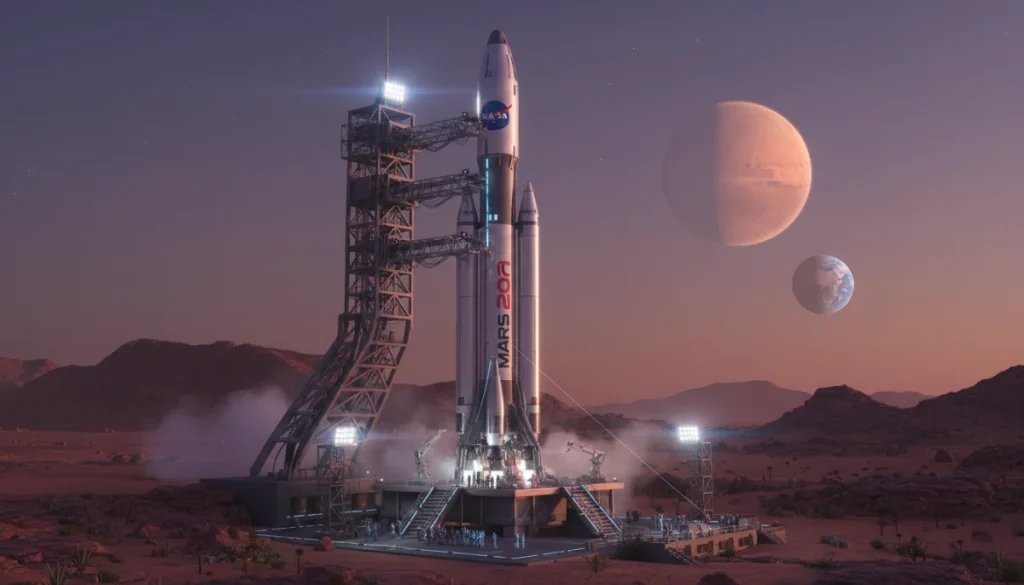
NASA has officially announced a new manned mission to Mars, with an ambitious launch window set for early 2026, marking a significant leap in human space exploration.
The dawn of a new era in human spaceflight is upon us. NASA has officially announced a groundbreaking new manned mission to Mars, with an ambitious launch window set for early 2026. This monumental endeavor, dubbed ‘Artemis IV: Red Planet Ascent,’ signifies a pivotal moment in our quest to understand and ultimately inhabit other worlds, pushing the boundaries of human ingenuity and resilience.
The Vision Behind Artemis IV: Red Planet Ascent
The decision to launch a manned mission to Mars in early 2026, under the banner of Artemis IV, is not merely a logistical announcement but the culmination of decades of scientific research, technological advancement, and unwavering dedication. This mission represents a significant acceleration of NASA’s long-term goals for deep space exploration.
The overarching vision for Artemis IV extends beyond simply landing humans on Mars. It encompasses establishing a sustainable human presence, understanding the planet’s geological and atmospheric complexities, and searching for signs of past or present life. This mission lays the groundwork for future colonization efforts, transforming humanity into a multi-planetary species.
Technological Innovations Driving the Mission
Achieving a manned mission to Mars by 2026 requires unprecedented technological leaps. NASA has been diligently developing and refining systems that will make this journey possible, from advanced propulsion to life support and habitat systems.
- Next-Generation Propulsion: The mission will leverage advanced propulsion technologies, likely a combination of chemical and electric propulsion, to significantly reduce transit times and increase payload capacity, making the journey to Mars more efficient and safer for the crew.
- Closed-Loop Life Support Systems: To sustain astronauts for the prolonged duration of the mission, highly efficient closed-loop life support systems are critical. These systems will recycle water, oxygen, and manage waste with minimal resupply from Earth.
- Martian Surface Habitats: Innovative habitat designs, potentially utilizing inflatable structures or 3D-printed elements from local Martian resources, are being developed to provide safe and robust living and working spaces for the crew on the planet’s surface.
These technological advancements are not only crucial for the success of Artemis IV but will also have profound implications for future space exploration and even applications here on Earth. The pursuit of Mars pushes the boundaries of engineering and science, fostering innovation across multiple sectors.
In essence, Artemis IV is a testament to humanity’s enduring spirit of exploration and our collective drive to overcome monumental challenges. The technologies being developed are not just for space; they represent a frontier of innovation that will benefit all of us.
Crew Selection and Training: Preparing for the Ultimate Journey
The astronauts chosen for the Artemis IV: Red Planet Ascent mission will be among the most elite individuals in human history. Their selection process is rigorous, focusing on a unique blend of scientific expertise, engineering prowess, psychological resilience, and teamwork capabilities. NASA understands that the success of such a complex mission hinges on the strength and adaptability of its crew.
Training for a Mars mission is unlike any other. It involves years of intensive preparation, simulating every conceivable scenario that could arise during transit, landing, and surface operations. Astronauts will undergo training in remote, extreme environments on Earth, mimicking the isolation and challenges of Mars.
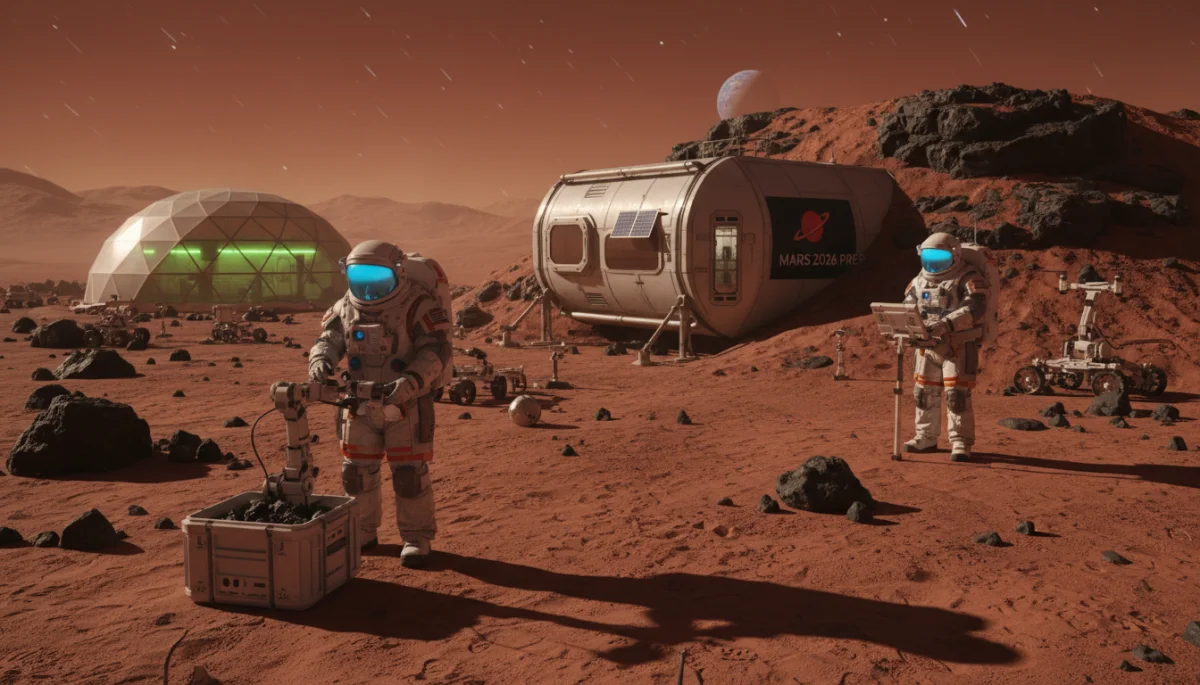
This includes extensive geological field training, robotics operation, medical emergency protocols, and deep-space communication techniques. The psychological aspect is equally critical, with crews undergoing rigorous assessments and training to manage stress, maintain morale, and resolve conflicts in an isolated, high-stakes environment.
The Astronaut Corps: A New Breed of Explorers
The chosen astronauts will likely come from diverse backgrounds, bringing a wealth of experience from various scientific and military fields. NASA emphasizes a multidisciplinary approach to crew selection, ensuring a broad range of skills on board.
- Pilots and Engineers: Crucial for spacecraft operation, maintenance, and problem-solving.
- Scientists (Geologists, Biologists, Physicians): Essential for conducting research, collecting samples, and ensuring crew health.
- Mission Specialists: Experts in specific areas, such as robotics, communication, or resource utilization.
The training regimen is designed to forge an unbreakable bond among the crew members, transforming them into a cohesive unit capable of facing the immense challenges of a deep space mission. Their journey will be a testament to human courage and the pinnacle of collaborative scientific endeavor.
The preparation for this mission is as critical as the mission itself. Every detail, from the physical conditioning to the psychological readiness, is meticulously planned to ensure the crew is optimally prepared for the unprecedented journey to Mars.
Scientific Goals and Expected Discoveries
The Artemis IV mission carries an ambitious scientific agenda, aiming to unlock some of Mars’s most profound secrets. Beyond the prestige of landing humans on another planet, the core objective is to advance our understanding of Mars’s past, present, and potential for future life. The presence of human researchers on the surface will allow for unprecedented flexibility and depth in scientific investigation.
One of the primary goals is to search for biosignatures – evidence of past microbial life. Martian geology holds clues to a wetter, warmer past, and human explorers can strategically select and analyze samples in ways robotic rovers cannot. This direct human interaction with the Martian environment will dramatically accelerate the pace of discovery.
Key Research Areas on Mars
The scientific activities planned for the mission are multifaceted, covering a broad spectrum of planetary science:
- Geological Surveys: Detailed examination of Martian rocks and soil to understand the planet’s formation, volcanic history, and the evolution of its crust.
- Water Ice Mapping and Utilization: Identifying and characterizing accessible water ice deposits, crucial for potential in-situ resource utilization (ISRU) for propellant and life support.
- Atmospheric Studies: Monitoring Martian weather patterns, dust storms, and atmospheric composition to better understand its climate and habitability.
- Astrobiology Research: Focused search for fossilized or extant microbial life in promising locations, such as ancient riverbeds or subsurface ice.
The data and samples brought back from Artemis IV will revolutionize our understanding of Mars and provide invaluable insights into planetary evolution and the potential for life beyond Earth. The mission’s scientific yield is expected to be immense, shaping planetary science for decades to come.
Ultimately, the scientific endeavors of this mission are designed to answer fundamental questions about our place in the universe and the potential for life beyond our home planet, pushing the boundaries of human knowledge.
Challenges and Risks of a Manned Mars Mission
While the prospect of a manned mission to Mars is thrilling, it is imperative to acknowledge the immense challenges and inherent risks involved. Such an undertaking represents the pinnacle of human endeavor, pushing the limits of technology, human physiology, and psychological resilience. NASA is meticulously planning to mitigate these risks, but they remain a significant factor.
The journey itself presents numerous dangers, including prolonged exposure to space radiation, which can have severe long-term health consequences for astronauts. The vast distances involved mean communication delays and limited opportunities for immediate assistance from Earth. Furthermore, the Martian environment is harsh and unforgiving, characterized by extreme temperatures, thin atmosphere, and pervasive dust storms that can damage equipment and obscure visibility.
Major Hurdles to Overcome
- Radiation Exposure: Developing robust shielding and countermeasures against cosmic and solar radiation during transit and on the Martian surface.
- Psychological Isolation: Managing the mental health and well-being of the crew during a multi-year mission in extreme isolation.
- Entry, Descent, and Landing (EDL): Successfully executing the complex EDL sequence on Mars, often referred to as ‘the seven minutes of terror,’ is a critical and high-risk phase.
- Resource Utilization: Reliably extracting and processing local Martian resources (like water ice) for propellant, oxygen, and water, reducing dependence on Earth resupply.
Each of these challenges requires innovative solutions and rigorous testing. NASA’s comprehensive approach to risk assessment and mitigation involves extensive simulations, redundant systems, and thorough astronaut training to prepare for every contingency. The success of Artemis IV will be a triumph over these formidable obstacles, demonstrating humanity’s capacity to venture into the unknown safely and effectively.
The challenges are indeed daunting, but the potential rewards in terms of scientific discovery and human achievement are unparalleled, driving the relentless pursuit of solutions to these complex problems.
International Collaboration and Global Impact
The Artemis IV: Red Planet Ascent mission is not solely a NASA endeavor; it embodies a spirit of international collaboration that underscores the global nature of space exploration. While NASA leads the charge, partnerships with international space agencies and private sector companies are crucial for sharing expertise, resources, and the immense financial burden of such an undertaking. This collaborative model reflects a growing understanding that the exploration of space is a shared human destiny.
Such partnerships bring together the brightest minds and most advanced technologies from around the world, accelerating progress and fostering a sense of collective achievement. International cooperation also helps to distribute the risks and responsibilities, making the mission more robust and resilient.
Benefits of Global Partnerships
- Shared Costs and Resources: Pooling financial and technological resources significantly reduces the burden on any single nation.
- Diverse Expertise: Bringing together scientists and engineers from different countries leads to a wider range of perspectives and innovative solutions.
- Enhanced Diplomatic Relations: Joint space ventures foster international goodwill and strengthen diplomatic ties.
The global impact of Artemis IV will be profound. It will inspire a new generation of scientists, engineers, and explorers worldwide, demonstrating what humanity can achieve when united by a common goal. The scientific discoveries made will benefit all of humankind, contributing to our collective knowledge about the universe and our place within it. This mission serves as a powerful symbol of human unity and our shared aspirations for the future.
The success of this mission will not just be a victory for NASA or the United States, but a triumph for all humanity, demonstrating the power of collaboration in achieving the seemingly impossible.
The Future Beyond 2026: Sustained Martian Presence
The Artemis IV mission in early 2026 is envisioned not as a one-off achievement but as the critical first step towards a sustained human presence on Mars. NASA’s long-term strategy extends far beyond the initial landing, aiming to establish a permanent research outpost and eventually, self-sufficient human colonies on the Red Planet. This ambitious roadmap involves a series of progressively more complex missions, each building upon the successes and lessons learned from its predecessors.
The data gathered by Artemis IV will be instrumental in designing subsequent missions, refining habitat technologies, optimizing resource utilization, and understanding the long-term effects of the Martian environment on human physiology. The goal is to move from short-duration exploratory missions to longer stays, eventually enabling continuous human occupation.
Key Steps Towards Martian Colonization
The path to a sustained Martian presence involves several interconnected phases:
- Establishing a Permanent Base: Developing and deploying larger, more robust habitats capable of supporting multi-year stays for larger crews.
- In-Situ Resource Utilization (ISRU): Mastering the extraction and processing of Martian resources, such as water ice for propellant and oxygen, and regolith for construction materials, to reduce reliance on Earth.
- Developing Martian Infrastructure: Building power generation systems, communication networks, and transportation systems on the Martian surface.
- Terraforming Research: Investigating the long-term potential and feasibility of altering the Martian environment to make it more hospitable for human life.
The vision of a future where humans live and work on Mars is no longer confined to science fiction. The Artemis IV mission is the tangible beginning of this incredible journey, promising to redefine humanity’s place in the cosmos. It represents an investment in our future, ensuring that the spirit of exploration continues to thrive for generations to come, securing a multi-planetary future for humanity.
This mission is just the beginning of a much larger narrative, a narrative where humanity establishes a permanent foothold beyond Earth, opening up new frontiers for discovery and expansion.
| Key Point | Brief Description |
|---|---|
| Mission Announcement | NASA announced a new manned mission to Mars, ‘Artemis IV’, launching early 2026. |
| Technological Advancements | Leveraging new propulsion, life support, and habitat systems for deep space travel. |
| Scientific Objectives | Primary focus on searching for biosignatures and understanding Martian geology. |
| Future Vision | Artemis IV is the first step towards a sustained human presence and colonization of Mars. |
Frequently Asked Questions About the Mars Mission
The official name for NASA’s new manned mission to Mars, targeting an early 2026 launch, is ‘Artemis IV: Red Planet Ascent.’ This name signifies its connection to the broader Artemis program, which aims to establish a sustainable human presence on the Moon as a stepping stone to Mars.
The primary scientific goals include searching for evidence of past or present microbial life (biosignatures), conducting detailed geological surveys to understand Mars’s history, mapping water ice deposits for future resource utilization, and studying the Martian atmosphere and climate patterns.
Major challenges include mitigating prolonged exposure to space radiation, managing the psychological impact of extreme isolation, ensuring a successful entry, descent, and landing on Mars, and developing reliable in-situ resource utilization capabilities to reduce dependence on Earth resupply.
Astronauts will be selected based on scientific expertise, engineering skills, and psychological resilience. Training involves extensive simulations in extreme Earth environments, geological field studies, robotics, medical protocols, and deep-space communication, all designed to foster a cohesive and adaptable crew.
International collaboration is crucial for Artemis IV. Partnerships with global space agencies and private companies help share the immense costs, pool diverse expertise, and distribute risks. This collaborative approach fosters global goodwill and accelerates progress towards shared human exploration goals beyond Earth.
Conclusion
The announcement of NASA’s new manned mission to Mars, Artemis IV: Red Planet Ascent, for an early 2026 launch represents a monumental step forward in human space exploration. This endeavor is more than just a journey to another planet; it is a testament to human innovation, perseverance, and the collective desire to push the boundaries of what is possible. By addressing significant technological, physiological, and psychological challenges, and fostering robust international partnerships, this mission is poised to deliver groundbreaking scientific discoveries and lay the essential groundwork for a sustained human presence on Mars, ushering in an unprecedented era of interplanetary living.