Unemployment Benefits 2026: State-by-State Analysis
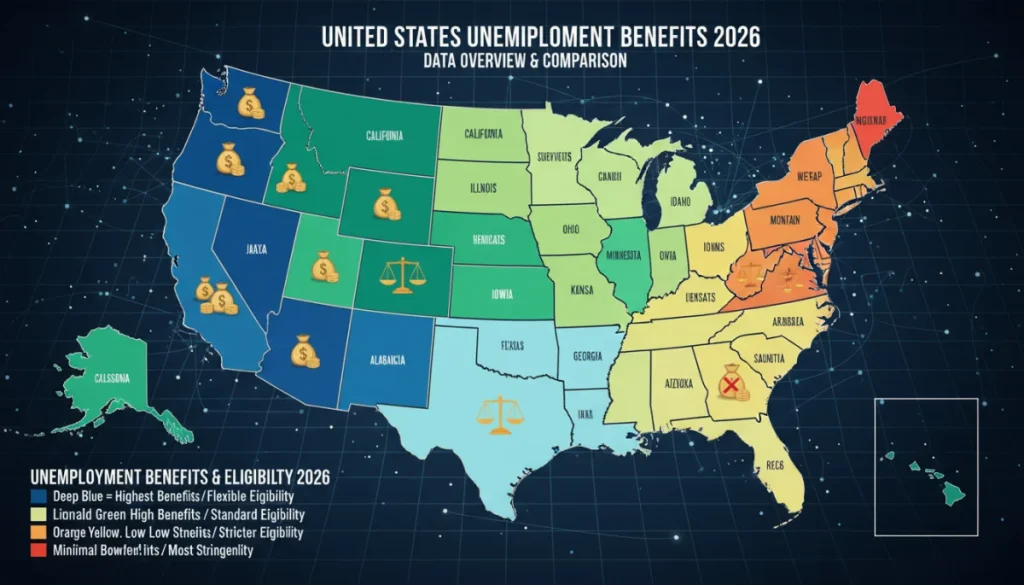
Understanding the nuanced landscape of unemployment benefits in 2026 is crucial, as maximum payments and eligibility criteria vary significantly across each U.S. state, impacting financial stability for those experiencing job loss.
Losing a job can be an incredibly stressful experience, bringing with it a cascade of financial uncertainties. For many, unemployment benefits serve as a vital lifeline, providing temporary income while they search for new employment. However, navigating the complexities of these benefits can be challenging, especially as rules and payment structures differ significantly from one state to another. This comprehensive guide aims to simplify this process by offering a detailed unemployment benefits 2026 state-by-state analysis, focusing on maximum payments and key eligibility requirements, ensuring you have the information needed to make informed decisions during a difficult time.
Understanding the Basics of Unemployment Insurance in 2026
Unemployment insurance (UI) is a joint state and federal program designed to provide temporary financial assistance to eligible workers who are unemployed through no fault of their own. While the federal government sets broad guidelines, individual states administer their own programs, leading to considerable variations in benefits, eligibility, and duration. As we look towards 2026, these state-specific nuances remain a critical factor for anyone seeking support.
The primary goal of UI is to offer a safety net, allowing individuals to cover essential living expenses while actively seeking new work. This not only supports individuals but also helps stabilize local economies during periods of economic downturns. It’s not a permanent solution but a bridge to re-employment, emphasizing the importance of understanding its operational framework.
Key Components of UI Programs
- Weekly Benefit Amount (WBA): This is the amount of money an eligible individual receives each week. It’s typically calculated based on a percentage of the individual’s past earnings during a specific base period.
- Maximum Benefit Amount: Every state sets a cap on the highest weekly benefit an individual can receive, regardless of their previous high earnings. This cap is a significant point of comparison between states.
- Benefit Duration: The standard duration for receiving benefits is usually 26 weeks in most states, but this can vary. Some states offer shorter durations, while federal programs might extend benefits during economic crises.
Understanding these basic components is the first step in deciphering the landscape of unemployment benefits. Each state’s approach to these elements directly impacts the financial security of its unemployed residents. The variability means that what you might expect in one state could be vastly different in another, making a state-by-state analysis indispensable for anyone navigating job loss in 2026.
Eligibility Requirements: A State-by-State Breakdown for 2026
While the core principle of unemployment insurance is consistent across the U.S. – providing aid to those who lose their jobs through no fault of their own – the specific criteria for eligibility can differ significantly. By 2026, states continue to refine their definitions of what constitutes an eligible claimant, often in response to economic conditions and legislative changes. These requirements are crucial, as meeting them is the gateway to receiving any financial support.
Generally, two broad categories of requirements must be met: monetary eligibility and separation eligibility. Monetary eligibility focuses on your work history and earnings, ensuring you’ve contributed enough to the system. Separation eligibility examines the circumstances under which you lost your job.

Monetary Eligibility: Your Work and Earnings History
To qualify for unemployment benefits, you must have earned a certain amount of wages during a specific period, known as the ‘base period.’ This period typically covers the first four of the last five completed calendar quarters before you filed your claim. Each state sets its own minimum earnings requirement. For instance, some states might require earnings in at least two quarters of the base period, while others might demand a total minimum amount over the entire period.
- Minimum Earnings Thresholds: These vary widely, from a few thousand dollars in some states to significantly higher amounts in others. This ensures that only those with a substantial work history contribute to and benefit from the system.
- Base Period Definition: Understanding how your state defines its base period is critical for calculating potential benefits. It directly influences which earnings are considered for your claim.
Failing to meet these monetary requirements is a common reason for initial claim denials. It’s essential to check your state’s specific guidelines to determine if your past earnings qualify you for assistance.
Separation Eligibility: Why You Lost Your Job
The circumstances surrounding your job loss are equally important. To be eligible, you must be unemployed through no fault of your own. This generally means you were laid off, your position was eliminated, or you were discharged for reasons other than misconduct. Quitting your job or being fired for gross misconduct typically disqualifies you from receiving benefits, though exceptions exist.
- Voluntary Quit: If you quit your job, you are generally ineligible for benefits unless you had ‘good cause’ attributable to the employer, such as unsafe working conditions or a significant change in job duties.
- Discharge for Misconduct: Being fired for misconduct, like insubordination or theft, usually results in disqualification. However, the definition of ‘misconduct’ can vary by state, ranging from simple negligence to intentional wrongdoing.
States often have detailed rules and appeal processes for these situations, acknowledging that not all job separations are clear-cut. Understanding your state’s specific definitions of ‘good cause’ and ‘misconduct’ is vital for a successful claim. The ongoing evolution of these rules means that what was acceptable in a prior year might have subtle changes by 2026.
Maximum Weekly Payments: A Comparative Overview for 2026
The maximum weekly benefit amount (WBA) is perhaps the most significant figure for individuals relying on unemployment insurance. This cap represents the highest amount an eligible individual can receive weekly, regardless of how high their previous earnings were. The disparity in these maximums across states is substantial, reflecting varying economic policies, cost of living, and legislative priorities. In 2026, these differences continue to be a critical factor in understanding the true financial support available.
States regularly review and adjust their maximum benefit amounts, often tied to inflation, average wages, or specific legislative mandates. These adjustments aim to keep benefits somewhat aligned with economic realities, though they rarely fully replace an individual’s lost income. Therefore, knowing your state’s maximum WBA is essential for financial planning during unemployment.
Top-Tier States for Maximum Benefits
Historically, states with higher costs of living or stronger union presences tend to offer more generous maximum benefits. For instance, states like Massachusetts, New Jersey, and Washington have often been at the forefront, providing higher weekly payouts. This trend is expected to largely continue into 2026, although specific figures will require checking the latest state unemployment department publications.
- Massachusetts: Often cited for its relatively high maximum WBA, complemented by potential dependent allowances, which can further increase the weekly payment.
- New Jersey: Another state consistently offering competitive maximum benefits, reflecting its high cost of living and strong worker protections.
- Washington: Known for a robust unemployment system, Washington’s maximum benefits are typically among the highest, providing substantial support to its unemployed residents.
These states demonstrate a commitment to providing a more significant safety net, though claimants must still meet all eligibility criteria to receive these maximums.
States with Lower Maximum Payments
Conversely, many states maintain lower maximum weekly benefit amounts. These states often have a lower cost of living, different economic priorities, or more conservative fiscal policies. States in the South and Midwest, for example, frequently have lower maximums compared to coastal states.
- Mississippi: Consistently among the states with the lowest maximum weekly benefit amounts, offering a more limited financial cushion.
- Arizona: While a growing state, its maximum WBA has historically been on the lower end compared to the national average, requiring careful financial planning for residents.
- Florida: Despite its large economy, Florida’s maximum unemployment benefits have traditionally been among the least generous, reflecting a different approach to social safety nets.
The discrepancy between the highest and lowest maximum payments can be several hundred dollars per week, highlighting the importance of state-specific research. This variation underscores the fact that unemployment benefits are not a uniform national standard but a patchwork of state-administered programs, each with its own financial ceiling. A thorough comparison is indispensable for anyone assessing their potential support in 2026.
Duration of Benefits and Potential Extensions in 2026
Beyond the weekly payment amount, the duration for which an individual can receive unemployment benefits is another critical factor influencing their financial stability. The standard duration across most U.S. states is typically 26 weeks, or approximately half a year. However, this is not a universal rule, and the possibility of extensions, particularly during economic downturns, adds another layer of complexity to the unemployment insurance landscape in 2026.
Understanding how long you can expect to receive benefits is crucial for long-term financial planning and job search strategies. The duration can significantly impact how much financial runway an individual has to secure new employment before their benefits are exhausted.
Standard Benefit Duration by State
While 26 weeks is common, some states offer shorter or longer periods. For example, a few states might offer as little as 12-20 weeks, especially when unemployment rates are low. Conversely, a handful of states might provide slightly longer durations. These variations are often tied to state-specific economic indicators and legislative mandates. It’s imperative to consult your state’s unemployment agency for the precise standard duration applicable in 2026.
- Typical 26-Week States: Most states, including New York, Texas, and California, adhere to the 26-week standard, providing a consistent period of support.
- Shorter Duration States: Some states might adjust their maximum duration based on unemployment rates, shortening it when the economy is strong. This dynamic approach requires claimants to stay updated on current state policies.
This variability means that the length of your financial safety net can differ considerably depending on where you reside. Planning your job search and financial budget accordingly is paramount.
Federal and State Extended Benefits Programs
During periods of high unemployment, both federal and state governments may implement extended benefits programs. These programs are designed to provide additional weeks of assistance beyond the standard duration when economic conditions worsen significantly. Historically, these extensions have been critical during recessions, offering a much-needed lifeline to those struggling to find work.
- Federal Extended Benefits (EB): Triggered by specific state unemployment rate thresholds, the EB program typically provides an additional 13 or 20 weeks of benefits, equally shared between federal and state funding.
- Temporary Federal Programs: In severe economic crises, Congress might authorize completely federally funded temporary programs, like the Pandemic Unemployment Assistance (PUA) or Pandemic Emergency Unemployment Compensation (PEUC) seen in recent years. While these are not permanent fixtures, the possibility of similar measures in future crises remains.
As of 2026, the availability of such extensions largely depends on the prevailing economic climate and legislative action. While the standard duration provides a baseline, understanding the potential for extensions offers a more complete picture of the support system. Keeping an eye on economic indicators and official announcements from your state’s unemployment agency and the U.S. Department of Labor is crucial for anyone relying on these benefits.
The Application Process: Tips for a Smooth Claim in 2026
Applying for unemployment benefits can seem daunting, but a well-prepared and accurate application is key to a smooth process and timely receipt of payments. While specific procedures might vary slightly by state, the fundamental steps and necessary documentation remain largely consistent across the U.S. in 2026. Understanding these requirements beforehand can save you significant time and stress.
The goal is to provide all necessary information clearly and precisely, avoiding common pitfalls that can lead to delays or denials. Being proactive and organized will greatly enhance your chances of a successful claim.
Gathering Essential Documentation
Before you even begin the application, collect all relevant personal and employment information. This will expedite the process and ensure accuracy. Missing or incorrect information is a frequent cause of processing delays.
- Personal Identifiers: Your Social Security number, driver’s license or state ID, and mailing address are fundamental.
- Employment History: Details of your last employer, including their name, address, phone number, and dates of employment. You’ll also need your reason for separation and information for all employers in your base period.
- Wage Information: Pay stubs, W-2 forms, or other wage statements to accurately report your earnings during the base period.
Having these documents readily available will allow you to complete the application efficiently and accurately, reducing the need for follow-up requests from the unemployment agency.
Submitting Your Application and Certifying for Benefits
Most states now offer online application portals, which are often the quickest and most convenient way to file your initial claim. After submitting, you will typically need to ‘certify’ for benefits on a weekly or bi-weekly basis. This involves answering questions to confirm your continued eligibility, such as whether you are able and available for work and actively searching for a job.
- Online Filing: Utilize your state’s official unemployment website. These portals are designed to guide you through the process step-by-step.
- Timely Certification: Do not miss your scheduled certification periods. Failure to certify can result in delayed or denied payments. Be honest and accurate in your responses.
Remember that filing for unemployment is a continuous process. You must actively engage with the system by certifying your eligibility and continuing your job search. Staying informed about your state’s specific requirements for both application and ongoing certification is crucial for receiving uninterrupted benefits in 2026.
The Future of Unemployment Benefits: Trends to Watch in 2026
The landscape of unemployment benefits is not static; it continually evolves in response to economic shifts, technological advancements, and legislative priorities. As we move into 2026, several trends are likely to shape how unemployment insurance programs operate, impacting everything from eligibility to benefit delivery. Staying abreast of these potential changes is important for both policymakers and individuals who may rely on these benefits.
Innovation in technology, a focus on workforce development, and ongoing debates about the adequacy of benefits are all contributing to a dynamic environment. These trends suggest a future where unemployment benefits might be more integrated with re-employment services and adapted to a changing job market.
Technological Advancements and Digitalization
States are increasingly leveraging technology to streamline the application process, improve fraud detection, and enhance communication with claimants. By 2026, we can expect even more sophisticated online portals, mobile applications, and AI-powered assistance to become standard. This digitalization aims to make the system more accessible and efficient.
- Enhanced Online Services: Expect more intuitive interfaces and comprehensive self-service options, reducing reliance on phone calls and in-person visits.
- Data Analytics for Fraud Detection: States will continue to invest in advanced data analytics to identify and prevent fraudulent claims more effectively, ensuring the integrity of the system.
While these advancements offer benefits, they also underscore the need for digital literacy among claimants. Access to reliable internet and computer skills may become even more critical for navigating the unemployment system.
Focus on Re-employment and Workforce Development
There’s a growing emphasis on not just providing financial relief but also actively helping unemployed individuals return to the workforce. Many states are integrating unemployment benefits with workforce development programs, offering job search assistance, training opportunities, and career counseling. This holistic approach aims to reduce the duration of unemployment and enhance workers’ skills.
- Mandatory Job Search Activities: Expect continued enforcement and potentially new requirements for claimants to engage in documented job search activities or participate in re-employment services.
- Skills Training and Education: States may offer more robust programs that allow claimants to pursue education or training while receiving benefits, preparing them for in-demand jobs.
This shift reflects a broader understanding that unemployment benefits are most effective when coupled with robust support for re-employment. The goal is to empower individuals to transition back into stable, meaningful work as quickly as possible.
Debates on Benefit Adequacy and Equity
The perennial debate about whether unemployment benefits are adequate to meet basic living expenses is likely to continue in 2026. Advocates for higher benefits argue that current maximums often fall short of covering essential costs, particularly in high-cost-of-living areas. Discussions around indexing benefits to inflation or average wages, and ensuring equitable access for all workers, including gig economy and contract workers, will remain prominent.
- Inflation Adjustments: Some states may consider mechanisms to automatically adjust benefits to keep pace with rising costs, providing a more stable safety net.
- Expanding Coverage: The question of how to extend unemployment insurance to workers in non-traditional employment arrangements, such as freelancers and independent contractors, will likely gain more traction, potentially leading to new legislative frameworks.
These discussions highlight the ongoing effort to balance fiscal responsibility with the fundamental need to support individuals during periods of joblessness. The future of unemployment benefits in 2026 will undoubtedly be shaped by these critical conversations and the resulting policy decisions.
Navigating Regional Economic Disparities and Benefits
The economic landscape of the United States is far from uniform, with significant variations in cost of living, industry stability, and job market health across different regions and states. These disparities directly influence the effectiveness and adequacy of unemployment benefits. What might be sufficient in a low-cost rural area could be woefully inadequate in a high-cost metropolitan region. In 2026, understanding these regional economic differences is crucial for a realistic assessment of unemployment support.
States tailor their unemployment insurance programs to their local economies, but this often means that the financial safety net varies in strength depending on where you reside. This section explores how these regional differences interact with unemployment benefits, offering a more nuanced perspective on the state-by-state analysis.
Cost of Living vs. Benefit Levels
One of the most significant factors is the cost of living. States with higher housing costs, transportation expenses, and general consumer prices often (though not always) have higher maximum weekly benefit amounts. However, even in these states, the benefits rarely fully replace a high earner’s wages, and for many, they still fall short of covering all essential expenses.
- High-Cost States: States like California, New York, and Hawaii often have higher maximum benefits, but their residents also face significantly higher living expenses, potentially negating some of the benefit’s impact.
- Low-Cost States: Conversely, states with a lower cost of living may have lower maximum benefits, which might be more proportionate to local expenses, but still offer a limited cushion.
This dynamic creates a complex picture where a high benefit amount in one state might provide less real purchasing power than a lower benefit in another. Claimants need to consider their local economic context when evaluating the sufficiency of their unemployment payments.
Industry Stability and Job Market Health
The dominant industries and overall health of a state’s job market also play a role. States with diverse, robust economies might experience shorter unemployment durations and more readily available job opportunities. In contrast, states heavily reliant on a single industry that experiences a downturn could see prolonged unemployment and increased pressure on their benefits system.
- Diversified Economies: States with varied industries, such as technology, healthcare, and manufacturing, tend to have more resilient job markets, potentially leading to quicker re-employment for claimants.
- Industry-Specific Downturns: If a state’s primary industry faces significant job losses, the unemployment system can become strained, and job searches for affected workers may be more challenging.
Understanding the local job market’s health is critical for anyone receiving unemployment benefits. A strong job market can mean a shorter period of reliance on benefits, while a weak one might necessitate a longer job search and greater financial strain. These regional economic disparities underscore why a one-size-fits-all approach to unemployment benefits is impractical and why a state-specific analysis remains vital in 2026.
| Key Aspect | Brief Description |
|---|---|
| State Variation | Benefits, eligibility, and duration differ significantly by U.S. state. |
| Eligibility Criteria | Monetary (work history/earnings) and separation (reason for job loss) rules apply. |
| Maximum Payments | Weekly benefit caps vary widely, from lower amounts in some states to higher in others. |
| Future Trends | Digitalization, re-employment focus, and benefit adequacy debates shape future UI. |
Frequently Asked Questions About Unemployment Benefits in 2026
While there isn’t a single national average, maximum weekly benefits vary significantly, typically ranging from around $250 to over $800, depending on the state. High-cost-of-living states generally offer higher maximums, but these figures are subject to change based on state legislation and economic conditions.
The most accurate way to find your state’s specific requirements is by visiting your state’s official Department of Labor or Unemployment Insurance agency website. These sites provide detailed information on eligibility, maximum payments, application procedures, and any recent legislative updates for 2026.
Generally, voluntarily quitting your job disqualifies you from unemployment benefits. However, exceptions exist if you can prove ‘good cause’ for quitting, such as unsafe working conditions, employer harassment, or significant changes to your job terms. Each state has its own definitions of what constitutes ‘good cause.’
You will typically need your Social Security number, driver’s license or state ID, mailing address, detailed information about your last employer (name, address, dates of employment, reason for separation), and wage information (pay stubs, W-2 forms) from your base period to complete your application accurately.
Yes, unemployment benefits are considered taxable income by both federal and most state governments. You will receive a Form 1099-G detailing the benefits paid, which you must report when filing your income taxes. You can often elect to have federal taxes withheld from your weekly payments.
Conclusion
The intricate tapestry of unemployment benefits across the United States in 2026 underscores the critical importance of a state-by-state analysis. From vastly differing maximum weekly payments to unique eligibility requirements and varying benefit durations, the support available to individuals experiencing job loss is anything but uniform. This detailed comparison reveals that while the federal government provides overarching guidelines, the implementation and generosity of unemployment insurance programs are firmly rooted in state-level policy decisions, economic conditions, and legislative priorities. Understanding these nuances is not merely an academic exercise; it is an essential step for anyone seeking to navigate the complexities of joblessness and secure the financial lifeline they need. As the landscape continues to evolve with technological advancements and ongoing debates over benefit adequacy, staying informed about your specific state’s provisions remains the most effective strategy for ensuring you receive the support you are entitled to during challenging times.