2026 US Dollar Strength: International Investment Implications

The anticipated 2026 US Dollar Strength is expected to significantly influence international investment strategies, affecting asset valuations and capital flows across global markets.
As we approach 2026, many financial analysts and economists are keenly observing the potential for continued US Dollar Strength and its far-reaching implications. This isn’t just a matter for currency traders; a robust dollar can ripple through global economies, impacting everything from commodity prices to corporate earnings and, crucially, international investment decisions. Understanding these dynamics is paramount for investors looking to optimize their portfolios in a rapidly evolving global financial landscape.
Understanding the Drivers of US Dollar Strength in 2026
The projected strength of the US Dollar in 2026 is not a random occurrence but rather a confluence of several key economic and geopolitical factors. These drivers create a robust foundation for the dollar’s appreciation, influencing its appeal as a safe-haven asset and a benchmark for global trade and finance.
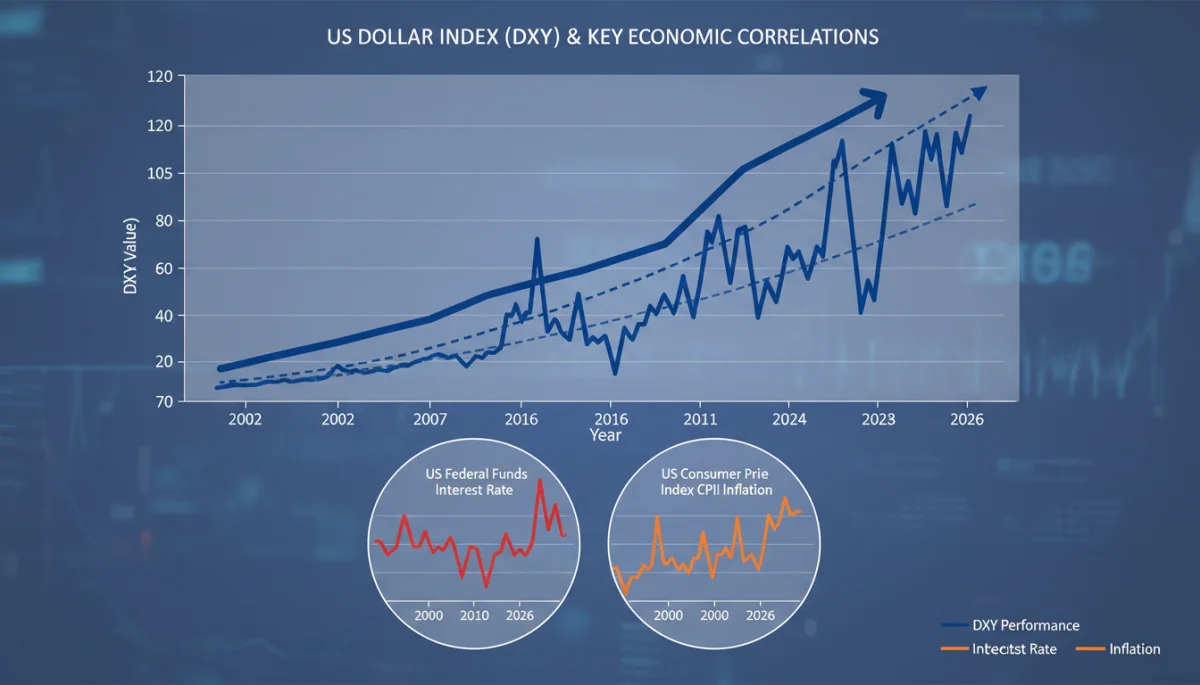
One primary factor is the anticipated divergence in monetary policy between the Federal Reserve and other major central banks. While other economies may still be grappling with inflation or slower growth, the Fed could maintain a relatively tighter stance, offering higher interest rates that attract capital to dollar-denominated assets. This interest rate differential makes holding dollars more attractive.
Monetary Policy Divergence
The Federal Reserve’s approach to interest rates and quantitative tightening plays a crucial role. If the Fed continues to prioritize inflation control over economic growth concerns more aggressively than its counterparts, the dollar will likely benefit.
- Higher comparative interest rates in the US.
- Slower pace of quantitative easing or continued quantitative tightening.
- Stronger real yields on US government bonds.
Economic Resilience and Growth
The US economy has historically demonstrated a remarkable capacity for resilience and innovation. Stronger-than-expected economic growth in the United States, compared to other developed nations, can draw foreign investment seeking better returns and stability.
This economic outperformance often translates into higher corporate profits and a more attractive stock market, further bolstering demand for the dollar.
Global Geopolitical Stability and Safe-Haven Demand
In times of global uncertainty, the US Dollar traditionally acts as a safe haven. Geopolitical tensions, economic instability in other regions, or unexpected global events can trigger a flight to quality, with investors moving capital into dollar assets perceived as less risky.
This demand for safety strengthens the dollar, regardless of domestic economic conditions. The dollar’s role as the world’s primary reserve currency underpins this safe-haven status.
In conclusion, the confluence of tighter monetary policy, resilient economic growth, and persistent safe-haven demand are the bedrock of the dollar’s anticipated strength. Investors must monitor these factors closely to understand the underlying currents driving currency valuations.
Implications for International Investments and Asset Classes
A stronger US Dollar in 2026 carries significant implications for various international investments and asset classes. Its impact is multifaceted, affecting everything from emerging markets to commodity prices and the profitability of multinational corporations.
For investors holding assets denominated in other currencies, a rising dollar means those assets become less valuable when converted back to US dollars. This currency translation effect can erode returns, even if the underlying asset performs well in its local currency.
Emerging Markets Under Pressure
Emerging markets are particularly vulnerable to a strong dollar. Many developing nations borrow in US dollars, making debt repayment more expensive when their local currencies weaken against the dollar. This can lead to financial instability and capital outflows.
- Increased debt servicing costs for dollar-denominated loans.
- Higher risk of capital flight from emerging market assets.
- Reduced competitiveness for emerging market exports.
Commodity Prices and the Dollar
Most global commodities, such as oil, gold, and industrial metals, are priced in US dollars. A stronger dollar typically makes these commodities more expensive for buyers using other currencies, which can dampen demand and put downward pressure on prices.
Conversely, a weaker dollar makes commodities cheaper, potentially stimulating demand. This inverse relationship is a critical consideration for investors in raw materials.
Multinational Corporations and Earnings
US-based multinational corporations with significant international operations often see their overseas earnings diminish when translated back into a stronger dollar. This can negatively impact their reported profits and stock performance.
Conversely, foreign companies exporting to the US may find their goods more competitive, while US exporters face challenges due to higher prices for their products abroad. Understanding this dynamic is crucial for stock selection.
The dollar’s strength acts as a powerful gravitational force, pulling capital towards the US and potentially creating headwinds for non-dollar assets. Investors must strategically adjust their portfolios to mitigate risks and capitalize on opportunities arising from these currency movements.
Strategies for US Investors in a Strong Dollar Environment
For US-based investors, a strong dollar environment in 2026 presents both challenges and opportunities. While it might reduce the attractiveness of foreign assets, it also enhances purchasing power abroad and influences specific sectors.
One key strategy involves re-evaluating exposure to international markets. Instead of shying away entirely, investors might consider hedging their currency exposure or focusing on companies that are less sensitive to currency fluctuations.
Focus on Domestic Equities with Global Reach
Investing in US companies that derive a significant portion of their revenue domestically can offer a buffer against currency translation risks. However, even these companies might face indirect impacts through supply chains or international competition.
Alternatively, some US multinationals might benefit from a strong dollar if their input costs are denominated in weaker foreign currencies, leading to improved profit margins.
Consider Dollar-Denominated Bonds
US Treasury bonds and other dollar-denominated fixed-income assets can become more attractive. Higher interest rates and the dollar’s appreciating value can offer compelling returns, especially for investors seeking stability and income.
This approach emphasizes the safety and yield offered by the US bond market in a strong dollar scenario.
Strategic Allocation to International Assets
While a strong dollar can erode foreign returns, it also means that foreign assets become cheaper in dollar terms. This presents an opportunity for long-term investors to acquire quality international assets at a discount.
Careful selection of international stocks or funds, potentially with currency hedging strategies, can still be a viable approach. Diversification remains a cornerstone of prudent investment, even amidst currency shifts.
Ultimately, US investors should adopt a nuanced approach, balancing domestic opportunities with strategic international exposure. Diversification, currency hedging, and a focus on fundamentally strong companies are key to navigating a strong dollar environment effectively.
Challenges and Opportunities for Non-US Investors
Non-US investors face a distinct set of challenges and opportunities when the 2026 US Dollar Strength is a dominant market theme. Their investment decisions must account for the impact of a strong dollar on their local currency returns and the cost of acquiring dollar-denominated assets.
A stronger dollar makes US assets, such as stocks and bonds, more expensive when purchased with weaker local currencies. However, if these US assets perform well, the combined effect of asset appreciation and dollar appreciation can still lead to significant returns.
Increased Cost of US Assets
For investors outside the US, buying American stocks, bonds, or real estate becomes more expensive in their local currency. This can deter some investors, but it also means that any subsequent appreciation of these assets, coupled with continued dollar strength, can amplify returns when converted back.
This scenario emphasizes the importance of a long-term investment horizon and a conviction in the underlying value of US assets.
Hedging Currency Risk
Non-US investors might consider hedging their currency exposure when investing in US assets. This involves using financial instruments like forward contracts or currency options to lock in an exchange rate, thereby protecting against further dollar appreciation or mitigating potential losses if the dollar weakens unexpectedly.
- Utilizing currency forward contracts to fix exchange rates.
- Employing currency options to gain flexibility.
- Investing in currency-hedged ETFs for simplified exposure.
Focus on Export-Oriented Domestic Companies
Within their home markets, non-US investors might favor companies that export heavily to the United States. These companies benefit from a strong dollar as their products become more competitive in the US market, potentially boosting their revenues and profitability.
This strategy allows investors to indirectly benefit from US economic strength without direct dollar exposure.
Non-US investors must carefully weigh the costs and benefits of dollar exposure. While a strong dollar can increase the initial investment cost, the potential for robust returns from US assets, coupled with the dollar’s appreciation, often makes it a worthwhile consideration, especially with proper risk management.
Sector-Specific Impacts and Investment Opportunities
The projected 2026 US Dollar Strength will not impact all economic sectors equally. Certain industries are poised to benefit, while others may face headwinds. Understanding these sector-specific dynamics is crucial for investors seeking to optimize their portfolios.
Sectors that rely heavily on imports or have significant domestic revenue streams might fare better. Conversely, export-oriented sectors or those with substantial international operations could experience challenges due to currency translation effects.
Technology and Innovation
The US technology sector, often characterized by strong intellectual property and domestic market dominance, may remain attractive. While large tech companies have global operations, their innovation leadership and robust domestic demand can provide a degree of insulation from currency fluctuations.
Furthermore, a strong dollar can make it cheaper for US tech companies to acquire foreign talent or components.
Energy and Commodities
As noted, a strong dollar generally puts downward pressure on commodity prices. This can be a boon for industries that are heavy consumers of raw materials, such as manufacturing or transportation, as their input costs may decrease.
However, for companies involved in commodity extraction or production, a strong dollar could translate to lower revenues if prices decline. Investors should analyze the cost structures of such companies carefully.
Luxury Goods and Tourism
A strong dollar can make international travel and luxury goods more affordable for US consumers, potentially boosting the US tourism industry and domestic luxury retailers. Conversely, it might make it more expensive for foreign tourists to visit the US.
- Increased purchasing power for US consumers abroad.
- Potential boost for US domestic tourism.
- Challenges for US export-oriented luxury brands.
Identifying sectors that are natural beneficiaries or can effectively mitigate the challenges of a strong dollar is key. Investment opportunities will likely emerge in areas demonstrating resilience, strategic cost advantages, or a strong domestic demand base.
Long-Term Outlook and Risk Factors
While the immediate outlook points towards continued US Dollar Strength in 2026, it is crucial for investors to consider the long-term outlook and potential risk factors that could alter this trajectory. Economic and geopolitical landscapes are dynamic, and unforeseen events can quickly shift currency valuations.
A sustained strong dollar can eventually lead to calls for intervention or changes in policy, particularly if it starts to significantly impair US export competitiveness or creates undue stress in global financial markets.
Inflationary Pressures and Policy Shifts
If inflation in the US proves more persistent than anticipated, forcing the Federal Reserve to maintain higher interest rates for an extended period, it could further bolster the dollar. However, excessive inflation could also eventually undermine confidence in the dollar if not effectively managed.
Conversely, if other major economies experience a resurgence in inflation, leading their central banks to tighten monetary policy more aggressively, the interest rate differential favoring the dollar could narrow.
Geopolitical Developments
Major geopolitical events, such as new conflicts, significant shifts in international trade relations, or unexpected political instability in key regions, could either reinforce the dollar’s safe-haven status or, in extreme scenarios, challenge its global dominance.
Any perceived weakening of the US’s economic or political influence on the global stage could eventually erode confidence in the dollar.
Fiscal Health and Debt Concerns
While the US benefits from its reserve currency status, persistent concerns about the national debt and fiscal deficits could, in the very long term, weigh on investor confidence. Although unlikely to be a primary driver in 2026, it remains a background risk for the dollar’s sustained strength.
A balanced perspective on the dollar’s future requires acknowledging both its current strengths and the potential vulnerabilities that could emerge over time. Prudent investors will continuously reassess these factors to adapt their strategies.
| Key Aspect | Brief Description |
|---|---|
| Drivers of Strength | Monetary policy divergence, US economic resilience, and safe-haven demand. |
| Impact on Emerging Markets | Increased debt burden, capital outflows, and reduced export competitiveness. |
| US Investor Strategies | Focus on domestic equities, dollar-denominated bonds, and strategic international buys. |
| Non-US Investor Strategies | Hedging currency risk, focusing on export-oriented domestic companies. |
Frequently Asked Questions About US Dollar Strength
The projected strength stems from factors like the Federal Reserve’s tighter monetary policy, continued robust US economic growth relative to other major economies, and the dollar’s traditional role as a safe-haven asset during global uncertainties. These elements attract capital to dollar-denominated investments.
A strong dollar generally makes foreign assets less valuable when converted back to US dollars for US investors, and makes US assets more expensive for non-US investors. It can also increase debt servicing costs for emerging markets with dollar-denominated loans and impact commodity prices.
US investors might consider focusing on domestic equities with strong local revenues, dollar-denominated bonds for stability, and strategically acquiring international assets at potentially discounted rates, possibly with currency hedging to mitigate exchange rate risks.
Sectors that rely on imports, such as manufacturing (due to cheaper raw materials), and those with strong domestic consumer bases like some technology firms, may benefit. Also, US domestic tourism and luxury goods for American consumers could see a boost.
Potential risks include a significant shift in Federal Reserve policy, a faster-than-expected recovery in other major economies, escalating US fiscal concerns, or a major geopolitical event that undermines global confidence in the US economy or its stability.
Conclusion
The anticipated 2026 US Dollar Strength is set to be a defining feature of the international investment landscape. Driven by a combination of robust economic fundamentals, strategic monetary policy, and its enduring safe-haven appeal, the dollar’s trajectory will necessitate careful consideration from investors worldwide. For US investors, it presents opportunities in domestic assets and strategic international acquisitions. For non-US investors, managing currency risk and identifying export-oriented opportunities will be key. While the outlook for a strong dollar appears solid, prudent investment strategies must always account for dynamic global conditions and potential risk factors. Adapting portfolios to these evolving currency dynamics will be crucial for navigating the financial markets successfully in the coming years.