2026 Retirement Savings: Roth vs. Traditional IRA Benefits
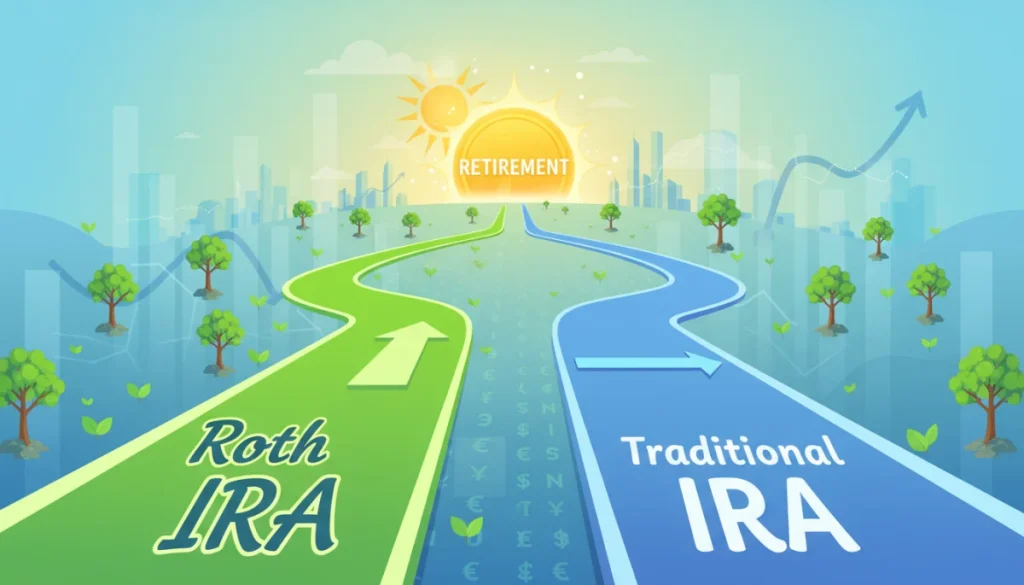
Understanding the nuances between Roth and Traditional IRAs is crucial for optimizing your retirement savings strategy in 2026, as each offers distinct tax advantages impacting your financial future.
As we navigate the evolving economic landscape of 2026, making informed decisions about your retirement savings is more critical than ever. The choice between a Roth IRA and a Traditional IRA can significantly impact your financial well-being in your golden years. This article delves into The 2026 Retirement Savings Landscape: Comparing Roth vs. Traditional IRA Benefits, providing a comprehensive guide to help you select the best option for your unique circumstances.
Understanding the Basics: Roth IRA Fundamentals
The Roth IRA, named after Senator William Roth, has become a cornerstone of retirement planning for many Americans. Its appeal primarily lies in its tax treatment, which differs significantly from its traditional counterpart. Contributions to a Roth IRA are made with after-tax dollars, meaning you won’t receive an immediate tax deduction. However, this upfront tax payment unlocks a powerful benefit: qualified withdrawals in retirement are entirely tax-free. This characteristic makes Roth IRAs particularly attractive to individuals who anticipate being in a higher tax bracket during retirement than they are today.
Eligibility for contributing to a Roth IRA is tied to your modified adjusted gross income (MAGI). In 2026, these income limits are subject to adjustments, and exceeding them can either phase out your ability to contribute or disqualify you entirely. It’s crucial to stay updated on these thresholds, as they directly impact who can directly fund a Roth IRA. Understanding the mechanics of these contributions is the first step in leveraging a Roth for your retirement goals.
Contribution Limits and Income Thresholds
Each year, the IRS sets limits on how much you can contribute to an IRA. These limits apply across both Roth and Traditional IRAs, though the income phase-outs are specific to Roth accounts. For 2026, these figures are expected to see adjustments based on inflation, so it’s vital to consult the latest IRS guidelines. If your income exceeds the specified thresholds, your ability to contribute directly to a Roth IRA may be reduced or eliminated. However, even if you’re above the income limits, a ‘backdoor Roth IRA’ strategy might still be an option, allowing you to convert Traditional IRA funds into a Roth.
- Annual contribution limits (subject to 2026 inflation adjustments)
- Catch-up contributions for individuals aged 50 and over
- Modified Adjusted Gross Income (MAGI) phase-out ranges
- Impact of exceeding income limits on direct contributions
Beyond the contribution mechanics, the primary draw of a Roth IRA is the tax-free growth and withdrawals. This means that all the earnings your investments generate within the Roth account are never taxed, provided you meet certain conditions. These conditions typically include reaching age 59½ and having held the account for at least five years. This tax-free status can lead to substantial savings over decades, especially for those with a long investment horizon. When considering the 2026 retirement savings landscape, a Roth IRA offers a compelling vision of a tax-free retirement income stream.
Exploring the Traditional IRA: Current and Future Benefits
The Traditional IRA has been a staple of retirement planning for decades, offering a different set of advantages compared to its Roth counterpart. The primary benefit of a Traditional IRA is the potential for tax-deductible contributions. Depending on your income and whether you’re covered by a retirement plan at work, your contributions to a Traditional IRA might reduce your taxable income in the year you make them. This immediate tax break can be particularly appealing to individuals currently in a higher tax bracket, as it effectively lowers their current tax bill.
However, the tax benefits of a Traditional IRA aren’t without their trade-offs. While contributions might be tax-deductible, withdrawals in retirement are generally taxed as ordinary income. This means that when you start taking money out of your Traditional IRA after age 59½, those distributions will be added to your taxable income for that year. Understanding this deferred taxation is key to determining if a Traditional IRA aligns with your long-term financial strategy, especially when considering your projected tax bracket in retirement.
Deductibility Rules and Tax Implications
The deductibility of Traditional IRA contributions is not universal. It hinges on several factors, including your MAGI and whether you or your spouse are active participants in an employer-sponsored retirement plan, such as a 401(k). For 2026, these income thresholds and deductibility rules will continue to be a critical consideration. If you are not covered by a workplace plan, your contributions are typically fully deductible, regardless of your income. However, if you are covered, the deductibility may phase out as your income rises.
- Full deductibility for those without employer plans
- Income-based phase-outs for those covered by employer plans
- Tax-deferred growth of investments within the IRA
- Required Minimum Distributions (RMDs) starting at age 73 (as of 2026)
Another significant aspect of Traditional IRAs is the concept of tax-deferred growth. Your investments grow within the account without being taxed until you make withdrawals in retirement. This compounding effect, unhindered by annual taxes, can lead to substantial wealth accumulation over time. However, it’s important to remember that these withdrawals will eventually be taxed. For those who anticipate being in a lower tax bracket during retirement, the Traditional IRA can offer a powerful way to reduce current tax obligations while building a substantial nest egg.
Key Differences: Roth vs. Traditional IRA at a Glance
The fundamental distinction between Roth and Traditional IRAs lies in when you pay taxes. This difference creates a ripple effect on various aspects of your retirement planning, from immediate tax savings to future income streams. Understanding these core differences is essential for making an informed choice that aligns with your financial projections and goals for 2026 and beyond. It’s not simply about one being ‘better’ than the other, but rather which one is ‘better for you’ based on your individual circumstances.
One of the most talked-about differences is the tax treatment of withdrawals. With a Roth IRA, qualified withdrawals are tax-free, offering immense peace of mind in retirement regarding unexpected tax burdens. Conversely, Traditional IRA withdrawals are taxable, meaning you’ll need to factor in income taxes when planning your retirement budget. This distinction directly impacts your net income in retirement and should be a primary consideration.
Tax Treatment and Withdrawal Rules
The timing of tax payments is the cornerstone of the Roth vs. Traditional debate. Roth contributions are after-tax, leading to tax-free withdrawals. Traditional contributions may be pre-tax (deductible), leading to taxable withdrawals. This difference significantly influences your financial planning, particularly when projecting your income and tax bracket in retirement. The five-year rule for Roth IRAs and the age 59½ requirement are also critical for tax-free withdrawals.
- Roth IRA: After-tax contributions, tax-free withdrawals in retirement (qualified).
- Traditional IRA: Pre-tax contributions (potentially deductible), taxable withdrawals in retirement.
- Withdrawal Age: Both generally require age 59½ for penalty-free withdrawals.
- Required Minimum Distributions (RMDs): Traditional IRAs have RMDs; Roth IRAs do not for the original owner.
Another crucial differentiator is the impact on your current tax situation. A Traditional IRA can provide an immediate tax deduction, lowering your current taxable income. This can be a significant advantage if you are in a high tax bracket now. A Roth IRA, on the other hand, offers no immediate tax deduction but promises tax-free income later. Your current income level and your projection of future income and tax rates should heavily influence your decision. These distinct tax implications are not merely academic; they have real-world effects on your financial liquidity and long-term wealth accumulation.
Eligibility and Income Considerations for 2026
Eligibility to contribute to Roth and Traditional IRAs is not universal and is subject to specific rules set by the IRS, which are updated periodically. For 2026, these income limitations and other criteria will continue to play a crucial role in determining which type of IRA you can contribute to directly, and to what extent. It’s imperative to understand these parameters to ensure your contributions are valid and to avoid potential penalties or complications. Staying informed about the latest IRS guidelines is a key component of effective retirement planning.
For Roth IRAs, the primary hurdle is your Modified Adjusted Gross Income (MAGI). If your MAGI exceeds certain thresholds, your ability to contribute directly to a Roth IRA will be phased out or eliminated entirely. These income limits are adjusted annually for inflation and are a critical factor for higher-income earners. Traditional IRAs, while not having direct income limits for contributions, do have income-based restrictions on the deductibility of those contributions if you are covered by a workplace retirement plan.
Roth IRA Income Limits and Phase-Outs
The IRS sets specific MAGI limits that determine eligibility for direct Roth IRA contributions. For 2026, these limits will be updated, and it’s essential to check the latest figures. If your income falls within the phase-out range, the amount you can contribute to a Roth IRA is gradually reduced. If your income exceeds the upper limit of the phase-out range, you cannot make direct contributions to a Roth IRA. This is where strategies like the ‘backdoor Roth’ come into play for those who are above the income limits but still wish to benefit from a Roth account.
- Annual MAGI thresholds for Roth IRA eligibility.
- Understanding the phase-out range for reduced contributions.
- The ‘backdoor Roth’ strategy for high-income earners.
- Impact of marital status on income limits.
Conversely, Traditional IRAs do not have income limits that prevent contributions altogether. Anyone with earned income can contribute to a Traditional IRA. However, as mentioned, the deductibility of those contributions is income-dependent if you are also covered by a retirement plan at work. This means that while you can contribute, you might not receive the immediate tax break if your income is too high. Navigating these eligibility and income considerations is a nuanced process that often benefits from professional financial advice, ensuring you maximize your retirement savings while adhering to IRS regulations.
Strategic Planning: When to Choose Which IRA
Deciding between a Roth and a Traditional IRA is not a one-size-fits-all decision; it’s a strategic choice heavily influenced by your current financial situation, future income projections, and tax expectations. The ideal choice for you in 2026 will depend on whether you believe you’ll be in a higher tax bracket now or in retirement. This fundamental question guides many individuals toward one type of IRA over the other, but it’s important to consider all factors before committing.
If you anticipate your income and, consequently, your tax bracket will be higher in retirement than it is today, a Roth IRA is generally the more advantageous option. By paying taxes on your contributions now, you lock in tax-free withdrawals later, effectively shielding your retirement income from potentially higher future tax rates. This strategy is particularly appealing for younger individuals who expect their careers and incomes to grow significantly over time.
Projecting Future Tax Brackets
One of the most critical elements in this strategic decision is accurately projecting your future tax bracket. This involves considering your current income, potential career growth, anticipated retirement income sources (Social Security, pensions, other investments), and future tax legislation. While predicting future tax laws is impossible, making an educated guess about your relative tax position can significantly inform your IRA choice. If you expect to be in a lower tax bracket in retirement, the Traditional IRA’s upfront deduction might be more beneficial.
- Current vs. projected future income levels.
- Anticipating changes in tax laws and rates.
- Impact of other retirement income sources on future tax liability.
- The benefit of tax diversification through both Roth and Traditional accounts.
Conversely, if you are currently in a high tax bracket and expect to be in a lower one during retirement, a Traditional IRA might be the better choice. The immediate tax deduction can provide significant savings now, and while withdrawals will be taxed later, they will be taxed at a lower rate. This approach defers taxation, allowing your money to grow tax-free for longer. Ultimately, a balanced approach, perhaps utilizing both Roth and Traditional accounts, can provide valuable tax diversification, offering flexibility regardless of how tax laws or your income evolve in the future.
Conversion Strategies and Backdoor Roth IRAs
For those who find themselves above the income limits for direct Roth IRA contributions, or who wish to convert tax-deferred Traditional IRA assets into a tax-free Roth account, conversion strategies become invaluable. The ‘backdoor Roth IRA’ is a particularly popular method for high-income earners to still benefit from a Roth, while Roth conversions allow individuals to strategically shift their retirement assets from one tax treatment to another. These advanced strategies require careful planning to avoid unintended tax consequences.
A Roth conversion involves moving funds from a Traditional IRA (or another pre-tax retirement account like a 401(k)) into a Roth IRA. The key implication here is that any pre-tax amounts converted are subject to income tax in the year of conversion. While this means paying taxes now, it secures tax-free growth and withdrawals in retirement. This strategy is often considered when an individual is in a lower tax bracket than they anticipate being in retirement, making the current tax hit more manageable.
Implementing a Backdoor Roth IRA
The backdoor Roth IRA strategy is typically employed by individuals whose Modified Adjusted Gross Income (MAGI) exceeds the limits for direct Roth contributions. It involves two main steps: first, contributing non-deductible funds to a Traditional IRA, and second, immediately converting those non-deductible contributions to a Roth IRA. Since the contributions were non-deductible, the conversion itself is generally tax-free, allowing high earners to bypass the income restrictions. However, the ‘pro-rata rule’ can complicate this if you have other pre-tax IRA accounts.
- Steps for executing a backdoor Roth IRA.
- Understanding the ‘pro-rata rule’ and its implications.
- Timing conversions to minimize tax impact.
- Consulting a tax professional for complex situations.
Roth conversions offer flexibility, allowing you to re-evaluate your tax strategy at different life stages. For instance, converting during a year when you have lower income or significant tax deductions might make the tax bill from the conversion more manageable. It’s crucial to consider the potential tax implications and ensure you have the funds to pay any taxes due on the conversion. These strategies, while powerful, demand a thorough understanding of tax rules and often benefit from the guidance of a qualified financial advisor to ensure they are executed correctly and align with your overall financial plan for 2026 and beyond.
The Role of IRAs in a Holistic Retirement Plan
While Roth and Traditional IRAs are powerful tools, they are just one component of a comprehensive retirement strategy. Integrating your IRA choices with other retirement vehicles, such as 401(k)s, 403(b)s, or even taxable brokerage accounts, creates a more robust and diversified financial future. A holistic approach considers all your assets, income streams, and financial goals to build a resilient plan that can withstand economic fluctuations and unexpected life events. The 2026 retirement savings landscape demands a multi-faceted approach.
Achieving tax diversification is a key benefit of integrating different retirement accounts. By having a mix of pre-tax (Traditional IRA, 401(k)) and after-tax (Roth IRA, Roth 401(k)) savings, you gain flexibility in retirement to withdraw from accounts that offer the most favorable tax treatment at that time. This adaptability can be incredibly valuable, especially as tax laws and your personal financial situation may change over several decades. It’s about building options for yourself in the future.
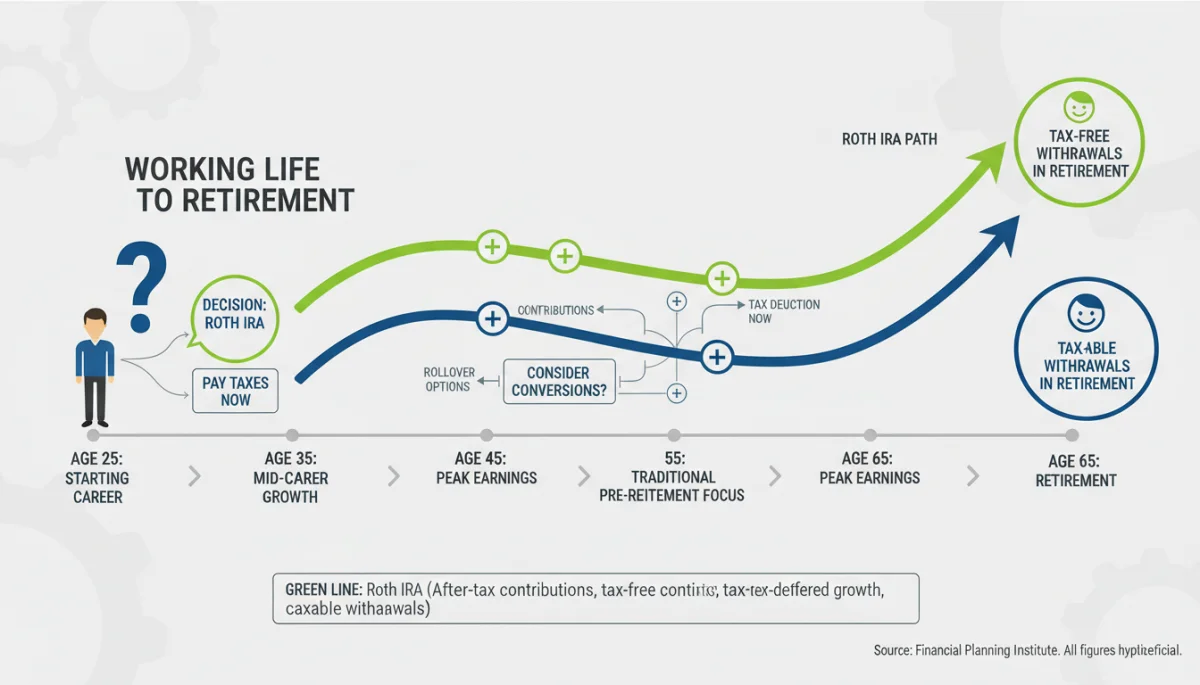
Furthermore, considering your overall estate planning objectives also plays a role in your IRA decisions. Roth IRAs, for instance, do not have Required Minimum Distributions (RMDs) for the original owner, which means you can leave the money to grow tax-free for your heirs. Traditional IRAs, on the other hand, are subject to RMDs, which can impact how you plan to pass on your wealth. These considerations extend beyond your own retirement and into your legacy, adding another layer of complexity and importance to your choices.
Integrating with Other Retirement Vehicles
Your IRA choice should not be made in isolation. It should complement your employer-sponsored plans, such as a 401(k) or 403(b). For example, if your workplace offers a Roth 401(k), you might consider contributing there for after-tax savings and then using a Traditional IRA for pre-tax deductions, or vice-versa. The goal is to create a balanced portfolio of tax-advantaged accounts that maximizes your savings and minimizes your tax burden across your lifetime. This layered approach provides greater financial security and flexibility.
- Balancing contributions between IRAs and employer plans.
- Utilizing Roth 401(k) options for tax diversification.
- Considering taxable brokerage accounts for additional investment flexibility.
- The importance of regular portfolio reviews and adjustments.
Ultimately, the most effective retirement plan is one that is tailored to your individual circumstances and regularly reviewed. As your income changes, as tax laws evolve, and as your life goals shift, your retirement strategy should adapt accordingly. Consulting with a qualified financial advisor can provide invaluable guidance in navigating the complexities of the 2026 retirement savings landscape, ensuring your Roth and Traditional IRA choices are part of a cohesive and optimized plan for your future.
Navigating Future Changes and Staying Informed
The financial landscape is dynamic, with tax laws and economic conditions constantly evolving. For 2026 and beyond, anticipating and adapting to these changes will be crucial for effective retirement planning. Staying informed about potential legislative adjustments to IRA rules, contribution limits, and income thresholds is not just good practice; it’s essential for optimizing your Roth and Traditional IRA benefits. Proactive engagement with financial news and policy updates can significantly impact your long-term savings strategy.
Government policies and economic shifts can directly influence the attractiveness of Roth versus Traditional IRAs. For example, changes in tax rates could make one option significantly more appealing than the other. Similarly, adjustments to Social Security or Medicare policies might alter your projected retirement income, which in turn could influence your preferred tax treatment for IRA withdrawals. Being aware of these broader economic and political currents allows for more agile and responsive financial planning.
Monitoring Legislative Updates and Economic Trends
Keeping an eye on legislative developments is paramount. Congress frequently debates and enacts changes to tax codes that can affect retirement accounts. These changes might include modifications to contribution limits, income phase-outs, or even the rules surrounding Roth conversions and Required Minimum Distributions (RMDs). Subscribing to reputable financial news sources, consulting with financial professionals, and regularly checking IRS publications are all excellent ways to stay abreast of these critical updates.
- Regularly checking IRS publications for updated limits and rules.
- Following financial news outlets for legislative changes.
- Consulting with a financial advisor for personalized insights.
- Understanding the impact of inflation on savings goals.
Furthermore, broader economic trends, such as inflation rates, interest rates, and market performance, will inevitably influence the real value of your retirement savings. While you cannot control these external factors, understanding their potential impact can help you adjust your investment strategies within your Roth or Traditional IRA. For instance, periods of high inflation might encourage a re-evaluation of your asset allocation. By diligently monitoring these elements, you empower yourself to make timely adjustments, ensuring your retirement savings strategy remains robust and aligned with your long-term financial objectives in the ever-changing 2026 landscape.
| Key Feature | Description |
|---|---|
| Tax Treatment | Roth: After-tax contributions, tax-free withdrawals. Traditional: Pre-tax contributions (potentially deductible), taxable withdrawals. |
| Income Limits | Roth has MAGI limits for direct contributions. Traditional has income limits for deductibility if covered by a workplace plan. |
| Withdrawals | Roth: Qualified withdrawals are tax-free. Traditional: Withdrawals are taxed as ordinary income. |
| Flexibility | Roth offers tax-free growth and no RMDs for owners. Traditional offers immediate tax deductions and tax-deferred growth. |
Frequently Asked Questions About IRAs in 2026
Roth IRAs are funded with after-tax dollars, leading to tax-free withdrawals in retirement. Traditional IRAs allow for potentially tax-deductible contributions, but withdrawals in retirement are taxed as ordinary income. The choice depends on when you prefer to pay taxes and your projected tax bracket.
Yes, you can contribute to both, but the combined total contributions across all your IRAs cannot exceed the annual limit set by the IRS for 2026. Income limits for Roth contributions and Traditional IRA deductibility still apply separately.
A ‘backdoor Roth IRA’ is a strategy for high-income earners who exceed the direct Roth contribution limits. It involves contributing non-deductible funds to a Traditional IRA and then converting them to a Roth. It benefits those who want Roth advantages despite income restrictions.
Traditional IRAs are subject to RMDs, which typically begin at age 73 (as of 2026). Roth IRAs, however, do not have RMDs for the original owner, allowing funds to grow tax-free indefinitely and be passed on to heirs without immediate distribution requirements.
Consider your current income and tax bracket versus your expected retirement income and tax bracket. If you anticipate higher taxes in retirement, a Roth is often better. If you expect lower taxes in retirement and need an upfront deduction, a Traditional IRA might be more suitable. Consulting a financial advisor is recommended.
Conclusion
Navigating the 2026 retirement savings landscape requires a clear understanding of the distinct advantages offered by both Roth and Traditional IRAs. While Roth IRAs provide the invaluable benefit of tax-free withdrawals in retirement, appealing to those who expect higher future tax brackets, Traditional IRAs offer immediate tax deductions and tax-deferred growth, making them attractive to individuals currently in higher tax brackets. The optimal choice is deeply personal, influenced by your current income, future financial projections, and evolving tax laws. By carefully weighing these factors and considering advanced strategies like Roth conversions, you can build a robust and tax-efficient retirement portfolio, ensuring a secure and prosperous future. Staying informed and seeking professional guidance are paramount to making the most of your retirement savings.