Maximizing Your 401(k) in 2026: New Limits & Strategies

To maximize your 401(k) in 2026, understand the updated contribution limits and leverage diversified investment strategies, potentially including Roth 401(k) options, to optimize your retirement savings.
As we look ahead to 2026, understanding how to best navigate your retirement savings is more crucial than ever. Maximizing Your 401(k) in 2026: New Contribution Limits and Investment Strategies isn’t just about saving; it’s about smart, proactive planning to secure your financial future. This guide will help you decipher the changes and opportunities that lie ahead, ensuring your retirement fund works as hard as you do.
Understanding the 2026 401(k) Contribution Limits
The Internal Revenue Service (IRS) periodically adjusts the contribution limits for 401(k) plans to account for inflation and other economic factors. These adjustments are vital for anyone serious about retirement planning, as they directly impact how much you can set aside each year on a tax-advantered basis. For 2026, it’s expected that these limits will see another increase, offering a greater opportunity for individuals to accelerate their savings.
Staying informed about these new limits is the first step in maximizing your retirement accounts. Exceeding the previous year’s limit without realizing the new one could lead to missed opportunities for growth. Conversely, not being aware of an increase might cause you to under-contribute, leaving valuable tax-deferred or tax-free growth on the table. The IRS typically announces these figures in the fall of the preceding year, giving ample time for individuals and employers to adjust their payroll deductions.
Standard Employee Contributions
The standard employee contribution limit is the maximum amount an individual can contribute from their paycheck to their 401(k) in a given year. This limit applies to both traditional 401(k)s and Roth 401(k)s. Historically, these limits have seen steady increases, reflecting a commitment to supporting retirement savings. For 2026, financial experts anticipate a bump, possibly pushing the limit higher than the previous year’s figures. This increase is a direct response to economic inflation and the rising cost of living, ensuring that the purchasing power of your retirement savings is maintained over time.
- Monitor IRS announcements for official 2026 figures.
- Adjust your payroll deductions early in the year.
- Understand the difference between pre-tax and Roth contributions.
Catch-Up Contributions for Older Savers
For those aged 50 and over, the IRS provides an additional provision known as catch-up contributions. This allows older workers to contribute an extra amount beyond the standard limit, recognizing that they may have less time to save for retirement or might be looking to boost their savings in their peak earning years. The catch-up limit also typically sees adjustments, offering a significant advantage for those nearing retirement. Utilizing this option can dramatically increase your retirement nest egg in a relatively short period.
It’s important to coordinate with your employer’s HR or benefits department to ensure these catch-up contributions are properly set up. Some plans might require specific forms or elections. This extra contribution can be a game-changer for individuals who started saving later in life or who experienced periods of lower income. By maximizing both standard and catch-up contributions, you are taking full advantage of the tax benefits and growth potential offered by your 401(k) plan.
In conclusion, keeping a close eye on the 2026 contribution limits, both standard and catch-up, is fundamental. These limits represent the ceiling for your tax-advantaged savings and are a critical component of a robust retirement plan. By proactively adjusting your contributions, you ensure you are maximizing every dollar available for your future.
Strategic Investment Options Within Your 401(k)
Beyond simply contributing the maximum allowable amount, the true power of a 401(k) lies in how those funds are invested. Many individuals set up their contributions and then forget about their investment choices, missing out on potential growth. In 2026, a strategic approach to your 401(k)’s investment options is paramount, considering market volatility and evolving economic landscapes. Your investment selections should align with your risk tolerance, time horizon, and overall financial goals.
Most 401(k) plans offer a curated selection of investment funds, typically including target-date funds, index funds, mutual funds, and sometimes individual stocks or bonds. While this selection can be limited compared to a self-directed brokerage account, understanding each option’s role in your portfolio is crucial. Regular review of these choices, at least annually, is a best practice to ensure they continue to meet your needs.
Diversification for Risk Management
Diversification is a cornerstone of sound investment strategy, and it’s equally important within your 401(k). Spreading your investments across different asset classes, industries, and geographies helps mitigate risk. If one sector performs poorly, others may perform well, balancing out potential losses. A well-diversified portfolio aims to capture market gains while minimizing exposure to significant downturns.
- Allocate investments across various equity sectors (e.g., technology, healthcare, consumer staples).
- Consider a mix of domestic and international funds.
- Include fixed-income investments (bonds) to reduce volatility, especially as you approach retirement.
Understanding Target-Date Funds
Target-date funds are a popular option within 401(k)s, especially for those who prefer a hands-off approach. These funds automatically adjust their asset allocation over time, becoming more conservative as you approach your target retirement date. For example, a 2045 target-date fund will start with a higher allocation to stocks and gradually shift towards bonds as 2045 nears. They offer simplicity and professional management, making them an excellent choice for many savers.
However, it’s important to understand the underlying investments and fee structures of target-date funds. While convenient, some may not align perfectly with your individual risk tolerance or other external investments. Reviewing the fund’s prospectus and understanding its glide path (how it adjusts its asset allocation) can help you determine if it’s the right fit for your retirement strategy. Even if you choose a target-date fund, it’s still beneficial to understand the principles of diversification it employs.
Ultimately, making informed investment choices within your 401(k) is as important as maximizing your contributions. Regularly reviewing your portfolio, understanding diversification, and knowing the pros and cons of various fund types will put you in a strong position to achieve your retirement goals.
The Power of Employer Matching Contributions
One of the most significant benefits of a 401(k) plan, often overlooked or underutilized, is the employer matching contribution. This is essentially free money from your employer that contributes to your retirement savings. Many companies offer to match a certain percentage of your contributions, up to a specific limit. Failing to contribute enough to receive the full employer match is akin to leaving a significant portion of your compensation on the table. It’s an immediate, guaranteed return on your investment that is hard to beat.
Understanding your company’s specific matching policy is crucial. Some employers match dollar-for-dollar up to a certain percentage, while others might match 50 cents on the dollar. Regardless of the exact formula, the goal should always be to contribute at least enough to get the maximum match. This strategy provides an immediate boost to your retirement savings and significantly accelerates the growth of your nest egg through compounding.
Vesting Schedules Explained
While employer contributions are a fantastic benefit, it’s important to understand vesting schedules. Vesting refers to the ownership you have over your employer’s contributions. Some plans have immediate vesting, meaning you own those contributions from day one. Others might have a graded vesting schedule, where you gain ownership of a percentage of the contributions each year, or a cliff vesting schedule, where you gain full ownership after a certain number of years.
- Inquire about your employer’s specific vesting schedule.
- Understand the implications if you leave the company before being fully vested.
- Factor vesting into your long-term career and financial planning.
For example, a typical graded vesting schedule might grant you 20% ownership after two years, 40% after three, and so on, reaching 100% after five or six years. If you leave employment before being fully vested, you might forfeit a portion of the employer contributions. This doesn’t affect your own contributions, which are always 100% yours, but it’s a critical factor to consider when making career decisions or evaluating the true value of your employer’s match.
Maximizing employer matching contributions is a non-negotiable step in optimizing your 401(k). It’s a powerful tool for wealth accumulation that, when combined with your own consistent contributions, forms a robust foundation for your retirement. Always ensure you contribute enough to capture the full match and understand your plan’s vesting rules.
Considering Roth 401(k) Options in 2026
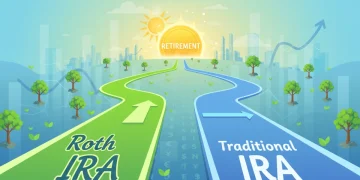
For many years, the traditional 401(k) was the primary choice for employer-sponsored retirement plans. However, the introduction and growing popularity of the Roth 401(k) have provided savers with an alternative tax treatment option. In 2026, evaluating whether a Roth 401(k) or a traditional 401(k) is better suited for your financial situation is a key strategic decision. The core difference lies in when you pay taxes on your contributions and earnings.
A traditional 401(k) allows pre-tax contributions, meaning your contributions reduce your taxable income in the present year. You pay taxes on your withdrawals in retirement. A Roth 401(k), conversely, uses after-tax contributions, so there’s no immediate tax deduction. However, qualified withdrawals in retirement are entirely tax-free. This distinction is crucial for long-term tax planning and can significantly impact your financial outlook in retirement.
When a Roth 401(k) Makes Sense
A Roth 401(k) is particularly attractive for individuals who anticipate being in a higher tax bracket in retirement than they are today. By paying taxes on your contributions now, you essentially lock in your current tax rate, potentially saving a substantial amount in taxes later. This option is also beneficial for younger workers who have many years for their investments to grow tax-free. The longer your money compounds, the more valuable those tax-free withdrawals become.

- If you expect higher income and higher tax brackets in the future.
- If you are early in your career and have a long investment horizon.
- For individuals who value tax-free income in retirement, regardless of future tax rates.
The Blend: Traditional and Roth Strategies
It’s also possible to have both a traditional 401(k) and a Roth 401(k) if your plan allows. This hybrid approach can offer flexibility and hedging against future tax uncertainties. By contributing to both, you diversify your tax risk, ensuring you have both tax-deferred and tax-free income streams in retirement. This can be a sophisticated strategy, often best discussed with a financial advisor, to tailor it to your unique circumstances and future income projections.
Ultimately, the decision between a traditional and Roth 401(k) or a combination of both depends on your current income, expected future income, and tax outlook. Given the potential for tax law changes, having flexibility and understanding the implications of each option is vital for maximizing your retirement savings in 2026 and beyond.
Advanced Strategies for 401(k) Growth
Once you’ve mastered the basics of contribution limits, employer matches, and investment selection, there are several advanced strategies you can employ to further enhance your 401(k) growth. These strategies often involve a deeper understanding of tax codes and market dynamics, but they can yield significant benefits over the long term. For 2026, staying agile and informed about these tactics can set your retirement plan apart.
These advanced approaches aren’t for everyone, and they often require more active management or consultation with a financial professional. However, for those willing to delve deeper, the rewards can be substantial, leading to a more robust and resilient retirement portfolio. The goal is to leverage every available tool to optimize your savings and investment performance.
The Mega Backdoor Roth
For high-income earners who have maxed out their traditional and Roth 401(k) contributions, the Mega Backdoor Roth strategy can be a powerful tool. This involves making after-tax contributions to your 401(k) (if your plan allows), and then converting those after-tax contributions to a Roth IRA. While the direct Roth 401(k) contribution limits apply, there’s a much higher overall limit for total 401(k) contributions (employee, employer, and after-tax). This strategy allows you to get more money into a Roth account than would otherwise be possible, growing tax-free for retirement.
This strategy is complex and requires careful execution to avoid tax pitfalls. Not all 401(k) plans permit after-tax contributions, and not all custodians facilitate easy in-plan conversions or rollovers to a Roth IRA. It’s essential to consult with a tax advisor or financial planner to ensure you comply with all IRS rules and make the most of this advanced technique. The Mega Backdoor Roth is an excellent example of how understanding the nuances of retirement planning can unlock significant advantages.
Rebalancing Your Portfolio
Regularly rebalancing your 401(k) portfolio is an advanced strategy that ensures your asset allocation remains aligned with your risk tolerance and financial goals. Over time, market fluctuations can cause your portfolio’s original asset allocation to drift. For instance, a strong bull market might cause your stock allocation to grow significantly, making your portfolio riskier than intended.
Rebalancing involves selling off some of your overperforming assets and reinvesting in underperforming ones to bring your portfolio back to its target allocation. This disciplined approach helps you buy low and sell high, preventing your portfolio from becoming overly concentrated in any single asset class. It’s a proactive measure to manage risk and maintain your investment strategy’s integrity.
Implementing these advanced strategies, such as the Mega Backdoor Roth and consistent portfolio rebalancing, can significantly amplify your 401(k)’s growth potential. While they require more attention and potentially professional guidance, they offer sophisticated ways to maximize your retirement savings beyond standard contributions.
Navigating Economic Trends and Market Volatility in 2026
The year 2026 will undoubtedly bring its own set of economic trends and market volatilities that could impact your 401(k) performance. A key aspect of maximizing your retirement savings is not just setting it and forgetting it, but actively understanding and reacting to the broader economic environment. While no one can predict the market with certainty, being informed allows for more measured decisions rather than reactive ones.
Understanding the interplay between inflation, interest rates, and global events is crucial. These factors directly influence investment returns and the purchasing power of your future retirement income. A well-constructed 401(k) strategy for 2026 will account for these dynamics, aiming to build a resilient portfolio that can withstand various economic conditions.
Impact of Inflation and Interest Rates
Inflation erodes the purchasing power of money over time, meaning your retirement savings will need to be larger to maintain the same lifestyle. Higher inflation often leads to central banks raising interest rates, which can impact bond prices and the cost of borrowing for companies, affecting stock valuations. For your 401(k), this means carefully evaluating investments that historically perform well in inflationary environments, such as real estate or inflation-protected securities, if available within your plan.
Conversely, during periods of lower interest rates, growth stocks might perform better as borrowing costs are cheaper. It’s a delicate balance, and your investment strategy should be flexible enough to adapt. While you shouldn’t constantly tinker with your portfolio, understanding these macro trends helps you make informed decisions during your annual reviews.
Staying Calm Through Market Swings
Market volatility is a natural part of investing. For long-term investors in a 401(k), short-term market downturns should not be a cause for panic. In fact, these periods can present opportunities. When the market drops, your regular contributions buy more shares at a lower price, a strategy known as dollar-cost averaging. This can lead to significant gains when the market eventually recovers.
- Avoid emotional decision-making during market downturns.
- Stick to your long-term investment plan and asset allocation.
- View market corrections as opportunities to buy assets at a discount.
The key is to maintain a long-term perspective and avoid making impulsive decisions based on daily news cycles. Your 401(k) is a long-term savings vehicle, and its success is measured over decades, not months or years. By staying disciplined and informed about economic trends, you can navigate market volatility effectively and ensure your 401(k) continues to grow towards your retirement goals in 2026 and beyond.
The Importance of Regular Review and Professional Guidance
Even with the best initial planning, a 401(k) strategy is not a set-it-and-forget-it endeavor. The financial landscape, your personal circumstances, and market conditions are constantly evolving. Therefore, regular review and, when necessary, professional guidance are indispensable components of maximizing your 401(k) in 2026. This proactive approach ensures your retirement plan remains aligned with your goals and optimized for growth.
An annual review of your 401(k) is a minimum best practice. This review should encompass your contribution levels, investment allocation, fund performance, and overall alignment with your retirement timeline. Life events such as marriage, birth of a child, a new job, or a significant change in income should also trigger a reevaluation of your strategy.
When to Seek Professional Advice
While many individuals can manage their 401(k) with basic knowledge, certain situations warrant professional guidance. A certified financial planner (CFP) can provide personalized advice tailored to your unique financial situation, risk tolerance, and retirement goals. They can help you navigate complex decisions, such as advanced investment strategies, tax planning, and integrating your 401(k) with other retirement accounts.
A financial advisor can also offer an objective perspective, helping you avoid emotional investment decisions during volatile market periods. They can help you understand the fine print of your plan, identify hidden fees, and ensure you’re taking advantage of all available benefits, including the employer match and catch-up contributions. Their expertise can be invaluable in optimizing your retirement trajectory.
Integrating Your 401(k) with Overall Financial Planning
Your 401(k) is just one piece of your broader financial puzzle. For true maximization, it needs to be integrated into a holistic financial plan that includes other savings vehicles (IRAs, taxable accounts), estate planning, insurance, and debt management. A comprehensive plan ensures that all your financial components work synergistically towards your long-term objectives.
- Review your 401(k) at least once a year.
- Consult a financial advisor for complex situations or personalized strategies.
- Ensure your 401(k) strategy aligns with your complete financial picture.
This integrated approach allows for a more robust and adaptable retirement strategy. By regularly reviewing your plan and seeking professional guidance when needed, you are not just saving for retirement; you are strategically building a secure and prosperous future. In 2026, this level of diligence will be key to truly maximizing your 401(k) potential.
| Key Point | Brief Description |
|---|---|
| Contribution Limits | Stay informed about updated IRS 401(k) and catch-up limits for 2026 to maximize tax-advantaged savings. |
| Investment Strategies | Diversify your portfolio, understand target-date funds, and rebalance regularly to manage risk and optimize growth. |
| Employer Match | Always contribute enough to receive the full employer matching contribution; it’s essentially free money for your retirement. |
| Roth 401(k) | Evaluate Roth 401(k) options for tax-free withdrawals in retirement, especially if you anticipate higher future tax brackets. |
Frequently Asked Questions About 401(k) Maximization in 2026
While official figures are typically released by the IRS in late 2025, experts anticipate an increase in both standard and catch-up contribution limits for 2026 due to inflation adjustments. Staying updated on these announcements is crucial for maximizing your savings.
To maximize your employer match, ensure you contribute at least the percentage required to receive their full contribution. This is essentially free money and significantly boosts your retirement savings. Understand your plan’s vesting schedule as well.
The choice between traditional (pre-tax) and Roth (after-tax) 401(k) depends on your current and anticipated future tax brackets. If you expect higher taxes in retirement, a Roth 401(k) offering tax-free withdrawals might be more beneficial. Consider a hybrid strategy if available.
Advanced strategies include the Mega Backdoor Roth, which allows high-income earners to contribute more to Roth accounts, and regular portfolio rebalancing to maintain your desired asset allocation. These often require professional guidance for proper execution.
It is recommended to review your 401(k) investment selections at least once a year. This ensures your portfolio remains aligned with your risk tolerance, time horizon, and evolving financial goals, adapting to market conditions and personal life changes.
Conclusion
Maximizing Your 401(k) in 2026: New Contribution Limits and Investment Strategies requires a blend of diligence, informed decision-making, and proactive planning. By understanding the updated contribution limits, strategically investing your funds, leveraging employer matches, and considering Roth options, you can significantly enhance your retirement security. Regular reviews and professional guidance are crucial to adapting your strategy to economic shifts and personal life changes, ensuring your 401(k) remains a powerful engine for your long-term financial well-being. Start planning today to secure the comfortable retirement you deserve.