Unemployment Extensions 2026: State-Specific Benefits Analyzed
Comparing state-specific unemployment extensions in 2026 reveals varying policies regarding additional benefit weeks, significantly impacting financial stability for eligible individuals.
Comparing state-specific unemployment extensions in 2026 is essential for anyone navigating the complexities of job loss and financial recovery. As economic landscapes shift, understanding how different states approach additional benefit weeks, especially the potential for 13 extra weeks, can make a significant difference in personal financial planning and stability.
Understanding the Landscape of Unemployment Benefits in 2026
The year 2026 brings new considerations for unemployment benefits across the United States. While federal programs often set a baseline, state-specific policies play a critical role in determining the actual duration and scope of aid. It’s not just about the standard benefit period; it’s about how states adapt to economic conditions and provide extended support when needed.
This section explores the foundational elements of unemployment insurance, emphasizing the interplay between federal guidelines and state autonomy. We delve into how these frameworks influence the availability of additional weeks of benefits, a crucial lifeline for many.
Federal vs. State Unemployment Frameworks
Unemployment insurance in the U.S. is a joint federal-state program. The federal government establishes broad guidelines, but each state administers its own program, setting eligibility requirements, benefit amounts, and duration within those parameters. This decentralized approach leads to significant variations.
- Federal Role: Provides funding for administrative costs and sets minimum standards for state programs.
- State Autonomy: States determine specific benefit levels, eligibility criteria, and the length of regular unemployment benefits, typically up to 26 weeks.
- Emergency Provisions: Historically, federal legislation has stepped in during severe economic downturns to fund extended benefits beyond state limits.
The distinction between federal and state roles becomes particularly important when discussing extensions. While a federal act might trigger a nationwide extension, the implementation and specific criteria often fall to individual states.
Understanding this dual system is the first step in comprehending why unemployment extensions can vary so widely. It’s not a one-size-fits-all solution, but rather a patchwork of programs designed to meet local economic realities while adhering to national principles.
The Significance of 13 Weeks of Additional Benefits
For many individuals facing prolonged unemployment, an extra 13 weeks of benefits can be a game-changer. This extension provides a critical buffer, allowing more time to find new employment without the immediate pressure of depleted savings. It’s a period that can mean the difference between maintaining financial stability and facing severe hardship.
This section examines the profound impact of such extensions on individuals and the broader economy. We consider why these additional weeks are often implemented and what they aim to achieve in terms of economic support and recovery.
Impact on Job Seekers
The availability of extended benefits directly influences a job seeker’s strategy and well-being. Knowing that an additional 13 weeks of support is possible can alleviate immediate financial stress, enabling a more focused and effective job search.
- Reduced Financial Strain: Lessens the burden of immediate expenses like rent, utilities, and groceries.
- Improved Job Search Quality: Allows individuals to seek suitable employment rather than taking the first available job out of desperation.
- Mental Health Benefits: Reduces anxiety and stress associated with long-term unemployment, fostering a more positive outlook.
Without these extensions, many would be forced into difficult decisions, potentially leading to underemployment or withdrawal from the labor force altogether. The extended period offers a chance for individuals to retrain, relocate, or retool their skills, ultimately contributing to a stronger workforce.
Furthermore, these extensions are not just about individual relief; they also inject much-needed capital into local economies. Unemployed individuals typically spend their benefits quickly on essential goods and services, stimulating demand and supporting local businesses. This ripple effect helps to mitigate the broader economic impact of job losses.
State-Specific Triggers for Extended Benefits in 2026
By 2026, states will have refined their mechanisms for triggering extended unemployment benefits. These triggers are typically tied to specific economic indicators, such as a state’s insured unemployment rate (IUR) or total unemployment rate (TUR). Understanding these metrics is key to knowing when additional benefits might become available in a particular state.
This section outlines the common triggers states use and how they function to activate extended benefit periods. It highlights the variability in these triggers, which contributes to the state-by-state differences in benefit availability.
Common Economic Indicators
Most states rely on a combination of federal and state-defined thresholds to activate extended benefits. The most prevalent are the Insured Unemployment Rate (IUR) and the Total Unemployment Rate (TUR).
- Insured Unemployment Rate (IUR): This measures the percentage of workers covered by unemployment insurance who are currently receiving benefits. A sustained high IUR often triggers extended benefits.
- Total Unemployment Rate (TUR): This is the broader measure of all unemployed individuals actively seeking work. Some states use a combination of IUR and TUR to activate extensions, often with specific thresholds.
- Look-back Periods: States typically compare current unemployment rates to those of previous periods (e.g., the last three years) to determine if an economic downturn warrants extensions.
The specific thresholds for these triggers can vary significantly between states. For example, one state might activate extended benefits when its IUR reaches 5% for a certain period, while another might require a 6% IUR or a combined IUR and TUR threshold. These differences reflect each state’s economic structure and policy priorities.
Moreover, some states might have discretionary powers to activate extensions under extraordinary circumstances, even if official triggers aren’t met. This flexibility allows for a more responsive approach to unforeseen economic shocks, ensuring that aid can be deployed when it is most needed.
Comparing Key States: Who Offers 13 Weeks in 2026?
As we look to 2026, the provision of 13 weeks of additional unemployment benefits will likely vary significantly from state to state. While some states may have robust mechanisms in place to trigger such extensions, others might maintain more conservative approaches, making it crucial for individuals to understand their specific state’s policies.
This section offers a comparative analysis of how different states are projected to handle these extensions. We explore potential scenarios and highlight states known for their proactive or reactive stances on unemployment aid.
State-by-State Variations and Projections
Predicting specific state actions in 2026 requires understanding historical patterns and current legislative trends. States with historically higher unemployment rates or those more vulnerable to economic downturns may be more inclined to offer extended benefits.
- States with Stronger Social Safety Nets: Certain states, often those with more progressive social policies, tend to have more generous unemployment benefit programs and are quicker to implement extensions.
- Economically Diverse States: States with diversified economies might be more resilient to downturns, potentially reducing the need for prolonged extensions, while those reliant on a single industry might be more prone to them.
- Legislative Environment: The political climate within a state can heavily influence its approach to unemployment benefits, with some legislatures being more amenable to extensions than others.
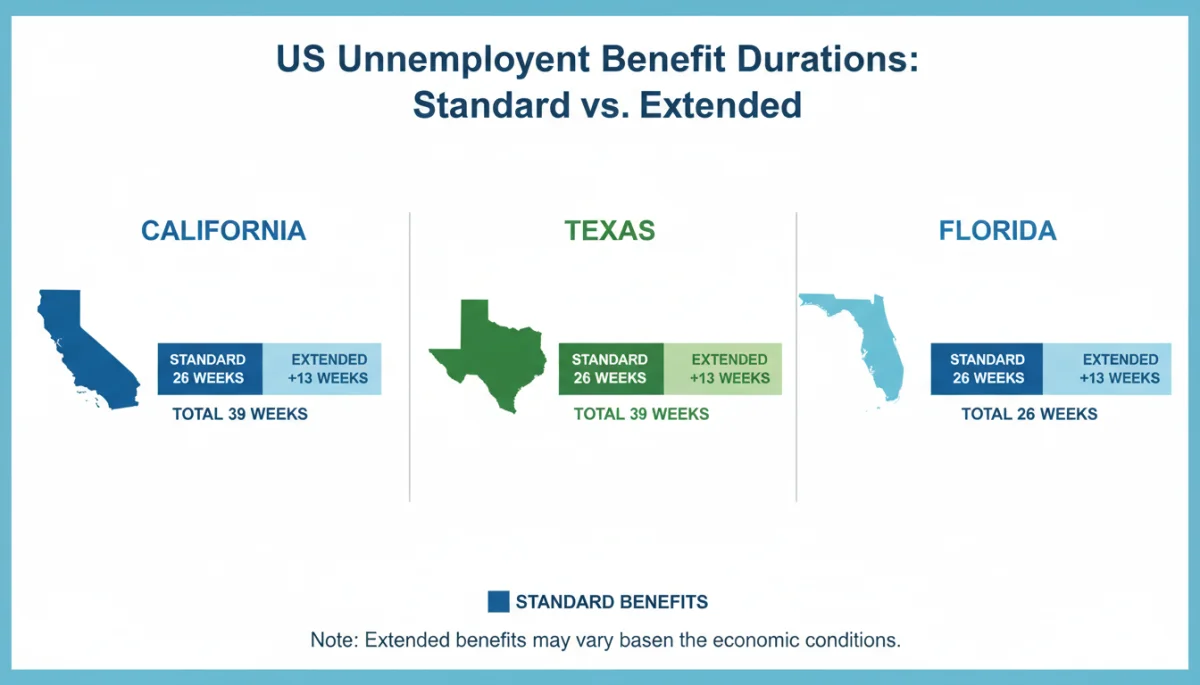
For instance, states like California or New York, with large populations and diverse economic sectors, often have established frameworks for extended benefits, which could include the 13-week provision if economic conditions warrant it. Conversely, states with more conservative fiscal policies might require higher unemployment thresholds or specific legislative action to enact such extensions.
It’s also important to consider that federal intervention can override or supplement state policies during national crises, as seen in past years. However, in a more stable economic environment, state-level decisions will be the primary determinant of extended benefit availability.
Eligibility Requirements for Extended Benefits
Even when extended unemployment benefits are available in a state, meeting the specific eligibility requirements is paramount. These criteria are designed to ensure that aid goes to those who genuinely need it and are actively seeking re-employment. Understanding these requirements is crucial for anyone hoping to access the additional 13 weeks of support.
This section details the typical conditions individuals must meet to qualify for extended benefits. We cover both general criteria and specific nuances that might apply in different states.
Key Criteria for Qualification
While specific rules can vary, several common eligibility factors apply across most states for extended unemployment benefits.
- Exhaustion of Regular Benefits: Applicants must have exhausted all regular unemployment benefits for which they were eligible. This means they have received the maximum number of weeks allowed under the state’s standard program.
- Actively Seeking Work: Individuals must generally demonstrate they are actively searching for new employment, often requiring proof of job applications, interviews, or participation in job search activities.
- Able and Available for Work: Applicants must be physically able to work and available to accept suitable employment if offered. This usually excludes individuals who are sick, injured, or otherwise unable to work.
- No Disqualifying Events: Individuals must not have been disqualified from regular unemployment benefits for reasons such as voluntarily quitting without good cause or being fired for misconduct.
Some states may also require participation in re-employment services or training programs as a condition for receiving extended benefits. These programs aim to help individuals develop new skills or improve their job search techniques, ultimately facilitating their return to the workforce.
It is always advisable to consult the specific unemployment agency in your state for the most accurate and up-to-date information on eligibility requirements, as these can be subject to change based on economic conditions and legislative updates.
Navigating the Application Process for Extensions
Applying for unemployment benefit extensions, particularly for an additional 13 weeks, can sometimes feel daunting. While states strive to streamline the process, understanding the steps involved and knowing what documentation to prepare can significantly ease the experience. Proactive preparation is key to a smooth application.
This section guides you through the typical application process for extended unemployment benefits. We provide practical advice on how to navigate state systems and ensure your application is processed efficiently.
Steps to Secure Your Extended Benefits
The application process for extended benefits often mirrors that of initial unemployment claims but with specific additional requirements. It is vital to pay close attention to deadlines and required documentation.
- Monitor Your Regular Benefits: Keep track of when your standard unemployment benefits are nearing exhaustion. Most states will notify you, but proactive monitoring is beneficial.
- Automatic Enrollment vs. Reapplication: Some states may automatically enroll eligible individuals into extended benefit programs, while others require a new application or certification. Check your state’s specific procedure.
- Required Documentation: Be prepared to provide updated information on your job search efforts, any changes in your financial situation, or other relevant details.
- Stay Informed: Regularly check your state’s unemployment agency website or communication channels for updates on extended benefit programs and application instructions.
It is crucial to respond promptly to any requests for information from your state’s unemployment office. Delays in providing documentation can lead to interruptions or denials of benefits. If you encounter difficulties or have questions, utilize the resources provided by your state, such as online FAQs, helplines, or local workforce centers.
By understanding the process and being prepared, individuals can effectively navigate the application for extended unemployment benefits, ensuring they receive the support they are entitled to during challenging times.
Future Outlook and Economic Preparedness for 2026
Looking ahead to 2026, the landscape of unemployment benefits will continue to evolve, shaped by economic trends, technological advancements, and legislative priorities. States are increasingly focusing on long-term economic preparedness, not just reactive measures, to support their workforces. This includes developing more flexible benefit programs and investing in workforce development initiatives.
This section considers the broader implications for unemployment benefits in the coming years. We discuss how states are adapting to future challenges and what individuals can do to enhance their own economic resilience.
Building Economic Resilience
States are learning from past economic cycles and aiming to build more resilient unemployment systems. This involves a multifaceted approach that includes both financial preparedness and workforce adaptability.
- Stabilizing Trust Funds: States are working to ensure their unemployment insurance trust funds are adequately funded to handle future downturns without immediate federal intervention.
- Workforce Development Programs: Increased investment in retraining, upskilling, and education programs helps individuals adapt to changing job market demands, reducing the duration of unemployment.
- Modernizing Benefit Systems: Many states are upgrading their IT infrastructure to make benefit applications and management more efficient and accessible.
For individuals, personal economic preparedness remains paramount. This includes building emergency savings, continuously developing new skills, and maintaining a robust professional network. These personal strategies complement state-level efforts to create a more secure economic environment.
The emphasis in 2026 and beyond will likely be on creating a synergistic relationship between state support systems and individual proactive measures. This collaborative approach aims to minimize the impact of unemployment and foster quicker transitions back into stable employment.
| Key Aspect | Description in 2026 |
|---|---|
| State Variation | Unemployment benefit extensions, including 13 additional weeks, vary significantly by state based on local economic conditions and policies. |
| Trigger Mechanisms | Extended benefits are often activated by state-specific economic indicators like Insured Unemployment Rate (IUR) or Total Unemployment Rate (TUR). |
| Eligibility Criteria | To qualify, individuals must typically exhaust regular benefits, be actively seeking work, and meet state-specific requirements. |
| Application Process | Applicants need to understand if their state requires reapplication or automatic enrollment for extended benefits and prepare necessary documentation. |
Frequently Asked Questions About 2026 Unemployment Extensions
No, the availability of 13 weeks of additional unemployment benefits will vary by state in 2026. Each state has its own specific economic triggers and legislative frameworks that determine if and when such extensions are activated, making it crucial to check your state’s policies.
Extended unemployment benefits are typically triggered by specific economic indicators within a state, such as a sustained high Insured Unemployment Rate (IUR) or Total Unemployment Rate (TUR). These thresholds vary by state and reflect the severity of unemployment.
Eligibility generally requires you to have exhausted your regular state unemployment benefits, be actively seeking work, and be able and available for employment. You must also not have been disqualified for certain reasons. Always check your state’s unemployment agency for specific criteria.
As of current projections for 2026, there isn’t a standing federal program for broad unemployment extensions. Federal intervention typically occurs during national economic crises. State-specific programs will be the primary source of extended benefits, so monitoring state policies is key.
First, monitor your regular benefits’ exhaustion. Then, check your state’s unemployment agency website to see if automatic enrollment applies or if you need to reapply. Be prepared to provide updated job search documentation and respond promptly to any requests for information to ensure a smooth process.
Conclusion
The landscape of unemployment extensions in 2026 underscores the dynamic nature of state-specific benefits and their crucial role in providing financial stability. Understanding the varying policies, eligibility criteria, and application processes across different U.S. states is vital for individuals facing job loss. While an additional 13 weeks of benefits can offer significant relief, its availability hinges on state-level economic triggers and legislative decisions. Staying informed and proactively engaging with state unemployment agencies will be key to navigating these complex systems and securing necessary support.