Federal Employee Benefits 2026: FEHB & Retirement Updates

Federal employees must proactively understand the upcoming changes to their health and retirement plans in 2026 to safeguard their financial and healthcare security.
Are you a federal employee wondering what the future holds for your healthcare and retirement? Understanding the significant shifts in federal employee benefits 2026 is not just about staying informed; it’s about proactively securing your financial well-being and health for years to come. The landscape of federal benefits is dynamic, with crucial updates to both the Federal Employee Health Benefits (FEHB) program and various retirement plans on the horizon. This article will guide you through these essential changes, helping you navigate the complexities and make the most informed decisions.
Navigating the Federal Employee Health Benefits (FEHB) Program in 2026
The Federal Employee Health Benefits (FEHB) program remains a cornerstone of federal compensation, providing comprehensive health insurance to millions of federal employees, retirees, and their families. As we approach 2026, several adjustments and potential reforms are being discussed that could significantly impact how these benefits are structured and utilized. Staying abreast of these developments is crucial for effective healthcare planning.
One primary area of focus for 2026 FEHB updates revolves around cost-sharing mechanisms. There’s an ongoing dialogue about how premium contributions might be adjusted, reflecting broader economic trends and healthcare costs. Employees should prepare for potential shifts in their out-of-pocket expenses, including deductibles, co-payments, and co-insurance rates. These changes are often aimed at ensuring the long-term sustainability of the program while trying to balance affordability for participants.
Potential premium adjustments and cost-sharing reforms
The Office of Personnel Management (OPM) regularly reviews FEHB plans and their associated costs. For 2026, it is anticipated that there will be a detailed evaluation of current premium structures. This may lead to varied percentage increases across different plans, influenced by factors such as healthcare utilization, administrative costs, and inflation. Understanding the specific changes to your chosen plan will be vital.
- Premium Contribution Changes: Employees might see adjustments in the percentage they contribute towards their health insurance premiums.
- Deductible Revisions: Some plans may increase their annual deductibles, requiring participants to pay more out-of-pocket before coverage begins.
- Co-payment and Co-insurance Updates: Expect potential changes to fixed co-payments for doctor visits and prescriptions, as well as co-insurance percentages for services.
Another aspect gaining attention is the potential for new plan options or modifications to existing ones. The FEHB program continually seeks to offer a diverse range of choices, from traditional fee-for-service plans to various managed care options like Health Maintenance Organizations (HMOs) and Preferred Provider Organizations (PPOs). New plans might emerge that cater to specific health needs or offer innovative approaches to care delivery, while existing plans could refine their benefits packages.
Furthermore, there is a growing emphasis on preventive care and wellness programs within FEHB. For 2026, we might see enhanced incentives for participants to engage in healthy lifestyles, potentially through reduced premiums or additional benefits for meeting certain wellness criteria. These initiatives aim to improve overall health outcomes and reduce long-term healthcare costs. Understanding these components can help federal employees optimize their healthcare choices and maintain their well-being effectively.
Understanding Federal Retirement Plans: FERS and CSRS in 2026
Federal retirement plans, primarily the Federal Employees Retirement System (FERS) and the Civil Service Retirement System (CSRS), are critical components of a federal employee’s financial security. As we move into 2026, there are several nuances and potential legislative adjustments that could impact these systems. While major overhauls are less frequent, incremental changes can still have significant long-term effects on retirement income and planning.
For FERS participants, which includes most federal employees hired after 1983, the system comprises three pillars: a Basic Benefit Plan, Social Security, and the Thrift Savings Plan (TSP). The Basic Benefit Plan’s annuity calculation is generally stable, based on an employee’s high-3 average salary and years of service. However, legislative discussions sometimes touch upon factors like the Cost of Living Adjustment (COLA) for retirees, which can affect the purchasing power of their annuities over time. Staying informed about these discussions is crucial for future retirees.
Thrift Savings Plan (TSP) modifications and investment options
The Thrift Savings Plan (TSP) is a defined contribution plan similar to a 401(k) and is a vital part of FERS. For 2026, employees should monitor potential changes to contribution limits, which are adjusted annually for inflation. Additionally, there’s always a possibility of new investment options being introduced or existing fund structures being refined. The TSP’s flexibility and low-cost investment options make it an incredibly powerful tool for retirement savings.
- Contribution Limit Increases: Annual adjustments to the elective deferral limit and catch-up contribution limits are expected due to inflation.
- Investment Fund Review: The TSP board frequently reviews its fund offerings (G, F, C, S, I, and L Funds) for performance and suitability, with potential for new diversified options.
- Withdrawal Options: While less frequent, changes to withdrawal rules for retirees or those separating from service can occur, impacting access to funds.
CSRS, which covers employees hired before 1984, operates as a defined benefit plan. While fewer active employees are under CSRS, its provisions for current retirees and those nearing retirement are equally important. COLA adjustments for CSRS retirees tend to be more robust than for FERS, but they are still subject to economic conditions and legislative review. Understanding the distinct characteristics of CSRS and any proposed alterations is essential for this segment of the federal workforce.
Beyond the core structures, there’s also a continuous effort to enhance financial literacy and retirement planning resources for federal employees. Agencies often provide workshops and online tools to help employees understand their benefits and make informed decisions about their savings and investments. Leveraging these resources can significantly improve an employee’s readiness for retirement.
Impact of Legislative Changes on Federal Benefits in 2026
The legislative landscape plays a significant role in shaping federal employee benefits 2026. Congress and various federal agencies continually review and propose changes to existing laws and regulations that govern health, retirement, and other employee programs. These changes can be driven by a multitude of factors, including economic conditions, political priorities, and the evolving needs of the federal workforce. Understanding the legislative process and potential areas of reform is key to anticipating future benefit adjustments.
One area that frequently sees legislative attention is the budget. Appropriations bills and other financial legislation can directly impact funding for federal programs, which in turn can influence the scope and generosity of employee benefits. For example, debates around federal spending could lead to discussions about adjusting government contributions to FEHB premiums or altering the formulas used for retirement annuities. While direct cuts are often met with strong opposition, subtle changes in funding mechanisms can still have a considerable effect.
Proposed reforms and their potential consequences
Several legislative proposals periodically emerge that could reshape federal benefits. These might include efforts to reform the structure of the FEHB program, such as introducing more market-based competition, or adjustments to retirement eligibility requirements. While not all proposals gain traction, staying informed about those that do move through the legislative process is important. Advocacy groups and employee unions often play a significant role in influencing these outcomes.
- Budgetary Allocations: Changes in federal budget priorities could lead to reallocations of funds impacting benefit programs.
- Program Eligibility: Legislative proposals might seek to modify eligibility criteria for certain benefits, affecting new hires or specific employee groups.
- Benefit Formulas: Discussions could arise regarding adjustments to the formulas used to calculate retirement annuities or survivor benefits.
Another aspect of legislative impact involves regulatory changes initiated by agencies like OPM. These administrative adjustments, while not requiring congressional action, can still have substantial effects. For instance, OPM might issue new guidance on how FEHB plans are administered, or it could modify rules regarding TSP contributions or withdrawals. These regulatory updates are often published in the Federal Register and are subject to public comment periods, offering an opportunity for stakeholders to voice their perspectives.
Ultimately, the interplay between congressional legislation and agency regulations creates a complex environment for federal benefits. Employees who track these developments, perhaps through official government channels or reputable federal employee news sources, will be better positioned to understand the rationale behind upcoming changes and their potential personal impact. Proactive engagement with this information allows for better personal financial and health planning.
Maximizing Your Federal Benefits: Strategies for 2026
With potential updates to federal employee benefits 2026 on the horizon, it becomes even more critical for federal employees to adopt proactive strategies for maximizing their benefits. This isn’t just about reacting to changes; it’s about strategically planning to ensure your health and financial security are optimized. A well-thought-out approach can help you navigate the complexities of FEHB and retirement plans effectively.
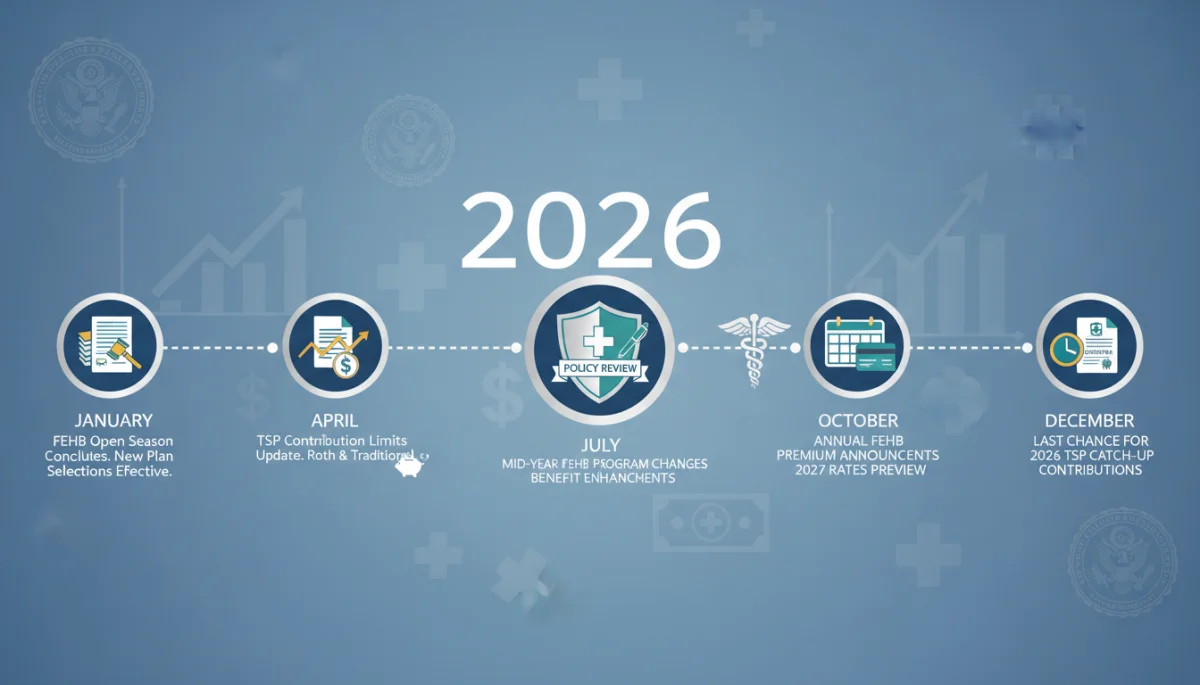
One of the most important strategies is to thoroughly review your FEHB plan during the annual Open Season. As premiums and benefits packages evolve, what was once the best choice for you might not be in 2026. Evaluate your current healthcare needs, anticipated medical expenses, and the financial implications of different plans. Consider whether a high-deductible health plan (HDHP) with a Health Savings Account (HSA) might be more advantageous, especially if you have lower medical costs or want to save for future healthcare expenses tax-free.

Strategic planning for TSP contributions and investment choices
For retirement planning, maximizing your Thrift Savings Plan (TSP) contributions is paramount. Aim to contribute at least enough to receive the full agency matching contributions, which is 5% for FERS employees. Beyond that, consider increasing your contributions to the maximum allowable limits, particularly if you are in your peak earning years. The power of compound interest makes early and consistent contributions incredibly valuable.
- Full Agency Match: Ensure you contribute at least 5% of your basic pay to receive the full government match.
- Max Out Contributions: If feasible, contribute the maximum allowed by the IRS for both regular and catch-up contributions (if over 50).
- Diversify Investments: Regularly review your TSP fund allocations (G, F, C, S, I, L Funds) to ensure they align with your risk tolerance and retirement timeline.
Another often-overlooked strategy is to take advantage of available financial literacy resources. Many federal agencies and organizations offer workshops, webinars, and counseling services focused on retirement planning, FEHB choices, and general financial management. These resources can provide personalized guidance and help clarify complex benefit provisions. Engaging with these tools can empower you to make more informed decisions about your financial future.
Finally, understanding the nuances of life insurance (FEGLI), long-term care insurance (FLTCIP), and other ancillary benefits is also crucial. These programs offer additional layers of protection and can be tailored to your individual circumstances. Regularly reviewing your coverage needs and comparing them against the available options will ensure that your overall benefits package is comprehensive and provides adequate security for you and your family.
Preparing for Retirement: Beyond the Basics in 2026
For federal employees eyeing retirement in 2026 or beyond, preparation extends far beyond merely understanding the mechanics of FERS or CSRS. It involves a holistic approach to financial, health, and lifestyle planning that addresses the nuances of transitioning from active service. As federal employee benefits 2026 evolve, so too should your retirement strategy, ensuring a smooth and secure transition.
One critical aspect is understanding your Social Security benefits. While Social Security is a component of FERS, its rules and benefit calculations are distinct. Knowing when to claim Social Security, how your federal annuity might interact with it (e.g., Windfall Elimination Provision or Government Pension Offset for some), and how to maximize your spousal or survivor benefits is paramount. These decisions can significantly impact your overall retirement income.
Considering long-term care and post-retirement healthcare options
Healthcare in retirement is a major concern, and careful planning for post-FEHB options is essential. While many federal retirees continue their FEHB coverage, it’s important to understand how Medicare integrates with FEHB when you become eligible. Medicare typically becomes the primary payer for Part A (hospital insurance) and Part B (medical insurance), while FEHB acts as the secondary payer, covering costs not paid by Medicare. Understanding this coordination of benefits can help you avoid unnecessary expenses.
- Medicare Integration: Learn how FEHB coordinates with Medicare Part A and B for seamless coverage in retirement.
- Long-Term Care Insurance: Evaluate the Federal Long Term Care Insurance Program (FLTCIP) or private options to cover potential future care needs.
- Dental and Vision: Consider separate dental and vision plans for retirees, as FEHB typically offers limited coverage for these services.
Beyond financial and health considerations, preparing for retirement also involves lifestyle planning. What will you do with your newfound free time? Will you pursue hobbies, travel, volunteer, or perhaps even start a second career? Thinking through these aspects helps ensure a fulfilling retirement. Many federal agencies offer pre-retirement seminars that cover not only financial aspects but also these broader lifestyle considerations, providing valuable insights and resources.
Moreover, estate planning should be an integral part of your retirement preparations. This includes updating wills, designating beneficiaries for your TSP and FEGLI, and establishing powers of attorney. Ensuring your affairs are in order protects your legacy and provides peace of mind for you and your loved ones. Proactive and comprehensive planning across all these areas will set the stage for a truly secure and enjoyable federal retirement.
The Future Outlook for Federal Benefits: Trends and Predictions for 2026
Looking ahead to 2026 and beyond, the future outlook for federal employee benefits 2026 is shaped by a confluence of demographic shifts, economic pressures, and technological advancements. Understanding these broader trends can provide federal employees with a clearer picture of what to expect and how to adapt their personal benefit strategies accordingly. While precise predictions are challenging, certain trajectories seem more likely than others.
One significant trend is the aging federal workforce. A large segment of federal employees is nearing retirement eligibility, which places increasing demands on retirement systems and healthcare programs. This demographic shift often fuels discussions about the long-term solvency of benefit programs and the need for potential adjustments to ensure their sustainability for future generations of federal workers. Policy makers are constantly seeking ways to balance the needs of current retirees with the ability to attract and retain new talent.
Technological integration and personalized benefit experiences
Technology is increasingly playing a role in how federal benefits are managed and accessed. For 2026, we can anticipate further enhancements in online portals, mobile applications, and digital tools that allow employees to manage their FEHB choices, TSP investments, and other benefit-related information more efficiently. These advancements aim to provide more personalized experiences and greater transparency, empowering employees to make better-informed decisions.
- Digital Portals: Enhanced online platforms for managing FEHB enrollment, TSP contributions, and retirement applications.
- AI-Powered Guidance: Potential for AI-driven tools to offer personalized benefit recommendations based on individual profiles and needs.
- Telehealth Expansion: Continued growth and integration of telehealth services within FEHB plans, offering more convenient access to care.
Economic factors, such as inflation and interest rates, will also continue to influence federal benefits. Inflation can erode the purchasing power of annuities if COLA adjustments do not keep pace, while interest rates can impact the returns on TSP investments. Federal employees should remain vigilant about economic indicators and how they might affect their financial planning. Diversifying investments and regularly reviewing financial strategies can help mitigate some of these external risks.
Finally, there’s a continuous emphasis on promoting employee well-being and mental health within the federal government. For 2026, FEHB plans are likely to continue expanding coverage for mental health services, and agencies may offer more robust employee assistance programs (EAPs) and wellness initiatives. These efforts reflect a growing recognition of the importance of holistic health for a productive and resilient workforce, ensuring that benefits extend beyond just physical health and financial security.
Key Considerations for Federal Retirees in 2026
Federal retirees, or those nearing retirement, have a distinct set of considerations when looking at federal employee benefits 2026. While many of the core benefits remain, the way they are accessed, coordinated, and potentially adjusted can significantly impact a retiree’s financial stability and quality of life. Proactive understanding and planning are even more critical for this demographic.
For retirees, maintaining continuous FEHB coverage is often a top priority. The ability to carry FEHB into retirement, with the government continuing to pay its share of the premiums, is a significant benefit. However, retirees must ensure they meet the eligibility requirements, typically including five years of continuous FEHB coverage immediately before retirement. Understanding these rules and confirming your eligibility well in advance of your retirement date is paramount to avoid any gaps in coverage.
Navigating Medicare and FEHB coordination for optimal coverage
The coordination of benefits between FEHB and Medicare is a complex but vital area for retirees. Once eligible for Medicare (typically at age 65), most retirees enroll in Medicare Part A and Part B. Medicare becomes the primary payer, and FEHB acts as the secondary payer, picking up many of the costs that Medicare does not cover, such as deductibles, co-payments, and services not covered by Medicare. This coordination usually results in excellent comprehensive coverage, often reducing out-of-pocket expenses compared to having only one program.
- Enrollment in Medicare: Understand the deadlines and implications of enrolling in Medicare Part A and B upon eligibility.
- Primary/Secondary Payer: Familiarize yourself with how Medicare becomes primary and FEHB secondary, impacting claim processing.
- FEHB Plan Selection: Review FEHB plans that integrate well with Medicare, as some might offer better value for retirees.
Cost of Living Adjustments (COLAs) for retirement annuities are another crucial factor for retirees. While CSRS retirees generally receive full COLAs, FERS retirees might receive reduced COLAs, particularly if inflation is high. These adjustments are vital for maintaining the purchasing power of your annuity over time. Staying informed about the annual COLA announcements and their calculation methods helps retirees budget effectively and manage their long-term financial plans.
Finally, understanding survivor benefits is essential for ensuring your loved ones are protected. Federal retirement systems offer various survivor annuity options, and decisions made at retirement can have lasting implications. Reviewing these options with your spouse or beneficiaries and making informed choices about elections is a critical part of comprehensive retirement planning for federal employees. This ensures that your financial legacy aligns with your wishes and provides security for your family.
| Key Update Area | Brief Description for 2026 |
|---|---|
| FEHB Premiums | Anticipate potential adjustments in employee premium contributions and cost-sharing mechanisms across plans. |
| TSP Contributions | Annual increases to contribution limits due to inflation, encouraging higher savings for retirement. |
| Legislative Impact | Ongoing congressional debates and agency regulations could subtly alter benefit structures and funding. |
| Retiree Healthcare | Crucial coordination between FEHB and Medicare for comprehensive coverage post-retirement. |
Frequently Asked Questions About Federal Employee Benefits in 2026
For 2026, federal employees should anticipate potential adjustments to FEHB premium contributions, deductibles, and co-payments. These changes are driven by healthcare cost trends and OPM reviews. New plan options or refinements to existing benefits packages might also be introduced to cater to diverse healthcare needs and promote wellness programs.
The Thrift Savings Plan (TSP) is expected to see annual increases in contribution limits, including catch-up contributions, due to inflation adjustments. There’s also a possibility of new investment fund options being added or existing fund structures being refined to enhance diversification and performance for federal employees’ retirement savings.
Federal employees should monitor congressional legislation related to federal budgets, which can influence funding for benefit programs. Additionally, regulatory changes from agencies like OPM could affect FEHB administration or TSP rules. Advocacy efforts by employee unions can also play a role in shaping these legislative and regulatory outcomes.
To maximize benefits in 2026, federal employees should thoroughly review FEHB plans during Open Season, ensuring optimal coverage. Maximizing TSP contributions, especially to receive the full agency match, is crucial. Utilizing available financial literacy resources and regularly reviewing ancillary benefits like life insurance and long-term care are also key strategies for comprehensive planning.
For federal retirees in 2026, Medicare (Parts A and B) will generally act as the primary payer, while FEHB will serve as the secondary payer. This coordination typically covers costs not paid by Medicare, such as deductibles and co-payments, providing comprehensive healthcare coverage. Retirees should ensure timely Medicare enrollment to avoid penalties and optimize benefits.
Conclusion
The landscape of federal employee benefits 2026 presents both continuities and potential shifts that demand attention from federal workers. From understanding nuanced changes in FEHB premiums and plan offerings to strategically maximizing TSP contributions and navigating legislative impacts, proactive engagement is essential. Retirees, in particular, must carefully consider the coordination of FEHB with Medicare and plan for long-term financial security. By staying informed, leveraging available resources, and adapting personal strategies, federal employees can effectively unlock and optimize their benefits, ensuring a stable and secure future in an evolving benefits environment.